Witnesses Testify to Horrific Conditions At Abortion Clinics

Denise M Burke, ESQ “Abortion Clinic Regulations: Combating the True “Back Alley” on page 124 the author cites:

 “In 1994, several women testified before the Gen. Assembly of the South Carolina legislature that when they walked into some of the states abortion clinics, they saw bloody, unwashed sheets, bloody cots in recovery rooms, and dirty bathrooms. Clinic workers testified that the remains of unborn children were not disposed of properly, but rather runs down sinks.”

Dial “Abortion: a Dirty Industry” Citizen Magazine, July 2001

Share on Facebook

911 Transcripts

Botched abortions happen. In a few cases the 911 tapes of calls from abortion clinics have been released to the public.

Transcripts of 911 calls are notoriously hard to acquire, but I have managed to find several. Here are some 911 call transcripts from botched abortions at clinics:

Aware Women’s Center:
Transcript of March 29, 1997 911 call
Dispatcher: Fire/Rescue.

Aware Woman: We need a transport, we have a possible perforation and we’d like a transport with no lights, no sirens.

Dispatcher: Okay, ma’am, we are 911. We have to come emergency.

Aware Woman: Okay, so you have to have lights and sirens.

Dispatcher: Yes ma’am.

Aware Woman: Okay.

Dispatcher: And what’s wrong with her?

Aware Woman: A possible perforation.

Dispatcher: What’s that?

Aware Woman: Where the uterus has been perforated. She was having an abortion.

Note: the clinic worker told 911 to send an ambulance without lights or sirens. A loud, flashing ambulance is not good for an abortion clinic’s image.

Again, from Aware Women’s

Transcript of December 12, 1997 911 call
Dispatcher: Fire/rescue.

Aware Woman: Hi, we need an ambulance up at Aware Woman, it’s 1564 Dixie Way.

Dispatcher: Okay, what’s going on?

Aware Woman: We have a patient with a real low blood pressure – 54 over 30.

Dispatcher: Is she a surgery patient?

Aware Woman: Yes.

Dispatcher: Is she post-surgery today?

Aware Woman: Yes.

Dispatcher: How many hours?

Aware Woman: Let me see when she had her surgery? She had her surgery . . . she was done with surgery at 12:35 – so about 2.5 hours.

Dispatcher: But she’s responsive?

Aware Woman: She is responsive.

Dispatcher: Okay, and your name?

Aware Woman: My name is (blanked out).

Dispatcher: We’re on the way. If she gets worse before we get there, call right back.

Aware Woman: Okay, thank you.

Dispatcher: Unh huh, bye.

Aware Woman: Bye,bye.

(Hang up)

Also from Aware Women’s:

Transcript of July 4, 1997 911 call
Dispatcher: Fire/Rescue.

Aware Woman: Hi, we need an ambulance at Aware Woman – we have a patient with heavy bleeding.

Dispatcher: And your number.

Aware Woman: (unintelligible) Bye Bye.

Pro-lifers outside an abortion clinic in Hyannes saw a woman loaded into an ambulance. They were able to obtain this copy of a transcript.

Transcript of 911 Audio Tape – September 13, 2007

The following is a Hyannes fire department recording of a 911 request for medical aid at 68 Camp David Street, Hyannes on Sept 13, 2007 at 5:49 pm. The incident number is R273209

Hyannis Dispatcher: 911. What’s the location of the emergency?

Caller: I’m at 68 Camp Street. I’m here at the Women’s Health Center.

Hyannis Dispatcher: The Women’s Heath Center?

Caller: Yes, at 68 Camp Street, Hyannis.

Hyannis Dispatcher: Okay, and what’s going on there?

Caller: Uh, well, this girl aspirated. She’s not breathing.

Hyannis Dispatcher: Okay. What’s your name?

Caller: —

Hyannis Dispatcher: —, what’s your phone number.

Caller: It’s —

Hyannis Dispatcher: 7088. I’ll have rescue right there.

Caller: Thanks.

19 year old Christin Gilbert died from complications from a third-trimester abortion she received at Doctor Tiller’s infamous late-term abortion clinic in Wichita Kansas. Both she and her baby were physically healthy before the abortion. Gilbert, who was mentally challenged, had been a victim of rape. Her family no doubt thought they were doing what was best for her when they took her for an abortion.

911 Dispatch: “911 Wichita.”

Marguerite (Tiller’s office): “Uh, Yes, this is Dr. Tiller’s office, we need an ambulance.”

911: “And what’s the address?”

Marguerite: “It’s 5107 E. Kellogg. But please, please, please–no lights and no sirens.”

911: “Ma’am, I can’t control that. And, uh, what’s the problem? Tell me exactly what happened.”

Marguerite: “Okay, this is the correct number for the ambulance, right?”

911: “Yes, ma’am. What’s the problem? Tell me exactly what happened.”

Marguerite: “Okay, all I know is that, is that it’s a patient who has to go to the hospital.”

911: “Okay for what reason, ma’am?”

Marguerite: “Hold on just a minute and I’ll…”

911 dispatch is then put on hold by Tiller’s office for 44 seconds.

Marguerite: “Sir, I’m sorry, I don’t have that information. All I know is that we need a transport to the hospital.”

911: “So you have no information as to why?”

Marguerite: “No sir, I don’t. I was asked to call.”

911: “Okay, so do you need the police over there?”

Marguerite: “Oh no no no.”

911: “Well see, that’s why we ask you these questions — so we know how to respond and what units to respond. If you can’t give me that information…”

Marguerite: “…we need a transport to the hospital..”

911: “And what’s your name?”

Marguerite: “My name is Marguerite.”

911: “And what is the phone number you’re calling from?”

Marguerite: “684-5108.”

911: “Alrighty. Thank you.”

Note again that the clinic worker asks for no lights and no sirens.

According to an investigation made into Cristen’s death, the young woman had actually been in cardiac arrest when the 911 call was made- long beyond feeling pain, and allowed to lie there dying while the counselor put 911 on hold for 44 seconds. Here is a copy of the respondent’s notes on the call. They said that “Cp refused to give information.”

Here is a picture of the ambulance that took Gilbert away

******

Lou Ann Herron lay bleeding in an abortion clinic recovery room while her abortionist had lunch and ordered staff not to bother him. Finally, they called an ambulance Here is a partial transcript.

911 Dispatcher: 911. What is your emergency?

Clinic worker: Well, one of our patients is unconscious. She’s lost quite a bit of blood and she’s pale.

911 Dispatcher : Is she breathing OK?

Clinic Worker: No, she’s not.

911 Dispatcher: OK, do you have oxygen on her?

Clinic Worker : No, we don’t.

911 Dispatcher : Do you have oxygen available?

Clinic Worker : Hmm. Can we get it on? I don’t know if we have any in there. Could we have you come to the side doors, right on 10th street, and try not to use no sirens?

Herron died from her injuries.

******

A transcript of a different kind is this one made to the Orlando fire department. When a young woman’s baby was born alive at a Florida abortion clinic, staff refused to give the child medical care or to call 911. His distraught mother called a friend and asked her to call 911 on her behalf. You can read about the incident here. This is the transcript.


OFD: Orlando Fire Department.

(Unintelligible.)

OFD: Thank you what is the address of the emergency?

Friend: 609 West Virginia Street. The EPOC Center.

OFD: 609 West Virginia? One moment please.

Friend: Let’s see … I don’t have the address on me. A friend of mine called form the abortion clinic and her baby was born alive.

OFD: Okay. Do you know the closest intersection. Did she call you on a phone?

Friend: Right, she called me off her cell phone.

OFD: Okay. Did you ask her to call 911? Because …

Friend: She asked me to call because she was back there with no kind of … They were just telling her to leave it … this is gross but … leave it in the toilet, you know, and let it die.

OFD: Is she in a house?

Friend: She’s in the clinic, the abortion clinic.

OFD: Okay.

Friend: Correct. EPOC. Center. Oh my God! I’m freaking out!

OFD: Did she call from a cell phone?

Friend: She called from her cell phone.

OFD: Okay. What did you say? She was having … the baby just came out?

Friend: Right. She as getting an abortion and the baby came out and it was still living. And they’re wanting it to die.

OFD: Okay. And she’s inside the clinic?

Friend: Correct.

OFD: Okay. Let me give a call to the county. Hold on. Actually, do not hang up. Just hold on the line, okay?

Friend: Okay.

DISPACHER CALLS COUNTY

OCFR: Orange County Fire and Rescue

OFD: Hi can you look up a couple of addresses for me. I have a 911 caller on the line with a baby. She’s in an abortion clinic and the baby is born and it’s still alive. They don’t know for how long.

OCFR: What would we be going for?

OFD: Uh, it would be for an obstetrics. It’s a female that’s in the center, I guess for … it’s an abortion clinic but the baby was born, and it’s alive at this moment and they don’t know for how long.

OCFR: Oh!

TRANSFER TO ORLANDO FIRE DEPARTMENT

OFD: Orlando Fire Department.

Friend: I need an ambulance to 609 Virginia Drive in Orlando.

OFD: 609 Virginia Drive?

Friend: Correct.

OFD: Okay, and what going on there?

Friend: Uh, it’s the women’s clinic. Uh, my friend was having an abortion and the baby was born alive.

OFD: Okay, you said the baby was born?

Friend: Correct.

OFD: Okay, hold on one second for me.

Friend: Okay.

OFD: 609 Virginia Drive?

Friend: Correct.

OFD: What’s the business name?

Friend: Uh, EPOC Clinic for Women. E-P-O-C.

OFD: EPOC Clinic for Women? Okay. Is there a phone in the building?

Friend: Yes.

OFD: Okay, can you call me from that or just pick up that phone and dial 911?

Friend: Uh, well I’m not there. She’s there. She called me and they’re not allowing her to use the phone there.

OFD: Okay.

Friend: But they’re wanting the baby to die.

OFD: She wants the baby to live?

Friend: Correct.

OFD: Okay.

Friend: She was expecting it to not be alive, and it is.

OFD: Okay. I’m going to get help out there.

Friend: Okay.

OFD: Just stay on the line with me.

Friend: Thank you! Thank you! Thank you!

OFD: Okay the baby’s been born?

Friend: Correct:

OFD: How long ago, do you know?

Friend: Uh, she just called me. It wasn’t 10 minutes ago. And said that the baby was born and it was alive and they were wanting her to leave it in the toilet. And uh … just let it die. And uh … she’s not wanting that to happen.

OFD: Okay, we do have help on the way like I said. We’re going try and call the center as well as have someone on the way.

Friend: Thank you very much.

OFD: Your welcome.

DISPATCHER CALLS WINTER PARK FIRE DEPARTMENT

OFD: Hi. Can you respond with us to 609 Virginia Drive?

Ambulance: For?

OFD: Uh, this is supposed … This is the EPOC Center E-P-O-C Center for Women. We are going for a lady that is in an abortion clinic. She says that the baby has been born ten minutes ago, but the center wants to kill the baby and will not let the mother call 911.

Ambulance: Woah!

OFD: Uhm hmm! So we have a third party calling because the mother did call 911 … uh …call a family member.

Ambulance: Okay, so we are the way now. Alright. okay.

OFD: Bye!

Sadly, the child did not survive, despite the mother’s wishes

Here are some more 911 calls:


Share on Facebook

Body Parts Left behind

From the autopsy on Madgalena Rodriguez, who died in an attempted abortion:

“[T]he body of the baby was not complete when autopsied. Both arms had been cut off; the heart, lungs, liver, and other organs had been cut out, the front of the chest and abdomen were missing, the right femur was fractured, the head was intact except for an area on the scalp which had been taken off from the back of the head.”

******

The fetus found during an autopsy on Janet Forster, who died from abortion complications:

“macerated, lacerated and purulent male fetus of about 19 weeks gestation. This fetus measures 14.5 cm. in crown-rump length, shows lacerations in the shoulder area, evisceration of the bowel through an abdominal laceration, and destruction of the skull and facial structures.”

******

From medical records describing what surgeons found inside a 14-year-old victim of a botched abortion:

“fetus, approximately 20 weeks in size, protruding into the abdominal cavity, consisting of a fetal head, torso and one upper extremity.”

******

From court records in an abortion malpractice suit:

“[F]etus was missing both arms and one leg… [the] rib cage … was exposed and lung tissue protruded from the left side of the chest, …there was disruption of the skin at the neck and right side of the face… and there was distortion of the facial features of said fetus.”

******

In court records, an abortionist describes what he says he extracted, and a patient describes what she says she expelled at home:

Abortionist: “I clearly identified all the significant parts. I saw the calvarium. I saw the spine. I saw extremities.”

Patient: “the entire face, two arms, and a portion of rib cage and back.”

******

From a pathology report on tissue expelled by an abortion patient:

“macerated fetus composed of head, one arm and a portion of thoracic trunk.”

******

From the autopsy on Barbaralee Davis, who died from a botched abortion:

“Two fetal parts, the face and thoracic spinal column, are embedded in a 700 cc. fresh hematoma inside the uterus.”

“In an attempt to estimate the length of gestation in the absence of the whole fetus, the two parts, namely the face, less the crown, and the thoracic vertebral column without the rump, are laid end to end. Together they measure 9 cm.

A conservative estimate of the crown to rump length would be 10 to 11 cm. This will place the gestational age at 16 to 16 1/2 weeks.”

******

From an autopsy performed on two fetuses found in a trash container next to an abortion clinic:

“FETUS #1: Parts of a fetus of indeterminate sex include a skull cap, both arms total with scapula intact, the entire vertebral column with a portion of rib cage attached, the pelvic girdle, the left femur, and both lower legs with feet attached. A kidney, the tongue, and one eye was also retrieved. Gestational age was estimated at 4 months, perhaps very slightly greater, estimated on length of long bones. Measurements are as follows: femur 28 mm. …foot length 18 mm. … hand length 15 mm. The tissue was evidently fresh from a viable abortion within hours.

FETUS #2: A beheaded male fetus of an estimated 7-8 weeks gestation. The length of the fetus from shoulder to rump is estimated at 2.2 cm… The arms and scapula girdle was traumatically detached and retrieved in a separate piece.

Again the tissue is fresh from a viable and very recent abortion.”

******

“Magelena” had an abortion on December 8, 1994, and died from her injuries. She she arrived at the hospital, doctors found:

“large uterine laceration with a fetal lower extremity protruding out into the abdominal cavity…a surgical sponge in the uterus…cervical vaginal and bladder lacerations….”

and said of the dead baby (estimated to be 30 weeks along)

“Both arms had been cut off, the heart, lungs, liver and other organs had been cut out, the front of the chest and abdomen were missing, the right femur was fractured, the head was intact except for an area on the scalp which had been taken off from the back of the head.”

Source: San Diego Reader 12.13/94, San Diego Union-Tribune 12/17/94, Orange County Register 12/15/94, Santa Monica Outlook Decmber 1994, Los Angeles Times 3/21/95, San Diego County South Bay Judicial District, Californa Superiour Court Case No. S6003494, San Diego County Case no. 643695,

Cited in Mark Crutcher “Lime 5: Exploited by Choice ” (Denton, Texas: Life Dynamics Incorporated, 1996)

Share on Facebook

Angela Sanchez: Not so Safe, Not so Legal

The story of Angela Sanchez involves illegal abortion and attempts to hide the body. Alicia Hannah’s abortion clinic was operating openly and apparently legally.

On January 19, 1993, Angela Neito Sanchez, age 27, went to Clinica Feminina de la Comunidad with two of her four children: 12-year-old Maria, and 2-year-old Victor.

Angela’s family is adamant that Angela wasn’t seeking an abortion. They said that she was excited about the pregnancy and was hoping it would be a girl so Maria would have a sister. Angela’s sister Celia said that someone from the facility had called Angela, telling her to come in for a consultation about the pregnancy.

Maria and Victor waited for their mother in the lobby. A clinic staffer approached Maria and suggested that she take the car and drive Victor home. Maria protested that she was too young to drive. The children continued to wait for their mother.

At around noon, a staffer took the children to lunch. When they returned to the clinic, Angela’s car was gone, and Maria was told that her mother had gone to another clinic. The children continued to wait, but when their mother failed to appear Maria finally called her uncle, Hemiberto Sanchez, who took them home with him.

By 10:00, Angela’s family was frantic, and Celia took Maria to the clinic to look for the missing woman. When they arrived, they saw Angela’s car. Maria jumped out of her aunt’s pickup truck and ran to the car. There she saw her mother lying on the ground.

Maria asked two women from the clinic, who were standing nearby, what had happened to her mother, and they told her, “She’s dead.” Sobbing, Maria clung to and kissed her mother while the two women from the clinic told Celia that a man had shoved Angela from a car and they were picking her up. One of the women, Alicia Ruiz Hanna, who operated the facility, told Maria that her mother had just come knocking on the door, then collapsed.

Celia put her sister’s body in the back of her truck and flagged down a policeman, who led her and Maria to a hospital. There, Celia was told that her sister had been dead for several hours.

After a prolonged investigation, and Hanna’s jailhouse conversion to Christianity, the full story finally emerged. Hanna, who had been passing herself off as a doctor and performing abortions at the facility, had given Angela an injection to induce abortion. Angela stopped breathing, and staffers attempted to revive her but did not summon paramedics because Hanna feared that she would go to jail and lose her children if it was discovered that she was running the clinic illegally. She and the other woman had planned to put Angela’s stiffening body into the trunk of her own car and abandon the vehicle at a distant location.

In December 1994, Hanna was convicted of second-degree murder for Angela’s death. She was sentenced to 16 years to life.

Sources: Orange County Register 12/13/94 and 1/28/95

Share on Facebook

Patient Injuries at Inglewood Abortion Clinic

Inglewood is an abortion facility that has been operating under many different names over the years.

The facility is renowned for it’s “five minute abortion” technique. According to their records, and the testimonies of a number of women, even second trimester abortions were done this quickly.

That’s five minutes for staff to clean the room from the previous abortion, position the patient on the table, and start an IV if one was being used. Since Inglewood was using anesthesia, they were probably administering it intravenously. The patient had to be properly anesthetized.

While the staff prepared the patient, the doctor had some time to strip off the bloody gloves from the previous patient, wash his hands, and put on a new pair of gloves. Somebody in that room had to get rid of the soiled linens and instruments from the previous patient. Somebody should have been putting new tubing on the aspirator, collecting the fetal remains from the previous patient, and putting a fresh stockingette and collection jar on the aspirator.

Somebody should have been wiping and disinfecting the abortion table, mopping and disinfecting the operating room floor. Somebody should have been setting up a clean set of instruments.

At some point during this period, the doctor was supposed to review the patient’s medical history and discuss any concerns with the patient. He was supposed to perform an examination to verify the pregnancy, and the estimated gestational age. Since this was the first time the patient and the doctor would meet, this would also be the time to assess whether the patient’s informed consent had been properly obtained. All in that five minute window.

Once the prep was done, there was less than five minutes for what had to be done for the abortion itself. That meant less than five minutes to dilate the patient’s cervix. In a second trimester abortion, that meant less than five minutes to reach in with forceps, dismember the fetus, and remove the larger parts. That meant less than five minutes to suction out the placenta and remaining tissues.

What time was left after the abortion itself would be used to rouse the patient from anesthesia and get her out of the operating room and off toward the recovery room so that the next patient could be brought in and aborted.

Also during that five minutes, somebody had to make the appropriate entries in the operating room log. The doctor was supposed to write the operative report in the patient’s chart. Notations to be made in that five-minute window include any drugs used, how they were administered, and how they were tolerated by the patient. Notes were to be made of how the patient was prepped for surgery. Notes on the surgery itself were to be entered, including an estimate of the amount of tissue removed. Notes of any suspected complications were to be made, along with notes of any measures taken to treat those suspected complications. Not surprisingly, Inglewood had many victims over the years.

Inspections revealed horrific conditions at Inglewood that went unchanged for years. And numerous women have died. Many women had terrible abortion complications but survived. Here are a few of them.

The Inglewood entity’s problems began back even before Roe v. Wade. California had legalized abortion, with some red tape, in 1970. The Inglewood entity started having problems — or, more to the point, the patients began having problems — documented as early as 1971.

1971

Joyce B. said that she had a legal abortion at West Coast Medical Group October 29, 1971. Additional surgery was required, her suit said, “to correct what was omitted.” She suffered permanent injury to her female organs, severe acute tubal infection, and subsequent tubal infection in following years. (LA County Superior Court Case No. C41915)

1972

Debra V. said that she was referred in 1972 for an abortion by Richard B. Tepper at Inglewood General Hospital. She suffered a perforated uterus, then was discharged prematurely without being examined by a doctor, to fly home to Arizona. She said she was given no proper discharge instructions. She had to be admitted to a hospital in Arizona for corrective surgery. Debra said that the care she received at Inglewood seemed designed “to get me through the operation as quickly as possible as opposed to ensuring my well being and safety both before, during and after the operation.” (LA County Superior Court Case No. C74502)

Tami R. alleged that she had an abortion arranged by West Coast Medical Group and Bella Vista Community Hospital performed June 1-2, 1972. Afterward, she suffered peritonitis and endometritis, and eventually had to have a hysterectomy. (LA County Superior Court Case No. C58508)

Jean K. reported that she was referred to Inglewood by Planned Parenthood for an abortion by Dr. Perlow in 1972. Perlow failed to diagnose Jean’s ectopic pregnancy. One week later she called back to Planned Parenthood due to pain, as she had been instructed to do. Planned Parenthood told her to call West Coast Medical Group (which, as I’ve said, either is or is inextricably bound up with Inglewood). She was given appointment in one week. Before she could attend her appointment, the pregnancy ruptured, and surgery was required. The operative findings found Jean’s abdomen full of blood and blood clots. The tube and pregnancy were removed; Jean was placed in ICU overnight due to her critical condition. Her suit also alleged that Planned Parenthood failed to check Inglewood’s qualifications before providing her with a referral. “They told me that the abortion was a quick and simple procedure and that no problems could result. I wasn’t warned…that the doctors performing the abortion had so many other abortions to do that realistically it would be hard for them to do anything with care.” In summarizing her treatment, Jean said, “I was sent to an abortion mill.” (LA County Superior Court Case No. C64485)

When Roe v. Wade came down in 1973, a lot of the red tape and regulations surrounding elective abortions were swept away. 1973 was also the year Inglewood staff performed the fatal abortion on Kathy Murphy. It’s debatable if Roe in any way changed the quality of care women got at the Inglewood facility. Certainly it unleashed a flood of lawsuits.

1973

Gloria D. filed suit, saying that she was referred to John Dupont for a September 4, 1973 abortion at Inglewood/West Coast Medical Group. Her suit alleged that Dupont and his associates at Inglewood “withheld from plaintiff sufficient facts and information as to the nature, dangers, hazards and risks,” causing her to suffer “severe, serious, and permanent injuries.” (LA County Superior Court Case No. NWC35925)

A suit was filed on behalf of minor Sharon M., alleging that she had a surgical procedure performed by Maclyn Wade and/or Dennis Perlow at Inglewood Hospital in May of 1973, arranged by or through Planned Parenthood. Sharon suffered injury requiring surgical treatment. (LA County Superior Court Case No. C84626)

Janet C. alleged that she had an abortion performed by John Dupont at Inglewood Hospital June 9, 1973. Her uterus ruptured. The surgical report from her post-abortion surgery indicates a 8-10 week size uterus shifted to left side of the pelvis, and a 5-cm fetus in a hematoma. The report documents the treatment Janet required: evacuation of 1 1/2 units of blood, administration of 2 units of blood, extraction of her cervix in fragments, and the 2-3 centimeter defect in the wall of her hemorrhagic uterus, which doctors had to remove. Janet said, “I was not informed of the possibility of such disastrous consequences of what was supposed to be a routine termination.” (LA County Superior Court Case No. SWC28902)

Gladys G. said that she was referred to Inglewood by Planned Parenthood without being offered a choice of facilities. She had her abortion performed by John Dupont at Inglewood, then required a second curretage on July 11, 1973, and eventually a total abdominal hysterectomy performed July 13, 1973. Dupont’s notes from the abortion indicate “minimal” blood loss, no perforations noted, “patient taken to recovery room in satisfactory condition, apparently having tolerated the procedure well.” Given Inglewood’s long documented history of writing surgical notes before surgery, it is difficult to say if this note was written before or after Dupont did the abortion that cost Gladys her uterus. (LA County Superior Court Case No. C64484)

A suit was filed on behalf of Cynthia T., age 13. The suit said that on April 28 or 30, 1973, Cynthia sought pregnancy counseling at Inglewood. The defendants “recommended that her said pregnancy be terminated and that they be authorized to perform the recommended abortion.” Cynthia’s abortion was performed by none other than Leo Kenneally. John Dupont indicated he was summoned by Morton Barke to assess Cynthia after Kenneally had finished the abortion. He “found she was grossly jaundiced and was suffering from a severe infection,” and he had her transferred to Cedars of Lebanon Hospital. Upon admission Cynthia was “very jaundiced.” She suffered post abortal clostridia sepsis, diffuse intravascular coagulation, and acute tubular necrosis. “Some necrotic material was found in the uterus, draining of the cul-de-sac revealed pus, and the uterus was found to be quite involved by a suppurative process as were the tubes and ovaries. The plaintiff also suffered acute renal failure.” The suit also noted that Cynthia “has suffered severe emotional, nervous, mental and psychological shock resulting from the complete abdominal hysterectomy, and demonstrated by prolonged periods of depression and lethargy.” Cynthia was further treated at a hospital April 30 – May 22. The suit also noted the “possibility of future kidney and liver complications.” Cynthia must take medications for remainder of her life, and suffered scars on her abdomen and arms. Doctors recommended mental therapy for her. Nevertheless, for some reason, her lawsuit was dismissed. (LA County Superior Court Case No. SWC30375)

1974

Patricia J. alleged that she underwent an abortion by John Dupont at Inglewood Hospital November 30, 1974. Her suit faulted Inglewood and Dupont with failure to notify her of a lab report indicating an unsuccessful abortion and failure to detect an ectopic pregnancy. Emergency surgery was required to remove the ectopic pregnancy. (LA County Superior Court Case No. C141669)

Laura M. filed suit alleging that she had an abortion performed by Floyd Gray and/or Jacobs Noghrian at Inglewood January 15, 1974. Her suit indicated an unspecified injury, and doctor, medical, and hospital expenses incurred as well as loss of earnings. The suit was dismissed. (LA County Superior Court Case No. C249894)

1975

Aliner P. alleged that she had an abortion by Fred D. Parrott at Inglewood April 25, 1975. She remained pregnant; subsequent surgery was undergone. (LA County Superior Court Case No. SWC34021)

1975 also brought the death of Lynette Wallace after an Inglewood abortion.

1976 was either a fallow year for abortion injuries at Inglewood, or nobody searched the courthouse for cases, because the next noted suit follows a 1977 case.

1977

Suit by Priscilla B. alleged that she was referred by Planned Parenthood for an abortion by John Dupont at Inglewood Hospital June 15, 1977. Priscilla sustained a life-threatening infection. Motion by defendants for dismissal granted. (LA County Superior Court Case No. SWC46322)

1978

A suit filed on behalf of 17-year-old Deborah S. alleged that she had an abortion by Morton Barke at Inglewood September 29, 1978. The suit alleged negligence, saying that Deborah suffered “serious disabling and permanent injuries to her body and mind, shock and injury to her nervous system and person.” The case was dismissed. (LA County Superior Court Case No. SWC52412)

1978 also saw the abortion death of Elizabeth Tsuji.

1979

Karen C. alleged that she had an abortion by J. Dupont (possibly John Dupont) at Inglewood Hospital July 28, 1979. Bleeding was noted by hospital staff but indicated as no cause for alarm. Karen was admitted to Hollywood Presbyterian Hospital August 1, suffering from an incomplete abortion discovered. She sued for incurred expenses and lost wages, but her suit was dismissed. (LA County Superior Court Case No. C331213)

Linda L. said that she had an unspecified surgery performed on her by Scott Ricke and/or Morton Barke at Inglewood October 20, 1979. Her suit alleged negligence, and said that Linda was “rendered incapacitated, disabled and her illness was exacerbated due to the misdiagnosis, treatment and care for a hazardous condition; she suffered great mental and physical pain and suffering and permanent disability.” She suffered a punctured iliac artery, and loss of female organs. She sued for medical and related expenses. (LA County Superior Court Case No. C359986)

A special story on live births after abortions, published in the Philadelphia Inquirer on August 2, 1981, states that in February of 1979, a 1 lb 11 oz infant girl born following a saline abortion at Inglewood. Staff summoned a neonatal rescue team from Harbor General Hospital, but for some reason the team did not respond, and the infant died.

1980

Mia C. said that she had an abortion performed by P. Scott Ricke at Inglewood’s Belous Medical Clinic June 12, 1980. She was 12 weeks pregnant. The abortion was incomplete, and she had to be hospitalized for further treatment. (LA County Superior Court Case No. C368721)

1981

Dorothy A. alleged that she suffered a near-fatal infection following an abortion performed June 27, 1981 at Inglewood. (C3764 – LA County Superior Court Case No. SWC 062 766)

1982

Shannette D. alleged that an abortion at Inglewood February 17, 1982 left her with a hole in her uterus, but still pregnant. She sued for subsequent medical and related expenses. (LA County Superior Court Case No. C442889)

Vicky R. said that she had an abortion by Steven Pine at Inglewood November 24, 1982. She suffered “perforation in the anterior lower uterine segment, left ovary and tube damaged with scar tissue, abdominal pain, vaginal discharge, urinary problems, severe shock to her nervous system, and other injuries.” She required treatment by physicians, nurses, physical therapists, hospitalization, and medical care. (LA County Superior Court Case No. C476082)

Betty M. alleged that she had an abortion performed by S. Pine (possibly Steven Pine) and/or Morton Barke at Inglewood September 29, 1982. The suit alleged failure to remove the fetus, “failing to discover the same,” and pain. Betty returned to Inglewood, where an additional abortion procedure was performed on her on October 5. The suit alleged the use of unsterile instruments, “excruciating and sharp pain,” loss of breath, and blood clotting in Betty’s left lung. Treatment with blood thinners was required. Betty’s suit was dismissed due to the statute of limitations. (LA County Superior Court Case No. C483321)

Stella G. said that she had an abortion at Inglewood November 14, 1982, and that Inglewood’s negligence caused her to suffer subsequent medical expenses. The suit said that Stella was “severely and seriously injured,” and suffered “great physical and mental pain.” (LA County Superior Court Case No. SWC69025)

1983

Patrice C. alleged that she underwent an abortion by Morton Barke and/or R. Weaver and/or C. Von Dippe at Inglewood April 27, 1983. Patrice was discharged with retained fetal parts. She returned April 30, but was released. She returned again within 24 hours due to worsening of her condition. The defendants “failed to use due and reasonable care in performing the abortion and postoperative treatment.” Patrice “suffered respiratory distress, extreme fevers, and other multiple medical problems.” She was admitted to Hawthorne Community Hospital, where she “was in critical condition and intensive care for several days.” (LA County Superior Court Case No. C507397)

1983 was also the year Cora Lewis died after an Inglewood abortion.

1984

Shanti F. said that she had an abortion performed by Steven Pine at Inglewood June 19, 1984. She sued for unspecified “severe bodily injuries and shock and injury to her nervous system.” Her suit said that Inglewood’s misdiagnosis of her condition on follow-up led to a delay in seeking care until July 24. (LA County Superior Court Case No SCC12219)

Leslie T. alleged that she had an abortion done by Lola Barke and/or Steven Pine and/or Bruce Shiffman January 5, 1984. Her suit alleged failure to diagnose ectopic pregnancy, and said that “defendants used excessive force and negligently punctured Plaintiff’s uterine fundus thereby causing a hole, infection, pain and bleeding.” Leslie suffered serious and in part permanent injury, and sued for medical and related expenses and loss of earning capacity. (LA County Superior Court Case No. SCC11519)

Dianne C. said that she had a combination abortion/tubal ligation performed by Morton Barke at West Coast Medical Group (which in entangled with Inglewood to the point where I think they might be the same place) September 11, 1984. She suffered a severed artery, and had to have corrective surgery. Her suit also alleged lack of informed consent and loss of wages. (LA County Superior Court Case No. C577956)

Tracy M. alleged that she had an abortion by Steven Pine and/or Morton Barke at Inglewood Women’s Hospital June 1, 1984. She sued for negligence, and for failure to recognize, diagnose, and treat complications. Her suit said that Tracy was “rendered sick, sore, lame and disabled.” (LA County Superior Court Case No. WEC092527)

Susan M. said that she had an abortion performed by Steven Pine and/or Morton Barke at Inglewood April 17, 1984. She said they did an incomplete abortion and an incomplete follow-up exam, “allowing the plaintiff’s condition to become serious and severe.” Susan was subsequently hospitalized, and sustained permanent injury. (LA County Superior Court Case No. WEC86705)

1984 is also the year Yvonne Tanner died after her abortion at Inglewood.

1985

In the case of patient Jeni G., state inspectors alleged that she had an abortion at Inglewood December 20, 1985. A stamped post anesthesia evaluation stated “Patient tolerated the anesthetic well without problems. Now awake with stable BP [blood pressure] and P [pulse]. May discharge from post recovery when ready.” However, the complaint noted, Jeni was “an extremely poor risk prior to surgery and had complications during the surgical procedure. She was not discharged until December 22.” (Complaint No. 8-0001)

1986

Kate A. alleged that she underwent an abortion by Bennett Weiss at West Coast Women’s Medical Group October 12, 1986. She suffered a perforated uterus, and incurred medical and surgical expenses and loss of earning capacity. (LA County Superior Court Case No. NWC034151)

Juana N. said she had an abortion by Edward Wilson September 13, 1986, at West Coast Women’s Medical Group. She sought follow up at, and was admitted to, Inglewood Women’s Hospital that day. On September 16, Steven Pine performed a second D&C, diagnosing an incomplete septic abortion, possible bowel perforation, and possible tubo-ovarian abscess. Juana suffered severe and continuous pain, which required her to be transferred to Tarzana Medical Center ICU on September 17. There, she underwent surgery to treat intra-abdominal sepsis and pelvic abscess. Juana was hospitalized five weeks. (LA County Superior Court Case No. SEC61659)

Debra W. alleged that she had a tubal ligation performed by Steven Pine at Inglewood August 1986, but that she subsequently became pregnant. She returned to Inglewood for an abortion, and was injured, incurring additional hospital expenses and loss of earnings. (LA County Superior Court Case No. SWC97391)

Penny P. alleged injury in an abortion done by Bruce Schiffman August 2, 1986, at West Coast Medical Group. (LA County Superior Court Case No. HWC 32151)

Dayna H. said that she underwent treatment by Bruce Schiffman and/or Chand Aryasingha December 1986 at West Coast Women’s Medical Group, and as a result suffered serious and permanent physical and psychological injuries and possible sterility. (LA County Superior Court Case No. NWC045509)

1987

In reference to patient Christina G., state inspectors alleged that she underwent an abortion at Inglewood June 26, 1987. No vital signs were recorded on the anesthesia record after induction of anesthesia; a stamped post anesthesia evaluation indicated vital signs stable and “Ventilating well,” although Christina entered recovery in “shocky” condition with shallow respiration, blood pressure of 76/30, pulse 118. Christina “was transferred to another acute care hospital” June 29. (Complaint No. 8-0001)

Monique D. alleged that she had an abortion performed by David Lieu at Inglewood November 11, 1987. Her suit alleged failure to advise of risks, failure to diagnose ectopic pregnancy, and rupture of her fallopian tube November 25. Monique required subsequent medical treatment. (LA County Superior Court Case No. SWC102814)

In the case of patient Edith H., state inspectors alleged that she had an abortion at Inglewood June of 1987. She returned June 30, complaining of fainting spells, and was admitted at 2:10 AM. Edith’s admitting diagnosis was of “fainting–possible ectopic pregnancy.” Edith lost consciousness for 2-3 minutes shortly after admission, and “blacked out five times while lying in bed” between admission and 3:40 AM. Edith not seen by a physician until 8 AM, then was “transferred to another acute care hospital at approximately 9:30” AM. However, there was no documentation of the medical reason for the transfer, or if Edith was stable. Her final diagnosis was listed as “intracranial lesion, syncope etiology unknown, rule out seizures.” (Complaint No. 8-0001)

Rosette M. alleges physician and emotional injury in a December 11, 1987 abortion by John Kaplan at West Coast Women’s Medical Group. (LA County Superior Court Case No. NWC042103)

Teresa C. said that she had an abortion by Teresa “Zumalt” and/or Morton Barke at Inglewood June 2, 1987. Her uterus was perforated, and she developed a peritoneal infection and required a hysterectomy. (LA County Superior Court Case No. SUC099075)

Mary Y., age 45, alleged that she when she was 22 weeks pregnant, she was advised by her physician to abort due to a diagnoses of Klinefelter’s Disease in the fetus. Mary was admitted to Inglewood January 22, 1987 for an abortion by Morton Barke and/or Steven Pine, and/or Theresa Zumwalt. Laminaria were inserted, and the abortion procedure was carried out January 24. Mary was admitted to a hospital February 13 with osteomyelitis, which her suit attributed to the abortion. (LA County Superior Court Case No. SWC97812)

1987 was also the year of Belinda Byrd’s abortion death at Inglewood.

1988

Donnetta G. alleged that the abortion performed on her on May 21, 1988 at West Coast Medical Group failed to end her pregnancy. She subsequently gave birth. (I don’t consider this an injury, but evidently Donnetta did.) (LA County Superior Court Case No. SWC108011)

After Donnetta G, the facility was finally closed down. Not for long, however. Inglewood had been operating as a hospital, making it eligible for routine inspections. It simply reopened as a clinic, where it would no longer be subject to inspections or to adhere to basic medical standards. See

Credit: Christina Dunigan

Share on Facebook
Tanisha’s Nightmare at Volunteer Medical Clinic

Tanisha’s Plight

A suit on behalf of Tanisha R., age 15, alleged that the girl “was kind of hysterical,” and consulted with her aunt Cathy, then age 23-24, upon learning she was pregnant.

Cathy “told me that I should have an abortion because it would be the best thing for me.” Tanisha “didn’t really necessarily agree with it, but I went along with it… I really didn’t know what I wanted to do at that time. I was confused, I didn’t know exactly anything.”

Cathy called Volunteer Medical Clinic, and scheduled an abortion for August 2, 1990.

Cathy’s friend Linda was involved. Tanisha said that Linda “didn’t talk to me about options or anything … she had told me she had experienced the same thing, and that was basically it.”

Tanisha had contacted the baby’s father, asking him to help support the baby, but he insisted she could not have become pregnant because he “used the withdrawal method,” and he “wasn’t going to support me or anything.”

Linda — the aunt’s friend — took Tanisha for the abortion appointment.

Tanisha’s Understanding

Tanisha was given forms to fill out. Linda wrote “not sure about” under medical history. Tanisha checked “yes” to having had local anesthetic, but “I thought — when I saw anesthetic, I thought it was like what an anesthesiologist put on you, I thought it was a gas mask,” and she had undergone foot surgery as a child under general anesthesia, so she thought that meant yes, she had experienced local anesthetic.

Tanisha also checked “yes” for migraine headaches because she had experienced headache which Cathy had told her was a symptom of pregnancy.

A woman then gave Tanisha a form to read. Tanisha later said, “I questioned the lady about what all of this was. She just said — she told me that it was just in case for medical insurance in case something had happened or something, I didn’t understand what she was talking about it, but I signed it.”

Tanisha tried to read the form but didn’t understand it; she said “I didn’t even know what a uterus was at that time. … I didn’t particularly understand any of this that I had read. … I didn’t understand what all that paracervical, and I didn’t really understand any of this to tell you the truth. All these words to me seems like pretty big words, I don’t understand them.”

When asked in her deposition to read parts of the form, she asked, “What is uterine?”

“I asked her to go over it with me, and she told me it was just a general consent form just giving consent to perform an abortion. … She didn’t explain anything else.”

Tanisha’s description of how pregnancy occurred was that the baby grew in the stomach, that the egg came from the stomach (she didn’t know what an ovary was), and “a little fish, a little fish — if the little fish gets inside the woman, then that’s how you get pregnant. … I think — and the little fish is the sperm.”

Her understanding of abortion was “It was going to be some kind of procedure — I don’t understand, I didn’t really understand the procedure. I just know they said they were going to perform it.”

Tanisha recalled being told something about suction. In virtually identical affidavits, clinic employees Deborah J. Walsh and Lisa G. Thomas state that Tanisha “was coherent, capable of understanding the counseling information provided to her, competent to give her consent and authorization for the abortion procedure, and capable of understanding the contents of the consent forms which she signed.”

Tanisha’s Doctor

In his deposition, Edward Perry, who performed the abortion, described Tanisha as “more articulate than the average,” and said that he took her to be 17 or 18 years old, and she displayed “an attitude of a desperate girl who wanted that over with.”

Didn’t he check her chart? As we read Perry’s words about decisions he made, we have cause for doubt.

Tanisha’s Preparation for the Abortion

Tanisha recalled no one counseling her about alternatives. Tanisha did not see a doctor on August 2, the first day she went in. “They told me they had to bring a special doctor in. … they told me I was too far along…I was 14 to 16 weeks.”

She returned the next day. “I went to the desk and told them who I was, and they told me to have a seat. And I sat and I waited….And I had to fill out some more forms. … and after that I was taken into the room, received two pills, a green pill and a white pill which were supposedly a Valium. … I went and I was advised by the nurses to remove everything from the bottom down, and I laid on the table to wait on the doctor or whatever.

Tanisha’s Abortion

Perry entered “when I was laying down on the table… He didn’t say hi, he didn’t greet me or anything…The conversation Dr. Perry and I had was when I — during when he was performing the procedure. When I was screaming out because I was in pain, and he told me that he couldn’t do anything because I was — I was moving, because he couldn’t do anything because I wouldn’t stop moving. That’s the conversation I remember Dr. Perry and I had.”

Perry’s deposition indicates he spoke with her while performing an ultrasound. “I told her that she was on the borderline of what we would do. I told her that there was public and private agencies elsewhere that would assist her if she wished to change her mind and asked her if she wished to change her mind about doing it. … So, we’re having this conversation, you know, this is the border, you know, you have been — it has to be done now in Tennessee, if you don’t want to change your mind, then we will have to send you to Atlanta. … I told her this was the upper limits of what we could do with suction, that if we didn’t do it, you know, is your mind made up today because, you know, we’re not going to talk about doing it the next time we meet, you know, this is it.”

Perry dismissed the effects of the pre-op Valium, “I think it’s voodoo medicine because it doesn’t have time to get in the bloodstream if we’re not shooting IV in there to do much anyway. … Patients seem to think it makes them feel better so we give it to everybody. … People with fear do not absorb from the stomach.”

So, by Perry’s admission, the clinic was administering medications to patients, knowing that the medication would not take effect prior to the procedure.

He injected anesthetic in the cervix, but did not wait to see if the Valium had taken effect. He did not check her heart or lungs because, “If she had a medical history of heart problems or lung problems that I thought would interfere with this procedure, then I would have checked them. The only thing she listed that she had a problem with before was migraines.”

Hello, Dr. Perry. Tanisha’s medical history was filled out by her aunt’s friend, who put “not sure about” on the forms. Did he read the medical history at all? Why did they proceed when they had an incomplete medical history for this underage patient?

Tanisha said she was moving during the procedure because of pain, and Perry “didn’t explain to me, he said it in a really abusive and really mean way that he couldn’t do anything if I didn’t stop moving. He told me to stop moving, and the nurses were restraining me down. …and I asked for them to stop and to give me something for pain, and no one gave me anything for pain.”

When asked how far into the procedure this was, she responded, “It seemed like forever to me so I can’t really say.”

Tanisha’s Injury

Perry said that the “patient vomited, retched, moved, grasped, and could not be accomplished on three tries. … she moved suddenly on the table and it didn’t feel right to me, I thought that thing had gone wrong. I didn’t do anything else to her with suction. … Tanisha makes a sudden move, and it felt to me like this thing went through the wall…. And I took the suction off, and I took it out, and I said I think we just perforated. … I turned the ultrasound machine on. Got the tenaculum and went back in with the sound again starting from scratch, and I could see the cranium…. I didn’t want to put suction in there and turn it on if it was going to be a perforation because I could take a relatively minor to moderate complication and turn it into a total catastrophe or a disaster…. So, I used under direct vision to take the forceps, and I was just getting right on it, like I say you know, to complete this procedure… Get that last fetal part that I could see on ultrasound. …The cranium…. And she couldn’t hold still. And so I gave her — I started an IV and gave Stadol IV which is similar to Demerol I cleaned everything up, tried again, couldn’t get her to cooperate.”

He described trying unsuccessfully to grasp the cranium with forceps, saying, “we finally decided, she says, quit, you know, I can’t take anymore, then to me that was time to go to the hospital and have general anesthesia.”

Tanisha’s Transfer

Tanisha said, “Then all I can remember was I was pushed in a wheelchair and put in the back seat of Lisa’s car, and I was going to the hospital.” Lisa was a clinic employee.

Tanisha did not recall them telling her why she was being brought to the hospital. “I just can’t ever forget that day when I was in so much pain. … I felt like somebody violated my body.”

Tanisha’s Mother

Tanisha’s mother said the first she knew her daughter had been pregnant was when Cathy called her at work, and put her on the phone with clinic staff who told her to come and sign forms because Tanisha was having a procedure done. Cathy called again and Tanisha’s mother realized that there was a problem, “and I was just an emotional wreck.”

Tanisha’s mother arranged for another sister to give her a ride to the hospital, where she “met a couple of nurses there that asked me to sign some forms. …They had already taken her back and prepped — was prepping her for surgery.”

Lisa from the clinic sat beside her and gave her papers to sign, which she did because, “I was very upset. I was hysterical. Everybody was just talking to me at one time, papers here, papers there…” She was confused, “blinded with fear,” and as of the time of her deposition still didn’t know what the papers were.

Tanisha’s mother saw Dr. Campbell “after the first surgery and [he] told me they had to take her back in. …And I asked him is she going to die, and he in turn stated I’ll do all I can.

Can you imagine what this mother was going through — to go from not even knowing that her daughter was pregnant to being called to a hospital where doctors were fighting to save the girl’s life.

“He told me that the abortion was not successful, that he had to remove some of the fetus, that the artery behind her bladder had ruptured, and she was hemorrhaging severely, and he was going to go in and try and do what he could.”

Her relationship with her sister Cathy suffered: “It’s not where it was before the incident, but through a lot of prayer, praying, I put forth an effort and she has also to make our relationship a little better, but we’re still distant in a sense.”

Tanisha’s Future

Tanisha described physical problems, including, “some scarring and abnormal cells,” “abdominal cramps on my sides and… I would hurt when I used the bathroom.” Tanisha suffered soreness from the surgery.

Tanisha expressed fear that she might not be able to bear children in the future. She said that the main reason for filing suit was “to prevent this from happening to anyone else.” She said she had “flashbacks and nightmares” about the abortion, that she began to see a counselor and wanted psychological care. “I had difficulty getting over the loss of my child… I had difficulty getting over that and the fact that I was reliving the events that happened August the 3rd.”

The Expert’s Opinion, the Administrator’s Qualifications

The affidavit of an expert witness found numerous faults with the consent document and process, and said that Perry never should have attempted to finish the procedure once he suspected a perforation, that the clinic “was not sufficiently qualified or trained to handle medical emergencies,” that pain control was inadequate and Tanisha was not properly prepared for the pain she would suffer, that staff members Lisa Thomas and Deborah Walsh, director and assistant director at the time of the abortion, “apparently are not qualified in any medical fields or qualified in any surgical fields and have strictly been trained on the job.”

Ms. Thomas stated that she had a bachelor’s degree in history, economics, and geography, and that her uncompleted graduate studies were in “history with emphasis on the field of abortion.” Her work experience prior to Volunteer was food service, photographing buildings for an historical survey, church secretary, and church organist. She had sought work specifically in an abortion clinic, and worked her way up from counselor to office manager to assistant director to director.

Tanisha’s Reflections

Tanisha’s deposition ends, “At that time I was a child…. I looked at them to take care of me in every was possible, and I don’t feel as they had done that. …I trusted them because they were professionals, and they were doctors and nurses, and I didn’t think anything could go wrong.” (Knoxville News-Sentinel 10-4-92; Knox County Circuit Court No. 3-268-92)

****

As for further evidence of what sort of facility Volunteer Medical Clinic is, the following deficiencies were noted in inspections (I’ve put the most alarming or disgusting in italics.):

* staff lavatories lacked proper wrist controls (12-18-80, 4-29-92)
* no documentation of physician hospital privileges (12-18-80, 3-26-90)
* out-of-date medications (6-6-84, 1-9-89)
* water damage on ceiling, water dripping from ceiling in office area (6-6-84)
* lab floor deteriorated (10-21-85)
* medications for patient use stored with cleaning supplies (10-21-85)
* reused disposable curettes (9-11-86)
* emergency lights failed test, absent, or inoperable (9-11-86, 2-18-88, 4-29-92, 4-7-93)
* (1-26-88)
* no written quality assurance plan (1-9-89)
* IV solution stored on supply room floor (3-26-90)
* expired sterile instruments (3-26-90)
* lacking policy on protection and retention of medical records (3-26-90)
* various fire code violations (10-21-85, 9-11-86, 2-18-88, 3-23-89, 3-29-90, 3-12-91, 4-29-92, 4-7-93, 4-18-94)
* no written policy on disposal of contaminated waste (3-5-91)
* ceilings, baseboard, and carpet need repair (4-29-92)
* dirty waiting room furniture and carpet (4-8-94)
* torn and deteriorated recovery room furniture covers (4-8-94)
* improperly stored medications (4-8-94)

(Statement of Deficiencies and Plan of Correction 12-18-80, 6-6-84, 10-21-85, 9-11-86, 1-26-88, 2-12-88, 1-9-89, 3-23-89, 3-26-90, 3-29-90, 3-5-91, 3-12-91, 4-29-92, 4-7-93, 4-8-94, 4-18-94)

Two employees were convicted in 1976 of selling abortions to non-pregnant women. (Knoxville Journal 3-10-89)

Brenda Vise died in 2002 after an abortion at Volunteer Medical Clinic.

Share on Facebook

Susanne Logan and Abortion Malpractice

CBS News 60 Minutes did a special on abortion malpractice in 1991. It focused on a woman who had become brain damaged as a result of negligence during her abortion.

Here is an excerpt from that segment.

Excerpt from CBS News 60 Minutes
Volume XXIII, #32 April 21, 1991

Vieira: No matter where people stand on the abortion issue, pro-choice or pro-life, nobody wants back-alley abortions, certainly not Susanne Logan, who found what she believed to be a reputable clinic where she could get a legal, safe abortion. Meet Susanne Logan.

[interviewing]Do you remember going to the clinic specifically to get an abortion? {Ms. Logan nods] But you don’t – I’m sorry. You don’t remember what happened inside the clinic? [Ms. Logan shakes her head]

Vieira: [voice over] Today, Susanne Logan lives in a Baltimore nursing home. She is almost completely paralyzed, her brain is so damaged she will never speak again. She’s now 33 and will spend the rest of her life never understanding what happened to her. Two years ago, Susanne was a waitress struggling to make ends meet when she found herself pregnant. She went to Hillview abortion clinic in Suitland, Maryland, for what she thought would be a safe, simple $3400 abortion. Susanne was given general anesthesia. Minutes later, according to her attorney, Patrick Malone, she stopped breathing.

Patrick Malone, Susanne Logan’s Attorney: Apparently, about half-way through the procedure the nurse looked at the patient’s face and noticed that the lips were turning blue, Susanne’s lips. Then all hell broke loose.

911 Operator: [on the phone] Fire and Rescue.

Woman: Yes, this is Hillview Women’s Medical Surgical Center at 5408 Silver Hill Road. We have a patient in the exam room who has- you know, we can’t get any pulse or respiration.

Vieira: [voice over] County paramedics who responded to the 911 call reported the clinic in chaos. Hillview workers lacked the right medicine to reverse the effect of the anesthesia. Their emergency equipment was broken, causing Susanne’s brain to go without oxygen for 12 minutes.

Mr. Malone: The anesthesia was given without any monitoring whatsoever, without an anesthesiologist present, without a nurse-anesthetist present, without the normal safeguards that are part of standard, modern American medical care. I’ve seen a lot of cases and met a lot of doctors and reviewed a lot of records and I’ve never seen anything like this.

Vieira: [voice over] Hillview’s owner is Barbara Lofton. For years, Lofton posed as a psychologist and ran mental health clinics until the District of Columbia shut her down for submitting phony Medicaid bills and letting unqualified employees dispense medicine. Undeterred, Lofton went into the abortion business, but D.C. investigators again shut her down, this time for operating without a license. A few months later, she moved the clinic two miles across the state line to Maryland, where there are no laws regulating abortion clinics. According to Tony Moore, a former worker at the clinic, Barbara Lofton, who is not a doctor, continued to flaunt phony professional credentials at Hillview.

Tony Moore, Former Employee, Hillview Clinic: When she first hired me, she introduced herself as “Dr. Lofton” and she had a stethoscope, which was quite expensive, like, about a $300 model and she wore scrubs and most of the time I saw her, she was answering the phone as “Dr. Lofton.”

Vieira: So all the time you were working there, you thought she was a doctor?

Mr. Moore: Right.

Vieira: [voice over] But as we said, Lofton isn’t an M.D. and in this videotape deposition for Susanne Logan’s lawsuit, she admits she’s not qualified to practice medicine.

Attorney: [deposition videotape] Have you ever been licensed as any kind of health care provider in any jurisdiction?

Barbara Lofton, Owner, Hillview Clinic: No.

Vieira: [voice over] Lofton did hire licensed physicians who moonlighted at Hillview, performing up to 25 abortions a day. But when they were unavailable to handle other clinic duties, we’re told she simply took their place. Frequently, Brenda Davis, a former Hillview employee, assisted her.

[interviewing] Did she perform medical procedures?

Brenda Davis, Former Employee, Hillview Clinic: Pelvic exams, cultures, prescribed medication.

Vieira: [voice over] Davis says at least one doctor at Hillview would leave blank prescription pads with his signature on them.

Ms. Davis: Well, on one night we ran out of signed prescriptions and Barbara was like, “Oh, I have a pad here,” you know, that the doctor signed. And I said, “OK.” So I went with her and actually what she did, she took a blank pen [sic] and she wrote his name.

Vieira: So she forged-

Ms. Davis: Yeah. She wrote his name and she said, “Don’t ever tell anyone I did that.”

Vieira: [voice over] Some patients at Hillview claim Lofton has gone even further than that. This patient, Elizabeth, who asked us to disguise her identity, says that when she went to Hillview for an abortion, Barbara Lofton told her she would personally take on her case.

Elizabeth, former Hillview Patient: She told me that she was Dr. Lofton and she told me she would do it herself, not to worry.

Vieira: So you thought she was a medical doctor?

Elizabeth: Right.

Vieira: [voice over] Elizabeth is suing Hillview for a badly performed abortion. Herb Fulcher says his girlfriend, Linda Brown, may soon do the same thing. When he came to pick Linda up at the clinic, Barbra Lofton was waiting for him.

Herb Fulcher: She said “We had a problem, accidentally hit an artery.” So I went in the back and they had a sheet wrapped around her bottom, like a baby diaper. And she was just blood everywhere covered [sic]. She was just laying in her own blood.

Vieira: [voice over]By the time paramedics got Linda to a hospital, she had almost bled to death. To save her life, doctors performed an emergency hysterectomy. She was 19.

[interviewing] If they hadn’t gotten to you within 10 to 12 minutes you would have died?

Linda Brown, Former Hillview Patient: yes.

Mr. Fulcher: Now she’ll never have a child again. That’s what the doctor said. She’ll never be able to have children again.

Ms. Lofton: [deposition videotape] No matter how good we are, accidents occur.

Vieira: [voice over] Lofton’s idea of an accident is pretty loose, as Susanne’s lawyer, Patrick Malone, discovered.

Mr. Malone: [deposition videotape] And isnt’ that something you realized before the incident with my client? There were accidents before that incident, weren’t there?

Ms. Lofton: One.

Mr. Malone: And that involved a death, did it not?

Ms. Lofton: It did, in fact.

Tam Gray: It’s sad to think that people can go in and have a safe procedure, what they think is safe, and die.

Vieira: [voice over] Tam Gray thought when her sister went to Hillview that she would have dinner with her that night, but Deborah didn’t make it. She died at the clinic.

Ms. Gray: The outcome was just like a back alley abortion.

Vieira: Did they say what had happened to her that-

Ms. Gray: They said something about anesthesia and why that was even administered is still beyond me.

Vieira: [voice over] Deborah paid $200 extra to be put to sleep. Even though abortions can almost always be done with the patient awake, Tony Moore said he knows why the clinic pushed the far riskier option of general anesthesia.

Mr. Moore: It would be more money. That’s the bottom line. It would have- it would be more money to be put to sleep or twilighted.

Vieira: [voice over] Soon after Hillview gave Deborah the anesthesia, her heart stopped.

[interviewing]I wanted to talk to Barbara Lofton about those reports, but Lofton didnt’ think there was much to talk about. Initially, neither did any of the abortion rights groups we contacted. As a reporter, I found that many pro-choice leaders knew about the problems at Hillview, but didn’t want them publicized. National Abortion Federation head Barbara Radford admitted she was just hoping it would go away.

Barbra Radford, Head, National Abortion Federation: Well, I think your first reaction from us was “This is the last thing we need.” We hoped that it wouldn’t get national publicity because of the political nature of all of this.

Vieira: Pro-choice activists worry that clinics like Hillview will be used against them in the bitter political battle over abortion. They fear publicity will prompt state legislators to start regulating clinics and pro-lifers will then use those regulations as a backdoor way to stop abortions. So wen though those laws could make clinics safer, they usually fight them.

Mr. Malone: You have to be licensed in the state of Maryland if you want to open a junkyard and deal in scrap metal, but in the state of Maryland you do not have to be licensed if you want to open an abortion clinic and deal in human lives.

Vieira: [voice over] That’s something State Senator Mary Boegers would like to see changed. She’s pro-choice, but she favors laws to make clinics safer. It’s a position that has cost her support among her pro-choice colleagues.

Mary Boerger, Maryland State Senator: There’s only so much of a willingness to try to push a group like the pro-choice movement to do what I think is the responsible thing to do because they then treat you as if you’re the enemy.

Vieira: [voice over] But Radford says regulations aren’t necessary because the state already has enough power to go after doctors who work at clinics. True, the state can investigate individual physicians, but when one doctor gets into trouble at Hillview, Lofton simply hires another one. The state can’t touch Lofton or her clinic.

Sen. Boerger: I think we have the responsibility of coming up with some legislation if we really care about the women of the state.

Mr. Radford: We want to make sure women have choices when it comes to abortion service and if you regulate it too strictly, you then deny women the access to service.

Sen Boerger: When we say what we’re trying to do is guarantee safe abortions and eliminate back alley, unsafe abortions, and yet you can demonstrate that there’s a woman who’s died and another woman who’s paralyzed, then not only that argument but all arguments from the pro-choice community can become suspect.

Vieira: [voice over] There is no argument on either side that will help Susanne Logan. She spends most of her days alone in the nursing home. She rarely has visitors. Her family lives in California and can’t afford the trip to Baltimore very often.

[interviewing] What do you want now, Susanne? What would you like? [Mr. Logan picks out the letters on keypad] To go home.

[on camera] On Friday, a grand jury in the District of Columbia announced that Barbra Lofton was indicted on nine counts of Medicaid fraud in connection with the mental health homes she operated in the District of Columbia. But Hillview is still open. Barbara Lofton is still running it and she denies that she or the clinic have done anything wrong.

Note: Susanne Logan died in 1992.


Share on Facebook

Botched Abortions in Texas

Health officials have been very lax in investigating clinics in the state of Texas- so much so that in 2003, 145 women who had been injured in clinics in the state of Texas filed suit against the State, demanding that it make abortion safer.

In April 2003, District Court Judge John Coselli, Jr. heard testimony from four women alleging a variety of physical and emotional injuries, including a ruptured uterus, a ruptured colon and sterility, as well as guilt and depression, from abortion procedures at private clinics regulated by the state.

He ordered mediation to resolve the class-action lawsuit. During mediation, the parties will attempt to reach an agreement before an unbiased third party designated by the court — usually a former district court judge.

Allen Parker, Chief Executive Officer of the Texas Legal Foundation, which is representing the plaintiffs, said that “We’re alleging that they do not adequately give women enough information about the nature and consequences of abortion for them to make fully informed and voluntary decisions.”

The suit also alleges that the state failed to adequately investigate unlicensed abortion clinics; failed to adequately inspect and examine licensed clinics; failed to cooperate with other state agencies attempting to prosecute illegal activity in abortion clinics; failed to prevent the unauthorized practice of medicine by unlicensed individuals in abortion clinics; and failed to require abortion clinics to report child abuse that resulted in pregnancy.

Pro-Choice groups ignored the injured women as if they did not exist. Peter Durkin, CEO of Texas Planned Parenthood, called the case “disingenuous,” saying the Texas Department of Health “does a good job with available resources of inspecting on a regular scheduled basis, as well as unannounced inspections of abortion providers of Texas. I think if you look at the motives of these suits, they are intended to increase the barriers to women accessing this service, and their other goal is to increase the cost.”

Attorneys for the State of Texas asserted that individuals cannot sue a state to make the state enforce its own laws and regulations. In attempting to refute that argument, Parker pointed to a 1989 Texas case in which farmers successfully sued the state Department of Health for failing to enforce regulations designed to protect farm workers. Parker said “Instead of protecting women, the state wants to protect itself by having this lawsuit dismissed. The state’s attitude has been ‘We don’t care’ or ‘It’s not my job.’ … If a person was speeding in your neighborhood every day, going 90 miles per hour in front of your house, and you called the police and they didn’t do anything, eventually, a judge would order them to enforce the law. We’re also asking that the state inform women of the emotional and physical consequences of abortion. It is the taking of the life of a human organism under Texas law, and it has long-term emotional consequences.”

Parker added that the suit seeks enforcement of the Texas parental notification statute. Two of the plaintiffs, a minor and her mother, say the state never informed the parents that the girl, who was 16 years old at the time, was getting an abortion.

According to Parker, the minor said she would never have gone through with the abortion had her parents been notified and is suffering “severe emotional trauma as a result.”

“I was very upset about what happened to my daughter,” said the mother, who wished only to be identified by her initials, L.S. “I found out afterwards, and I was very angry that I wasn’t notified.”

L.S. said the state stonewalled her when she sought specific information on its abortion laws and regulations, particularly parental notification. A private guidance counselor referred her to the Texas Legal Foundation.

Her daughter made the decision to have an abortion based on information given to her at the abortion clinic, L.S. said. “They told her that the child could be born with some kind of disorder or retardation and that she would have to take care of it for the rest of her life. She was frightened about what they told her could happen.” L.S. said her daughter was “very distraught,” complaining that she had “rushed” into the decision and that the clinic had failed to inform her of alternatives to abortion such as child placement or adoption. Her daughter became more withdrawn, L.S. said, until the girl had to be hospitalized for emotional distress. The mother said that “She was crying all the time. I’m very upset that it happened at all. I wish I would have been notified, and I wish they would have given her different options when she went in to get her pregnancy test.”

Several of the women were injured by abortions performed in abortion clinics by non-licensed personnel, including non-doctors.

References: “Texas Women’s Botched Abortion Lawsuit Begins Friday.” Steven Ertelt’s Pro-Life Infonet at http://www.prolifeinfo.org, April 11, 2003; “Class Action Lawsuit Launched Against Texas for not Enforcing Abortuary Regulations.” LifeSite Daily News at http://www.lifesite.net, April 11, 2003; Steve Brown. “Texas Abortion Lawsuit Headed for Mediation.” CNSNews.com, April 14, 2003; “Texas Lawsuit Over Abortion Damage Goes to Mediation.” Steve Ertelt’s Pro-Life Infonet, April 14, 2003; “Judge Orders Mediation in Texas Abortion Suit.” LifeSite Daily News, April 14, 2003.

Credit abortionviolence.com

Share on Facebook

Diane Sawyer and the Non-Story of Lawson Akpulonu

How much can an abortionist get away with while the mainstream media pointedly look the other way? Quite a lot, as I’m about to describe.

Today I’d like to look at the most glaring example of mainstream media treating wrongdoing by abortionists as “a non-story.”

In March of 1995, when we were working on Lime 5, Life Dynamics got a call from one of Diane Sawyer’s assistants. Ms. Sawyer, we were told, had heard rumors that some abortion facilities were selling abortions to women who were not, in fact, pregnant; they just thought they were.

We told Ms. Sawyer’s assistant that this was a slow news day kind of story – “Generalisimo Francisco Franco is still dead.” Whenever a local newspaper or TV station wants to do a sensationalist little story, they send female reporters to local abortion mills with male reporter’s urine specimens, and they document being told they’re pregnant and the attempts to sell them abortions.

We supplied the assistant with what he asked for — a list of abortionists who were still practicing even after having been caught selling abortions to women who were not pregnant. But we also included a list of abortionists who were a serious public health threat and were still practicing, suggesting that these fellows might make a more news worthy project than rehashing something local news organizations across the country had been doing for over twenty years.

While I was compiling documentation and verifying that certain quacks were still in practice, we got a call from a nurse in California. She told us, “I’d always thought that the stories of seedy abortion mills were just a bunch of bogus stories made up by right to lifers. But I just quit a job at one of those seedy mills, and I want to report this guy before something terrible happens.”

This nurse told us that she had answered a help wanted ad placed by Dr. Lawson Akpulonu, and had been hired on the spot on January 14, 1995. After four hours, she was so appalled that she quit. After wondering what to do and who to contact, she saw an advertisement for Life Dynamics’ abortion malpractice litigation program, and decided that we were the right people to call.

Akpulonu, she told us, had the filthiest clinic she’d ever seen. She saw life-threatening conditions including:

* rusty metal speculums
* rusty forceps
* instruments cleaned with dishwashing liquid
* lack of lifesaving equipment
* no apparatus for administering anesthesia
* cockroaches in the operating room
* no medical swabs in the operating room
* no alcohol in examining or operating rooms
* rancid blood smell in rooms
* no refrigerator to store pathology tissues
* no containers for biohazardous materials
* no needle disposal units in examining room or operating room
* used needles left on tables in the operating room
* improper handling of fetal materials

Scott helped her to prepare a complaint for the California medical board. In her complaint, she reiterated what she’d told Scott, and warned the medical board:

“Akpulonu performed five abortion procedures. … I saw old specimens, apparently from earlier abortions performed the day before, in urine sample glasses stored in the medicine cabinet. … When Akpulonu began the abortion procedures, he did not allow anyone else in the room with him. There was no nurse or assistant with him…. After the procedures, Akpulonu asked me to empty the products of conception from the gauze bag attached to the vacuum aspirator into containers. …he referred me to the medicine cabinet. The only containers in that cabinet that could have held the specimens were the plastic urine sample glasses. I followed instructions and then asked an intern if that was the standard procedure at the clinic. She said it was. The specimens sat on the counter for several hours. … Based upon what I saw in the short time that I was there, it does not appear that Akpulonu is sending any specimens to a pathology lab. …I truly believe that someone will become seriously injured if something is not done immediately.”

(Source: Consumer Complaint Form dated 3-21-95)

We also asked her if she would be willing to talk to Diane Sawyer about what she’d seen. She said absolutely, that she wanted this guy exposed for what he was before something terrible happened to any of his patients. We contacted Diane Sawyer’s assistant and faxed him a copy of the complaint the nurse was about to file — a real scoop on a breaking story, to get a copy of a complaint before the medical board even got it.

The next day, Diane Sawyer’s assistant called us back, told us that Miss Sawyer had reviewed all the material we’d sent her, and had decided that seedy abortion facilities were “a non-story.”

A few days later all hell broke loose.

The medical board in California went public with a complaint from a patient they identified as “A. A.” While under anesthesia for an abortion by Akpulonu at his Midland Medical Center on January 28, 1995:

“A.A. awoke to find respondent raping her; he had penetrated her vagina with his penis. Respondent gave patient A.A. a shot and she went back to sleep. When patient A.A. woke up a second time, she saw respondent next to her. She saw his erect penis out of his pants. She tried to push him away. … Respondent then gave her another shot and she went back to sleep. When patient A.A. awoke for a third time, she found her sweater had been removed and her bra partially pulled down exposing her right breast. Respondent was caressing patient A.A.’s body. …when patient A.A. tried to scream, respondent placed his hand over her mouth. Respondent told patient A.A. she had a beautiful body. He said she was a very nice girl and a very sexy girl while he continued rubbing her inside her blouse and bra. He kissed her right breast. He then placed his business card inside her bra and said she could call him anytime”

(Source: California Medical Board Accusation No. 17-95-46707)

We’d offered to give Diane Sawyer a scoop on the Akpolunu scandal. She dismissed it as “a non-story.” And it turned out that he was evidently raping his patients.

More reports of abuse started pouring in from other patients once A.A. had the courage go come forward.

A patient idenfitied as “T.O.” said that she had an abortion by Akpulonu on November 9, 1992. The anesthetic injection was supposed to induce sleep but only made her drowsy. Akpulonu ordered the nurse to leave the room and performed the abortion. “[Akpulonu] began to massage patient T.O.’s vagina with his hand. Patient began to cry. [Akpulonu] also began to rub her thighs and buttocks and he fondled her breasts through her blouse. … [T.O.] could feel him rub his groin up against her exposed vagina. He had his pants on at the time. Patient T.O. continued to cry. She asked respondent what he was doing and pushed his hand away.” Akpulonu then left the room and the nurse returned and gave T.O. follow-up instructions.

(Source: California Medical Board Accusation No. 17-95-46707)

A patient identified as “D.L.” reported that she’d had an abortion by Akpulonu on June 22, 1994, and a follow-up appointment and colposcopy exam on July 14 of that year:

“During the examination, the phone rang and the respondent told his assistant to answer the phone,” leaving Akpulonu alone with D.L. He met with her in his office after the exam, and told her that she had a severe infection. Akpulonu quoted a price of $1500 for treatments. D.L. cried when she heard the cost. “He said what she had was treatable and that was more important than the money. He also said, ‘Don’t worry, I like you, I’ll do anything for you.'” D.L. went for first the first scheduled laser treatment on July 22, and was unconscious and alone with Akpulonu during the 1.5 hour procedure. Her next visit was August 2. Akpulonu squeezed D.L.’s shoulder while alone with her, and drew blood using a latex glove instead of a tourniquet. Two fingers of the glove inflated as he tightened the glove around D.L’s arm, and Akpulonu tapped the inflated fingers playfully, “referring to them as penises by saying, ‘This one’s Chinese, and this one’s Vietnamese.'” As D.L. left the room after blood was drawn, Akpulonu grasped her firmly by the waist and pulled her back close to him. “She was confused. She turned her head and saw him smiling. She said ‘No’ and freed herself from his hold.”

(Source: California Medical Board Accusation No. 17-95-46707)

Patient J.L. came forward. She said that she’d had an appointment for a second trimester abortion with Akpulonu, and had been quoted price of $350. She arrived on August 23 for her appointment, and told Akpulonu that other facilities had turned her away because she had a heart condition. Akpulonu instructed her to falsify her health questionnaire and not to report the heart condition. He inserted laminaria in preparation for the abortion and sent J.L. home. J.L. returned as instructed over the next two days for monitoring of dilation. On August 25, the abortion was performed. Akpulonu then billed $3150 to J.L.’s mother’s American Express card.

The medical board document alleged unsanitary conditions at Midland Medical Clinic, and alleged that Akpulonu had applied for a fictitious name license under false pretenses for his 3 clinics, naming as shareholders or applicants “physicians and surgeons who in fact have no business association with respondent or his corporation.”

A former employee allegedly told the Medical Board that Akpulonu did not sterilize instruments and used untrained assistants in surgery, and that he flushed fetal remains down the toilet, allegations similar to those made by the nurse who contacted Life Dynamics. This former employee also alleged being hired with no medical training or experience, and being required to assist in surgery. Unlike the nurse who quit after only four hours on the job, this employee quit after 3 weeks.

(Source: LA Times 1-31-93)

Akpulonu had also been arrested for perjury on government documents. He had been given probation for brandishing a loaded handgun on pro-lifers. Aonsumer advocate alleged that Akpulonu was involved in an AIDS testing fraud. Akpulonu had pleaded guilty to medical insurance fraud. On November 19, 1991, Akpulonu threatened a parking garage attendant with a loaded .380 caliber semi-automatic pistol, which he had been carrying concealed in his vehicle, when the attendant asked him to remove his improperly parked car from a restricted area. The original charges of exhibiting a firearm, carrying a concealed weapon in a vehicle, and carrying a loaded firearm in a public place were amended to add a charge of disturbing the peace; Akpulonu pleaded nolo contendere to the added charge February 20, 1992, and the remaining charges were dismissed.

(Sources: LA Times 1-31-93; Medical Board Accusation D-5286)

It turns out that had Diane Sawyer decided to look into this “non-story,” she’d have found a history of filth and quackery.

A July 17, 1991 inspection of Akpulonu’s facility had found:

* “Filthy rest room with no tiolet paper”
* “Reports of unsterile instruments being used in operating room”
* Fumes perservering after anesthesia
* No registered nurse at the facility
* Akpulonu performing abortions alone, with no assistant
* “No scrub room and inadequate supply of gowns and gloves”
* Blood on floor and curtains of the operating room
* The facility was operating with an expired license
* Blood specimins were discarded rather than sent to a lab for testing

When inspectors returned in August and September of 1991, they found:

* “Employees were trained to clean hoses used in medical procedures in running cold water by working the hoses manually to flush out all blood and tissue.”
* “Gloves were not worn.”
* “Employees were trained to dump tissue jars into the sink and run the contents through the garbage disposal.”
* “All instruments were rinsed in cold water in the sink and put in the autoclave, which was rusty and too small to permit closing of the lid when the instruments were in it”
* There were no pathology reports on abortion tissues.
* Disposable plastic syringes were being re-used.
* “The clinic smelled of rotting tissues, the surgery room was splattered with blood and some other rooms were filled with dust.”
* “Rat droppings were found in the surgery room and in the hall.”

Despite these filthy conditions, Akpulonu’s clinic remained open. A May 1993 inspection found:

* “Repsondent did not use gloves during medical procedures and advised his medical assistants that they did not need to use gloves unless they had a cut on their finger or hand.”
* “Repsondent brought his entire staff into the examination room to observe a patient who had a severe case of genital warts.”
* No pathology reports were done on abortion tissues.
* There was no refrigeration for blood and tissue samples or for medications.
* There was “no on-site equipment for handling emergencies.”
* Fetuses less than 18 to 24 weeks were flushed down the garbage disposal.
* Equipment was not properly sterilized between procedures.

Still Akpulonu’s facility managed to remain open. A July/August 1993 inspection found:

* Staff were now flushing fetuses of less than five months down the toilet.
* Staff were not trained in infection control.
* Equipment was still not being sterilized between procedures.
* “Employees assisting in medical procedures were not provided aprons, masks or hair covers.”
* Staff were re-using single use equipment “such as plastic equipment inserted in patients’ vaginas and tubing that transported products of conception.”

Even this was not enough to close Akpulonu’s clinic down. A September, 1993 inspection found:

* A foul odor in exam rooms
* A dirty autoclave containing rusty, dirty, tissue-encrusted instruments
* An employee containing dirty equipment without wearing gloves because the employee had been instructed by Akpulonu “that if the employee sesired to work at respondent’s clinic, the employee would not wear gloves when dealing with bodily fluids.”
* When the employee indicated intent to report this to health authorities, Akpulonu told the employee he would see to it that the employee never got another job in the health care field.

Still Akpulonu remained in business. A February 1994 inspection found:

* Blood products improperly stored in improperly labeled, leaking containers
* No soap, antiseptic, or towels at hanswashing facilities
* Improper storage of hazardous waste
* Inadequate personal protective equipent for staff.
* Missing emergency equipment
* Poor housekeeping
* Improper record keeping
* “Training was inapprpopriately given by and employee with only one week of employment and did not include information on the handling of an exposure incident.”

The facility still remained open. A March 1994 inspection found:

* IV needles were not disposed of properly.
* There were improperly labeled blood products stored in open cupboards.
* There were still no towels at the handwashing site.
* The emergency exit was blocked.
* There wre no gowns, face shields, or goggles for staff.
* The emergency equipment was still missing
* The housekeeping was still poor.
* The record keeping was still inadequate.
* “Biohazardous waste was improperly stored in paper boxes.”
* “Maintenance room contained an unlabeled and blocked electrical panel as well as a floor covered with large wires creating a hazard.”

So at the time we contacted Diane Sawyer’s assistant and sent her the nurse’s complaint, Akpulonu already had a four-year history of dangerous behavior posing a threat to women’s health and lives. Ms. Sawyer would have quickly uncovered this situation, as did we, with a single fax to the California medical board. But she and her staff either did not bother to investigate, or had reviewed this four year string of disgusting inspections and had still dismissed it as “a non-story.”

After the allegations of patient A.A. became public, a warrent was issued for Akpulonu’s arrest on charges of rape. He fled. His whereabout are still unknown. He and his facility remain “a non-story.”

And by the way, Akpulonu’s qualification for being the owner, manager, and abortionist for a California clinic was that he was a podiatrist.

Credit: Christina Dunigan


Share on Facebook
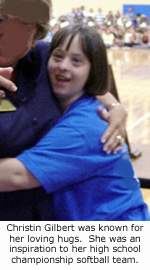
“Patient A”

A 20-year-old patient, identified in New York medical board documents as “Patient A,” was treated by Brigham at his American Medical Pavilion and AB Services of New York November 10 and 11 of 1993. To avoid depersonalizing her, I’ll call her “Millie.”

Millie called Brigham’s office at American Medical Services in Spring Valley, NY, on November 7 or 8, 1993. She made an appointment for an abortion beginning on November 10.

Brigham performed an ultrasound on Millie at about 5 PM on November 10, and told her that she was 26 weeks pregnant.

Although Millie was in the late second or early 3rd trimester, Brigham and his staff provided her with a “fact sheet” for first trimester abortions.

During the examination on November 10, brigham “should have been able to observe that Patient A was 26 weeks pregnant, obese, smoked cigaretts and had unspecified allergies. A practitioner would also have been able to observe that this patient had a very long vagina, a very long cervical canal, and a very small external cervix.” These were all risk factors for abortion and anesthesia or sedation.

He inserted 12 laminaria to dilate her cervix. He also injected digoxin into the fetal heart to start the abortion. Brigham told her to come back the next day to finish the abortion.

Millie returned at about 9 AM. Brigham performed an evacuation procedure to remove the fetus. Millie was under twilight anesthesia for the abortion. She was transferred to the recovery room at about 11 AM.

“While in the recovery room, Patient A bled profusely, vomited and lost consciousness.” Prior to her loss of consciousness, Millie was noted to have been confused and disoriented, with a pulse of 100 at 12:20 PM. By 12:30 PM, Millie’s blood pressure was 90/50 and her pulse was 90. By 12:40, her blood pressure had fallen to 85/50.

During this period, Brigham administered a fast infusion of IV fluids. By 12:50, this brought Millie’s blood pressure up to 110/65, and her pulse down to 85. But at 1:00, Millie’s blood pressure was 100/50 and her pulse was back up to 93. Brigham resuctioned Millie’s uterus and failed to notice any injury.

By 1:30, Millie’s blood pressure had fallen to 70/50, with a pulse of 90. By 2:05, her blood pressure was 90/50, her pulse was 95, and her oxygen saturation was 92%. Her hematocrit had fallen to 29% from a preoperative level of 35%. Brigham administered oxygen via face mask.

Brigham continued to try to figure out what was wrong with Millie. By 2:30, she was “cool, pale, tired and dry… and had urinated on him.” These are signs that a patient is in serious trouble.

Millie’s blood pressure remained low, and her pulse began to climb to 104, 112, 115, and finally 120 at 2:50.

At 2:55, Millie tried to sit up. She experienced dizziness and a gush of blood.

Brigham continued to try to treat Millie in his office until around 3 PM. Her hematocrit was 18%. Brigham finally transferred her to the hospital by ambulance.

Millie was in hypovolemic shock on arrival. Her hematocrit was 9%. She had a cervical laceration extending up into her lower uterus, and her uterine artery had been lacerated. Millie was given 4 units of packed cells, two units of fresh frozen plasma, and 10 units of platelets. She required an emergency hysterectomy.

The medical board specifically faulted Brigham in that he:

* “failed to counsel Patient A appropriately prior to the D&E procedure, or to note such counseling.
* “failed to have appropriate transfer arrangements in place…”
* “failed to recognize the gravity of the laceration in a timely manner.”
* “continued to attempt to repair the laceration in the office after Patient A’s condition required her transfer to a hospital.”
* “failed to recognize that Patient A was in shock.”

The board also noted that Brigham didn’t keep records on Millie during the procedure or immediately thereafter. They were written the day after the abortion, when Millie was hospitalized.

Source: New York Medical Board Allegations (scroll to page 5) and Findings (scroll to bottom of page 18)

Credit; Christina Dunigan

Share on Facebook