Fighting suicidal feelings; What to expect when you reach out

The suicide of Robin Williams has shaken just about everyone, but for those of us who suffer with depression, bipolar disorder, or other mental health issues, it is especially hard. I want to address the difficult topic of suicide from the point of view of someone who has struggled with it. First, I’m going to talk about some reasons why you should ‘t do it. Second, I’m going to walk you through what happens when you reach out for help

There are many, many reasons why a person should not commit suicide. I’m going to talk about just a few.

Reasons you shouldn’t do it.

Suicide is devastating for the people who love you. Any death is tragic, and everyone has loved ones who will mourn their passing. But suicide is so much harder for people to deal with. It brings up such intense emotions of guilt (why didn’t I stop her/him? Why didn’t I see it how depressed she was?) anger (how dare he do that to us) and intense grief. Also, when a person commits suicide, it becomes much more likely that one of their loved ones will do the same. Copycat suicides are a real phenomenon. If you have children, they are 100% more likely to commit suicide sometime in their lives if you do it. Even for people who are not close to you, the suicide rate goes up. You can leave behind a legacy of suicide. If any of your friends struggle with suicidal feelings, it will hit them especially hard.

A book I read once said that suicide is like throwing a hand grenade into a room full of people who know you. You can’t control who will be hurt or killed by the shrapnel.

You might fail at suicide, and things could get a lot worse. The truth is, the majority of suicide attempts fail. You might survive your suicide attempt, and be left with long-term, life altering health problems. Every form of suicide can leave a person permanently damaged rather than dead. Taking pills can destroy your kidneys and liver. Hanging can cause permanent brain damage from lack of oxygen, leaving a person mentally disabled (what callous people call “retarded”) and far worse off than they were before. Jumping can shatter your bones and leave you permanently paralyzed. And guns – let’s not even go there.

There is no form of suicide that is 100% foolproof.

You will never know if things would’ve gotten better. No one knows the future. Things could get better. Especially if you seek help. One thing about depression is that when you are in it, it seems like it will last forever. That’s one of the symptoms of depression, one of the lies it tells you. You tend to believe that you will be miserable for the rest of your life and that suicide is the only way out. For the vast majority of people, that isn’t true.

Reaching out

If you are feeling suicidal, call a friend. If you don’t feel you can do that, call a hotline ( 1-800-273-TALK (8255). Or reach out to chat online http://www.suicidepreventionlifeline.org/. There is also an excellent forum where you can post anonymously about your suicidal feelings and get support. http://suicideforum.com/ It’s an active forum with an online chat room where you can get support for your suicidal feelings and give support to others.

If you are about to do it – if you’re at the point where you feel you can no longer fight your suicidal feelings, when the temptation is overwhelming, and you know you can’t fight anymore – you have to do the bravest thing you may ever have to do in your life. You have to call 911.

This is an intimidating thing. I’m going to walk you through exactly what happens if you call 911 or the police to help yourself, or if someone calls them on your behalf. That way, if you find yourself in the situation, it won’t be quite as scary.

First of all, I have a friend who works as a 911 dispatcher. She told me that the training manual they all study has an entire chapter on dealing with people who call because they feel suicidal. It’s okay to call 911 if you’re feeling suicidal. People do it all the time. The 911 operators are trained as to what to do. The operator will ask you a few questions, do you have a weapon, do you have a plan, etc. – and then she will send someone to come and talk to you.
Police and paramedics will come. They will ask you to come with them to the hospital. You will not be put in handcuffs or a straitjacket. You will not be locked up and put in the back of a police car. The only exception to this is if you threaten the police or become violent towards them. They are not there to arrest you and lock you up – they are there to help you.  As scary as this is, as hard as it can be – if it saves your life, it’s worth it. Think of your loved ones. Think of it as a gift to them and yourself- you are going through this in order to save your life and spare them the pain of losing you.

So what happens next? Well, they’ll take you to the hospital. At the emergency room, they will put you in a room of your own and you will wait for a psychiatric evaluation. The nurses and doctors will check in on you every now and then to make sure you’re safe, and they will probably take blood. This helps them check to see if your depression has a physical cause – for example, a thyroid disorder can cause depression. They may also ask for a urine sample. This is a good time to tell them about any prescription medicines you are taking and any health problems you have.

Here’s a tip- you’ll probably be waiting in the emergency room for a long time. Once they know you’re safe, the doctors and nurses will be busy dealing with people who are having heart attacks, strokes, or who come in with serious injuries. You will have to wait until these people are treated before you are screened. I recommend that before the ambulance drives you to the hospital that you grab a book or something else to keep you occupied. Because it can be hard to sit in the ER for hours with just your own thoughts.

When you are screened, a psychiatrist or psychologist will sit down with you and ask you about your suicidal feelings. It’s a good idea to be honest. After all, you’re getting help, and you won’t get it if you’re not honest. Tell him or her the truth. Some of the questions he will ask you include, do you have a plan to commit suicide? Have you ever attempted before? Do you suffer from any chronic mental health issues? Are you under the care of a counselor or psychiatrist? (If you are they will usually notify them)

The screener may decide that you’re okay to go home. Or, he may think that you need to be somewhere to keep you safe for the next couple of days. If this happens, he or she will offer you a chance to go into an inpatient unit. As long as you are cooperative, you will usually be placed in this unit voluntarily. This means you will be able to sign yourself out as long as they don’t think you’re in imminent danger of committing suicide. Occasionally, if they are really worried, they may give you an ultimatum- as in, we think you are in danger, so you can go in voluntary or if you resist, we will commit you. Go in voluntarily. If you become violent, or if they think you are in so much danger that you need to be watched constantly, they may commit you. This is an extremely scary thing – but even if they do commit you, there are very strict laws about how long you can hold a person without giving them the option to leave on their own. They will not lock you up and throw away the key. It’s unlikely that this will happen if you come in voluntarily, however. It usually only happens to people who are taken in against their will, who just made a serious suicide attempt, or who are violent and abusive toward staff.

It’s a very scary thing to go to a psychiatric hospital. But the truth is, it’s not so terrible. It’s something you can survive and get through, and it might help you. First of all, you can rest assured that no one has to know you were hospitalized unless you tell them. There are very strict laws about this. They won’t tell your parents. They won’t tell your boss. They won’t tell anyone unless you give them written permission to do so. If, while you’re inpatient, someone calls and asks for you, even a close friend or family member, they will tell them that they can’t confirm that you are in the unit. They give out no information about patients unless you sign a waiver saying that they can. If a nurse or mental health worker tells someone you in the unit without your written permission, she or he will be fired and the hospital can be sued. They won’t risk that.

Things that happen in the hospital

You will meet with a psychiatrist. He or she will want probably to put you on medication, probably an antidepressant, if you’re not already on one. Taking psychiatric medication can be very helpful. It will not change your personality, it will merely, in most cases, cause your depression to lift or at least become more manageable. Sometimes it takes a little while to find the right medication, but it can definitely be useful tool in fighting depression. No one has to know you are on psychiatric medication unless you tell them.

You have the right to refuse to go on the medication. Even if they pressure you to agree that you will take it while you are in the hospital, it is always your choice to continue taking it when you get home. No one can force you to be on a medication long-term.

You will go to group therapy. In some hospitals the sessions are mandatory, in others, you can choose whether or not to go. These groups will allow you to talk about the things that brought you to the hospital. They will be led by a psychologist or mental health professional. If you feel you can, you will be given the opportunity to share openly among people who often can relate to the issues you’re going through. You will probably never see these people again, unless you choose to keep in touch with someone, so you can be free to be honest. In other groups, they will teach you about different aspects of fighting depression, anxiety, and other issues. There may be an anger management group, a group on substance abuse, a group on handling suicidal feelings, etc. Some groups may be more helpful to you than others.

You will have a lot of downtime. Between groups, there will be a lot of free time. You can take advantage of the free time by journaling. Journaling can help you get in touch with your emotions and work things out. Usually they have a television on the unit, though since there are so many people there you probably won’t get a choice of what you want to watch. It’s a good idea have a book or two with you to read. You will not be allowed a cell phone, tablet, or other device while in the hospital. They will hold onto them for you until you leave. You can also sleep and get some rest.

The good thing to remember is that, even if your experience of the hospital is absolutely terrible, you won’t be there for long. The average hospital stay is 3 to 6 days. The days of long commitments and locking people up for extended periods of time are over. Nowadays, treatment at hospitals is geared towards getting you out and back to your life as quickly as possible. They will be watching for signs of improvement. Generally speaking, as soon as you can tell them that you no longer feel suicidal, they will let you go. Being in the hospital costs insurance money, and insurance companies don’t like to cover extended stays – sadly, that is another reason why hospital stays tend to be short. Oh speaking of insurance – if you don’t have it, you can still go in the hospital – there are often a lot of different types of financial help offered such as Charity Care, for people in hospitals. And even if you do get stuck with a bill, remember, it’s worth it to save your life.

The other thing that the hospital will do for you is set you up with ongoing mental health treatment. If you don’t already have a therapist, they will find you one. They may tell you where you can get more group therapy, if you find it helpful. They may tell you about support groups you can go to in the community. They will set you up with some kind of long-term treatment so that you can continue fighting your depression outside the hospital. They will not send you out of the hospital unless you feel ready to go and you have a place to go to for ongoing treatment.

This is the basic story of what will happen if you call 911 or friend calls 911 on your behalf. My hope is that if you need to get help, this article will make you more willing to do so. It’s easier when you know what to expect, when you’re not heading off into the unknown.

Reaching out for help is not a sign of weakness. Rather, it is a side of extraordinary bravery and strength. Asking for help does not mean you are a weak person – it means you are strong person. Everyone needs help throughout the life about certain things. Accepting this, and reaching out, is tremendous sign of maturity and courage. Your life is worth fighting for.

Please feel free to repost this article.

Share on Facebook

Planned Parenthood can’t help pregnant woman who wants to keep her baby

Planned Parenthood, which receives millions of dollars from taxpayers every year, offers pregnancy tests. Many women go to Planned Parenthood expecting unbiased counseling, but the vast, vast majority of pregnant women who come to Planned Parenthood leave with an appointment for an abortion. Former Planned Parenthood clinic worker Catherine Adair describes what counseling was like at the Planned Parenthood she worked at, which performed abortions.

“Sarah” was a young woman who went to a Planned Parenthood clinic for a pregnancy test. In her own words:

“My Planned Parenthood experience was 30 years ago and short. I lived in an apartment building across from them. I had just become a Christian, trying to get pregnant. I took my jar of “specimen” over and found out I was pregnant! WOO HOO! They asked how I wanted to deal with the pregnancy, and I said, well, I want to see the doctor and talk about the pregnancy, labor and delivery, ASAP! I was excited.

They said, “Um, you’re KEEPING the baby? We don’t do that here.” I was shocked. I asked for a referral, because we had not lived there long. They didn’t refer to OBs either! WOW!  I was so young, and they were so beside themselves that I would be keeping the baby! (and probably upset that I had wasted their pregnancy test).I learned they aren’t really PLANNING for PARENTHOOD.”

Susan Michelle “Inside Planned Parenthood the only choice that matters is abortion” Bound4life November 23, 2011

Planned Parenthood doesn’t provide services to help pregnant women unless those services are connected to abortion. Usually they cannot even provide referrals to doctors for women who want to carry their pregnancies to term.

Read more women’s stories of counseling at Planned Parenthood and other abortion clinics.

Share on Facebook

Teenagers discuss rising abortion rates in their high school

Pro-life author George Grant interviewed 3 teenagers discussing how abortions among high school students rose when an in school sexual health clinic opened up in their school.

From Grant:

“Milly Washington, Lanita Garza, and Denise Rashad attended high school together in Minneapolis. 2 years ago, the district installed an experimental school-based clinic on their high school campus. “At first I thought it was a real good idea,” Denise told me.

“Yeah. Me too,” Lanita chimed in.

“I mean, there’s been lots of girls that’s left school cause they got in trouble,” said Denise, “and I believed this might help some.”

“But it hasn’t,” Milly said. “All it’s done is make it so gettin’ in trouble is normal now.”

“And with an easy way out,” Denise added.

“Yeah. Abortion. It’s weird, but you know, a couple of years ago, I didn’t know anybody who’d had an abortion,” said Milly. “Now it’s like everybody’s had at least one. Lots have 2. Or even more than that.”

George Grant Grand Illusions: the Legacy of Planned Parenthood (Franklin, Tennessee: Adroit Press, 1988, 1992) 99

Share on Facebook

Young woman aborts baby at 15 weeks, says it’s “God’s plan”

From an article that profiled several abortion patients and had an interview with an abortion doctor, Dr. William Harrison, who had performed thousands of abortions at the time of the article:

15 weeks sonogram
15 weeks sonogram

Amanda hasn’t told her ex-boyfriend that she’s 15 weeks pregnant with his child. She hasn’t told her parents, either, though she lives with them.

“I figured it was my responsibility,” she says.

She regrets having to pay $750 for the abortion, but Amanda says she does not doubt her decision. “It’s not like it’s illegal. It’s not like I’m doing anything wrong,” she says.

Feet of baby aborted at 15 weeks

    “I’ve been praying a lot and that’s been a real source of strength for me. I really believe God has a plan for us all. I have a choice, and that’s part of my plan.”

Stephanie Simon “Offering Abortion, Rebirth” The Los Angeles Times 29 November 2005

Share on Facebook

Stereotypes Wrong About Pro-Lifers Being Male

One author who studied the pro-life movement concluded:

“Pro-choice and pro-life activists do not divide neatly along ethnic, occupational, or even religious lines. At the local level, where activity is strongest, grassroots activists on both sides of the abortion issue are primarily white, middle-class, and female.”

Faye D Ginsburg Contested Lives: the Abortion Debate in an American Community (Berkeley and Los Angeles California: University of California Press, 1989) 6

This study was done in the late 1980s when the Rescue movement was at its height, and more men were involved. Now the movement is even more female. The pro-life movement is more diverse than many people believe. The common pro-choice stereotype that the pro-life  movement is a bunch of men who want to take away all women’s rights is unfounded.

Share on Facebook

Catholic teen works for Planned Parenthood: Human Life Alliance teaches her

Yet another reason why the pro-life message needs to be spread in churches and youth groups – Christians, even Catholics, work for Planned Parenthood too.

One pro-lifer tells of her experience.

“Kristin Windey, HLA (Human Life Alliance) Electronic Outreach coordinator and I had the opportunity to exhibit at the national Catholic Youth Conference held in Indianapolis, Indiana. There were approximately 25,000 attendees from across the nation, most of the world high school age.…

A 16-year-old girl approach the HLA display and was looking at our Planned Parenthood publication. When Kristin engaged her in conversation and offered her our chastity publication, Just for Girls/Just for Guys, the young woman indicated that she was more interested in The Truth about Planned Parenthood and said she worked for Planned Parenthood! Kristin asked if she was Catholic, and the girl said she was and that she and attending the conference with her Catholic youth group.

At that point, Kristin advised her Planned Parenthood does abortions, and the young lady said she knew that but was told by their staff she didn’t have to be in favor of abortion to work for them. She stated she wasn’t involved with abortion but only promoted “safer sex.”… Kristi has a sidewalk counseling background it did an excellent job of explaining to the girl the “business” of Planned Parenthood and how that conflicts with her faith. Kristin also used HLA’s’s publication to show her the development of the preborn child, which totally surprised her.”

“From the Director” Human Life Alliance Winter 2014, page 5

Read more about Planned Parenthood here.

Share on Facebook

When in pregnancy should abortion be allowed?

Professor of theology and ethics at Fuller Theological Seminary (as of 1987) Lewis B Smedes believed that abortion was okay through the 6th week of pregnancy:

“Abortion should be legally permitted during the first 6 weeks of pregnancy. Since no one can reasonably be sure that the fetus is a person at that time.

Abortion should be severely restricted after the first 6 weeks, and through the 12th week, serious defects cannot be found until the 12th week.

Abortion after the 3rd month should be a crime, since by that time a fetus has obviously developed into a functioning human body like a person.”

Lewis B Smedes, Mere Morality (Grand Rapids: Wm. B. Eerdmans Publishing Co., 1983),  143 – 144

Smedes’s distinctions become questionable when we actually look at unborn babies at different stages. What is the exact moment that it becomes wrong to abort a baby after six weeks?

Unborn baby at only 5 to 6 weeks

The baby above is okay to abort, according to Smedes. The baby below is not okay to abort.

6 weeks
6 1/2weeks

The cutoff point of six weeks is an arbitrary distinction picked out of thin air. No earth shattering changes in development happens between six weeks and six days and seven weeks. So many other stages given for when abortion should become illegal are also arbitrary. For example, many people say that abortion should be legal in the first trimester, the first three months, and not afterwards. Here are an unborn baby’s legs at 11 weeks

11 week legs
11 week legs

And here are a baby’s legs at 12

Legs of an unborn baby at 12 weeks

So some people think those babies are ok to abort. But here is the foot of a baby at 14 weeks.

unborn baby's foot at 14 weeks
unborn baby’s foot at 14 weeks

You don’t see a huge difference here either. Nor is there a huge difference between the second and third trimester

26 weeks sonogram of an unborn baby
26 weeks sonogram of an unborn baby (end of 2nd)
28 weeks
28 weeks

You can see facial expressions on each child, even though there is a two-week difference.

Most opinions people have about what the cutoff should be for abortion to be legal become meaningless when you see pictures of unborn babies right before and after that stage. It becomes clear that the only moment, the only beginning point when babies could have rights is either birth or conception. At birth, the baby travels down the woman’s birth canal into the outside world. It is merely a change in location and dependency (although the born baby will still be dependent on his/her mother for an awful lot. It is an incident in the life of a child. Conception, on the other hand, is the moment when that baby comes into existence.  From a scientific standpoint, it is the beginning of life.  Human rights should start when human life begins

Share on Facebook

Director of NARAL Pro-Choice Minnesota: These are “incredibly challenging” times

Linnea House, executive director of NARAL Pro-Choice Minnesota, speaking to about 60 pro-choice activists at an event:

“I’ll be blunt. These are going to be incredibly challenging times for us…And our opponents are organized, they’re funded and they are ready to go.”

ERIC ROPER Abortion foes begin new battle at Capitol; Efforts to restrict abortion gain strength across U.S Star Tribune January 23, 2011

Pro-life activists are passing laws that restrict abortions at record speed over the past three or four years. A recent poll showed that 58% of Americans are against abortion in all or most cases. The tide is turning.

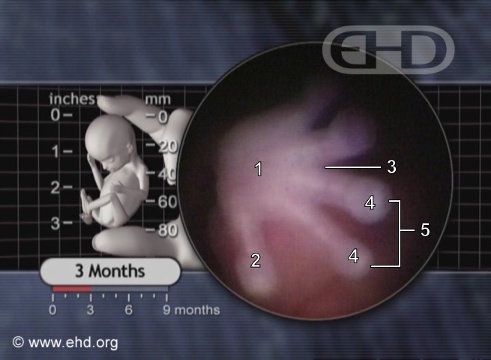
Hand of baby at 3 months
Share on Facebook

Allowing disabled babies to die is par for the course in pediatric hospital

The book All God’s Mistakes: Genetic Counseling in a Pediatric Hospital was written by an author who spent some time in a hospital that specialized in genetic counseling in the care of disabled infants. He discovered that many of the babies who were born with severe disabilities or who were very sick were allowed to die. Here are 2 quotes from the book:

“Here you have this situation, you have this tragedy: it’s terrible, it’s hard to recover from, it’s just miserable, whatever. You have this situation where nature is ready to take its course; but, if you go ahead and intervene, who knows? You may save the baby, which is the last thing anybody really wants in the situation.”

Charles L Bosk All God’s Mistakes: Genetic Counseling in a Pediatric Hospital (Chicago: The University of Chicago Press, 1992) 76

“She [the woman who counseled the parents] reported that the parents had decided not only that they did not want to repair the child’s oomphalecele, but they wanted the child to die, and they were willing to do what they could to hurry that event along. The parents had left orders that the child not be fed. She reported that Berger was very upset with this turn of events… Berger claimed that it was one thing for the physicians and the parents to handle this, and quite another for the nurses who had to deal with the infant every day and would be the ones to watch it starve.”

“Bill [a doctor] reported that the mother was discouraged because today the baby looks good. She was hoping that it would die soon, so seeing it looked healthy really discouraged her.”

77, 80

Share on Facebook

Dr. David Reardon on post-abortion women who work in clinics

A number of former clinic workers have reported that most of the women who worked at abortion clinics had had abortions themselves. David Reardon describes the reasons why aborted women might be drawn to working in clinics and what this means for women who go in for abortions.

“Aborted women who work as counselors are almost invariably victims of a disturbing abortion experience themselves. On one level, they choose to work in clinics in the hope of preventing other women from experiencing the traumas which they had faced and may still be facing. But on a deeper level, they returned to the abortion clinic in the hope of easing the gilts and traumas which they themselves are still experiencing.

For many women who have been deeply disturbed by their own abortion experiences, working as an abortion counselors away of hardening themselves to the wrong unforgettable experiences. By “returning to the scene of the crime,” some women seek to reenact their own abortion decisions through the decisions of others. In this sense, the aborted counselor has a high stake in the final decision of her clients. By watching others choose abortion for the same reasons that she did, she is able to reaffirm the “rightness” of her own decision. In contrast, however, when an aborted counselor witnesses a client suddenly choose against abortion and boldly accept the challenges of an unplanned pregnancy, the counselor may become cynical, ashamed, and envious.

In fact, one abortionist wrote about how the women who worked as abortion counselors in this clinic HAD TO have had abortions. All the better to sell them! Could this explain why some clinic workers pressure women into having abortions? Reardon goes on to say:

Two WEBA women who had worked in counseling or hospital situations that brought them into contact with women seeking abortions have described how immersion in abortion can be soothing to troubled conscience. According to one, “I found that in talking to other women about abortion, their decisions to abort satisfied something in me. It made me feel better about what I had done… [It] strengthened my own decisions to abort.”

Another woman found comfort in being surrounded by people costly repeating pro-abortion rhetoric as justification for their work: “there’s safety in numbers. I didn’t really feel awful about my abortion as long as everyone where I worked was patting me on the back.”

He also says:

“The importance of denying the reality of abortion sheds additional light on why abortion clinics consistently oppose informed consent requirements, especially requirements for discussing the relevant stage of fetal development. In refusing to provide informed consent, abortion providers are obstensibly “protecting” the woman seeking abortion from disturbing and “confusing” facts. But it may also be true that abortion personnel are seeking to protect themselves from the same disturbing facts. The requirement to tell women the facts about fetal development, day after day, would destroy the wall of denial, which holds clinics together. By focusing attention on the unborn, informed consent requirements were not only compel women to consider the moral consequences of their acts, they would also force abortion counselors to face their own moral doubts about abortion.”

David C Reardon Aborted Women: Silent No More (Westchester, Illinois: Crossway books, 1987) 256-257


Share on Facebook