An Australian woman, identified as Genevieve, describes the “counseling” she received in an abortion clinic:
“I collapsed in sheer exhaustion. I told her that I had been outside for hours. I cried hysterically, curled over with my head in my hands on my knees. I said that “I feel that I’m depriving my child of life.” I stopped crying in disbelief when the counselor told me that if I was going to abort that I would have to do it right now. The counselor said, “Look, I’ll give you five minutes to think about it when I come back, I want your answer.” I couldn’t believe it. Now I was going into a state of panic and shock. I could now barely speak… The counselor glared at me, sighed a deep sigh, and impatiently said, “Look, they’re all waiting for you, you know…” They seemed angry at me. They were sick of me and in the end I weakly obeyed their commands.”
Submission to National Health and Medical Research Council, Draft Documents As Services for the Termination of Pregnancy in Australia: a Review, 266 (later titled, “An Information Paper to Termination of Pregnancy in Australia,” and since withdrawn)
Quoted in:
Melinda Tankard Reist Giving Sorrow Words: Women’s Stories of Grief after Abortion (Springfield, IL: Acorn Books, 2007) 181-182
Abortion Rights Coalition of Canada’s (ARCC) Facebook page, posting an article, on their support of sex selection abortion:
“Lessons from India: Here’s an excellent article that explains in detail how the war against sex selection abortion in India contributes to the further oppression of women in many ways. ….
The right of women to do what they feel is best for them in the circumstances they find themselves is sacrificed at the altar of making empty ‘pro-girl’ gestures. …If you are pro-choice, then you cannot start limiting someone else’s choice because it makes you feel uncomfortable.”
So it is perfectly okay for a woman to have an abortion, often an abortion she is pressured into, solely because her baby is a girl. In fact, preventing baby girls for being aborted because they are girls is “oppression of women.” This is like bizarro world, where everything is backwards – where preventing sex discrimination is a form of sex discrimination in itself, and killing girls for being girls is somehow pro-woman.
A proabortion attorney said the following about a law requiring a sonogram to be performed before abortions. The law would also allow a woman to see the sonogram image if she chose
“It’s really about chipping away at the various ways in which abortion care can happen in an effort to make it impossible for women to obtain it.”
Michelle Movahed attorney for the Center for Reproductive Rights, which sued to block the state’s ultrasound law
Robin Marty, Jessica Mason Pieklo Crow After Roe (Brooklyn, New York: ig Publishing, 2013) 91
This completely ignores the fact that ultrasounds are already a routine part of abortion care.
The only way to truly, accurately date a pregnancy is through ultrasound; ultrasound is also needed because an ectopic pregnancy must be ruled out before an abortion is performed. Even if ultrasounds were not a part of routine abortion care, how would requiring one “make it impossible” for women to have an abortion?
The only consequences this law would have would be to make abortion safer and to offer women a chance to get more information about the baby they are about to destroy.
The goal of the law is to change minds and hearts by giving the woman more information about her own body.
Is it better for her to be exposed to ultrasound pictures (from a friend/family member’s pregnancy or her own future pregnancy) after she has the abortion, when it is too late for her to change her mind?
A woman named Maria had an abortion and suffered emotionally afterwards. A year after her abortion, she was so distraught that she called the clinic and set up a follow up appointment. The clinic worker she met with was cold and unkind, and even tried to steer her away from a pro-life group that helps postabortion women, putting political ideology ahead of her patient’s healing.:
“I resent not being told that having an abortion had aftereffects. Late last year I went back to the abortion clinic for counseling. The lady I spoke to made me feel like an idiot when I cried and said I wanted to die. I asked her about [the pro-life group] Women Hurt by Abortion. She said not to contact them. She was not impressed that I rang for counseling so long after my abortion. It was like, “What do you want?” They don’t want to see us again, once we have an abortion.”
Melinda Tankard Reist Giving Sorrow Words: Women’s Stories of Grief after Abortion (Springfield, IL: Acorn Books, 2007) 120
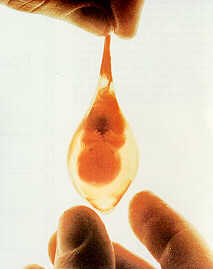
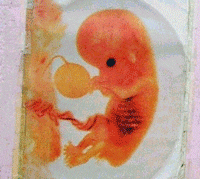
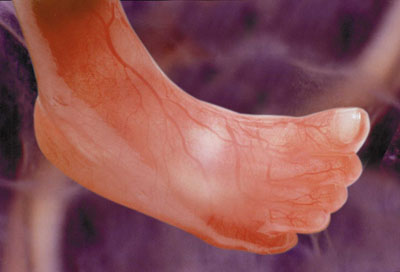
Here are some pictures of unborn babies at different stages of development. I am also going to link to pictures of what these babies look like after an abortion takes their lives.
Abortionist Amos Grunebaum Said the following under oath at the partial-birth abortion ban trial in New York:
“We have been told by grieving counselors to take pictures of all dead fetuses and babies – specifically babies, but also fetuses – so there is a memory of the baby by the mother.”
Testimony of abortionist Dr Amos Grunebaum, National Abortion Federation, et. al. v. Ashcroft, U.S. District Court, Southern District of New York, March 30, 2004.
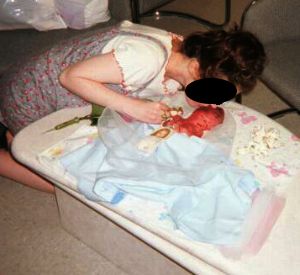
He is referring to the practice of late-term abortionists’ giving “keepsakes” to women who have abortions. These women are offered the chance to hold their babies and “say goodbye” as if it were a natural death or miscarriage. Some of them take photographs with their dead child. Other abortionists have also spoken of this and Dr. George Tiller offered such services in his late term abortion clinic.
The women or couples that do this are usually ones that aborted their babies because the babies would’ve been disabled – in some cases, these children had such severe problems if they would have been stillborn or may have died soon after birth, but in many more cases, the disability was one that the child could’ve lived with.Below is one such picture. It was taken of a woman who now regrets her abortion. Her identity has been obscured, but you can see the body of the baby and her features (the child was a girl). The baby had been diagnosed with cystic fibrosis, a serious illness, But one that can be managed. The average life expectancy for someone with cystic fibrosis is in the early 40s. Perhaps 40 years of life were taken from this baby.
Former abortion clinic worker Rayna Rapp, who herself had aborted a disabled baby, wrote a book where she interviewed men and women going through the process of amniocentesis to detect abnormalities in their babies. She has many quotes from these men and women, some of whom aborted, some of whom did not, in her book, but I would like to present two quotes from the author herself. In these, she talks about the conflicting values between supporting the disabled and aborting them before they are born.
“Over the years of this study, I learned a great deal about two related and tension fraught issues. The first is the need to champion the reproductive rights of women to carry or refuse to carry to term a pregnancy that would result in a baby with a serious disability. The second is the need to support adequate, non-stigmatizing, integrative services for all the children, including disabled children, that women bear. The intersection of disability rights and reproductive rights as paradoxically linked feminist issues has emerged as central to my political and intellectual work.”
In the second quote, she discusses how the technology that is aimed that destroying disabled unborn babies cannot be “neutral”,:
“It is hard to argue for the neutrality of a technology explicitly developed to identify and hence eliminate fetuses with problem-causing chromosomes (and, increasingly, genes): the biomedical and public health interests behind the development and routinization of the technology itself evaluate such fetuses as expendable. Ethicists and counselors are surely right to respond that parents of such potentially atypical fetuses have a right to know as well as not to know about the chromosomal status of their fetus, and to use the information however they may wish, whether that means preparing for the birth of a child with special needs or ending the pregnancy. But the very existence and routinization of the technology implies anything but neutrality. It assumes that scientific and medical resources should be placed in the service of prenatal diagnosis and potential elimination of fetuses bearing chromosome problems.”
Rayna Rapp Testing Women, Testing the Fetus: the Social Impact of Amniocentesis in America (New York: Routledge, 1999) 8, 59
“My husband gave me an ultimatum: go and get an abortion or he would leave. As the sole parent’s pension was an absolute pittance in those days, I felt that I had no choice… Inside myself I was thinking, “Oh, please don’t let this happen – I want to keep this child; I think it will be a boy, a little brother for my daughter. I wish my husband would accept this child too and not make me have it aborted.” Each night when my husband came home from work, I begged him, “Please don’t make me have an abortion. Please don’t make me kill our child. Please, why can’t I just have this baby?”
Their marriage later broke up anyway.
Melinda Tankard Reist Giving Sorrow Words: Women’s Stories of Grief after Abortion (Springfield, IL: Acorn Books, 2007) 25-26
Women being pressured to abort by their partners is very common. In fact, one study shows that 64% of women going in for an abortion had been coerced and were not making the choice completely by their own free will. This is not “choice” like the feminists say. Read more about coerced abortion here.
“When an article I wrote about women’s negative experiences of abortion appeared in The Canberra Times in 1997, a family planning figure hastily wrote in to dismiss postabortion trauma. Similar reactions surfaced in a feminist email discussion about my book that lasted several days. The project was treated with contempt by all but two participants. Someone suggested a quick online collection of “stories of women not hurt by abortion” to be compiled. This reaction unnecessarily pits women’s differing stories against each other and, once again, suggests there is only one authentic experiential reality when it comes to abortion.”
Melinda Tankard Reist, quoted in her book Giving Sorrow Words: Women’s Stories of Grief after Abortion (Springfield, IL: Acorn Books, 2007) 20
From Nightline. Reporter Martin Bashir of ABC news interviews Dr. William Harrison, an abortionist.
DOCTOR WILLIAM HARRISON (PHYSICIAN) My conscience calls me to do abortions because I consider the mother’s life much, much more important than that tiny little blob of tissue.
MARTIN BASHIR (ABC NEWS) (Off-camera) It’s interesting you say it’s a blob of tissue, but as you know after just 21 days, the heart is pumping blood. At 42 days, the child has recordable brain waves. And you are, every day, relentlessly terminating that life, and you’re happy with that?
feet of unborn baby at just seven weeks
DOCTOR WILLIAM HARRISON (PHYSICIAN) Am I happy with it? No, but I’m not distressed about it. I would be a lot more distressed if I could not terminate that life for the patient that that life is going to be a disaster for.
DOCTOR WILLIAM HARRISON I’ve had lots of patients who come in for second, third, fourth, fifth, even one who had nine abortions.
MARTIN BASHIR (ABC NEWS) (Off-camera) Is that really appropriate?
DOCTOR WILLIAM HARRISON (PHYSICIAN) If she needs nine abortions, yeah.
18 year old patient
MARTIN BASHIR (ABC NEWS) (Off-camera) Did you see a photograph of the fetus yesterday?
PATIENT (FEMALE) Yes, I did.
12 weeks
MARTIN BASHIR (ABC NEWS) (Off-camera) What effect did that have?
PATIENT (FEMALE) It made it a little more difficult. I think it made me a little more nervous about it.
MARTIN BASHIR (ABC NEWS) (Off-camera) Did you consider the possibility of perhaps adoption?
PATIENT (FEMALE) I thought about it. But I really thought that that might be even harder going through the whole pregnancy stage and seeing the child and then having to give it away, I just think would really, really tear me up inside.
DOCTOR WILLIAM HARRISON (PHYSICIAN) The most important decision that a woman ever makes is to have a baby. Whether you have an abortion or not is relatively minor. Basically, abortion is a method of birth control. You know, it’s not the best method of birth control. But all it does is stop the birth of a baby that a woman doesn’t want at a time she doesn’t want it.
….
DOCTOR WILLIAM HARRISON (PHYSICIAN) I’ve had one of the most emotionally satisfying careers that I can imagine anyone having. I can’t tell you how satisfying it is, when two weeks after a young woman has come in distraught and thinking that her life is ruined, and she comes back two – two weeks after the abortion and she is a new woman. She’s been given her life back.
MARTIN BASHIR (ABC NEWS) (Off-camera) And for her to be born again, you’ve had to kill the fetus.
DOCTOR WILLIAM HARRISON (PHYSICIAN) Uh-huh. That’s right.
MARTIN BASHIR (ABC NEWS) (Off-camera) And that’s a fair exchange?
DOCTOR WILLIAM HARRISON (PHYSICIAN) That’s a fair exchange.
MARTIN BASHIR “THE ABORTIONIST” Nightline (ABC), 1/11/2006