National Abortion Federation opposes regulations to make abortion safer

Sometimes pro-choice groups oppose commonsense regulations that would make abortion safer. Rachel MacNair described the following in her book:

“When 60 Minutes ran a piece about Hillview abortion clinic in Maryland, showing the women who had been killed and maimed, they made the suggestion that perhaps greater regulation was necessary. To this the head of the National Abortion Federation, Barbara Radford, said, “We want to make sure that women have choices when it comes to abortion services. And if you regulate it too strictly, you then deny women the access to service.”

On the same report, when pro-choice Maryland State Senator Mary Boergers wanted legislation to regulate clinics because of this scandal, she lost pro-choice support. When she acted for all the world as if she believed that “safe and legal” really meant safe, she was called on the carpet. She said that if you ask questions, “they then treat you as if you’re the enemy.”

Rachel M MacNair, PhD. Achieving Peace in the Abortion War (New York: iUniverse, 2009) 113 – 114

Read about terrible conditions in abortion clinics that prompted pro-lifers, to support regulation and pro-choice opposition.

Read about women who died from legal abortions

Read about abortionists who ran filthy, dangerous clinics

Share on Facebook

Arguments for Slavery, Arguments for Abortion

In an anthology of essays by African American pro-life activists, Reverend Walter Hoye compared the arguments used to support abortion to the arguments used to support slavery.

For example:

“In 1867, Buckner Payne, Publisher: “The Negro is not a human being.”

In 1984, Rabbi Wolfe: “A fetus is not a human being.”

*****

In 1900, Professor Charles Carroll: “The Negro is… one of the lower animals.”

In 1985, Dr. Hart Peterson on fetal movement. Summarize that it was: “Like… a primitive animal that’s poked with a stick.”

*****

In 1903, Dr. William English: “The Negro race is… a heritage of organic and psychic debris.”

In 1980 Dr. Mariti Kekomaki: “An aborted baby is just garbage… just refuse.”

*****

Southerners during the time of slavery: The black slaves are property.

In 1986, attorney Lori Andrews, summed up the abortion argument with this statement, “People’s body parts [embryos] are their personal property.”

*****

“Persons Not Property.” Reverend Walter Hoye Doctor Alveda King and Dr.La Verne Tolbert Life at All Costs: an Anthology of Voices from 21st-Century Black Pro-Life Leaders (Xlibris Corporation, 2012) Pages 48 – 49

Below: African-American baby aborted at 20 weeks. Abortion is legal at this time throughout the United States.


Share on Facebook

“You can worry about kid’s later” said Planned Parenthood

From an African-American woman who got pregnant at 19 and decided to go to Planned Parenthood:

7 week feet

“We walked into the clinic and the lobby was empty. I approached the receptionist window and woman handed me paperwork to complete. A little while later, a black woman called my name and she escorted me into her office. She looked over my paperwork and told me I was still young, in school and I could worry about kids later.

This was the only advice and counsel I was given. She certainly did not try and persuade me into waiting a day or two to think about my decision. It was clear in her mind that what was about to take place was not a big deal, and she wanted to make sure I grabbed hold of that same mindset. She then moved me into another room and performed an ultrasound.

I asked her if I could see the screen, and she said, “No.” I asked, “Why not?” She said, “It’s against our policy.” Then she told me, “There’s nothing to see, it’s just tissue.” In that moment I should’ve put my clothes back on and walked out. She never talked with me about fetal development, the baby’s heartbeat, or adoption.

Before I knew it I was quickly swept into a sterile bright white room, greeted by a Filipino woman who asked me to climb onto the table. When the doctor came in, he had a mask on and I could only see his eyes. He told me to relax, I would receive a sedative, and I wouldn’t feel anything, and the procedure would not take long. It did seem as if the entire procedure was less than an hour.

I remember walking into the locker room and seeing at least 10 women sitting next to one another on a long bench. We all looked like zombies… Someone came in the room and offered us juice and cookies. I remember thanking the person and in my comatose state, I said, “You guys are really nice in here, you are treating us so well.”

I was deceived, delusional and out of my mind. I was in the lion’s den, and didn’t even know it.”

….

“I was 34 when I had my first molar/ectopic pregnancy. My OB/GYN told me I also had a lot of scar tissue in my fallopian tubes. Two years later at 36, I had a miscarriage, followed by another molar pregnancy at 37. At 38, I had a partial hysterectomy…

The woman from Planned Parenthood was right about one thing when she said, “You could worry about kids later.” Worry was now the operative word.”

Tegra Little “Worry about Children Later” in Doctor Alveda King and Dr.La Verne Tolbert Life at All Costs: an Anthology of Voices from 21st-Century Black Pro-Life Leaders (Xlibris Corporation, 2012) 126 to 128

Share on Facebook

Most abortions are done between 7 – 12 weeks

Unborn baby at seven weeks

Susan Tew, an Alan Guttmacher spokeswoman(The Alan Guttmacher Institute, is an organization that researches abortion rates. It is affiliated with Planned Parenthood):

Most surgical abortions are done between seven and 12 weeks after a woman misses her period and after tests have confirmed pregnancy.

Mike Stobbe 23 years later, new sparks fueling abortion debate The Florida Times Union, Jan 22, 1996 pA-1

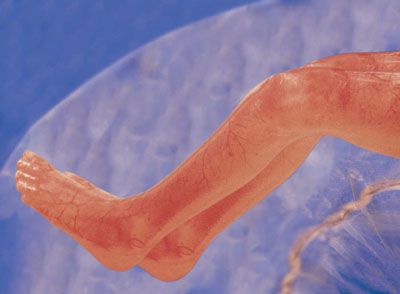
Legs of unborn baby at 12 weeks

Earlier abortions are more common now since RU-486 gives a woman the option to abort a soon she finds out she’s pregnant. The majority of abortions, however, continue to be performed after 6 to 7 weeks


Share on Facebook

Former clinic worker suffers emotionally 10 years later

From one former clinic worker:

“The other day I saw on abortion on TV and I had to run to the bathroom. The guilt of having assisted with abortions is so great 10 years later that I sometimes think I need therapy. The trouble is I don’t know any therapist I could talk to about this.”

Mary Arnold “Abortion Burnout” Catholic Twin Cir., August 1984 3 – 4

Abortion is emotionally harmful even to the providers. To read more about the emotional impact abortions have on those who perform them, go here.

Share on Facebook

Abortion clinic counselor upset with woman who doesn’t want abortion

One woman who went in for an abortion tells her story:

“During the pre-abortion group counseling, each girl was asked to tell the others whose choice it was to have the abortion. All the girls had said it was their choice, but I said that I wanted to have my baby but my boyfriend wanted me to have the abortion. I didn’t want marriage, though – I wasn’t ready for that. The counselor seemed quite upset with me and plainly told me that I was being “romantic,” while my boyfriend was being “realistic.” How could wanting to give birth to my baby be romantic? I knew it wouldn’t be peaches and roses, but the counselor had no right to put me down like that, either. It seems to me that these people are so involved in fighting for abortions that they forget to look at the young girls and the baby’s needs.””

She had the abortion, and later both she and her boyfriend came to regret it deeply.

David C Reardon Aborted Women: Silent No More (Westchester, Illinois: Crossway books, 1987) 279

Share on Facebook

Abortion does not present simple solutions

From one abortion clinic worker on abortion patients:

“What they think are simple solutions are not as simple as they think. They can die, they can become sterile, and they can have many other complications. That unfortunately is the biggest evil abortions.”

Magda Denes, PhD. In Necessity and Sorrow: Life and Death in an Abortion Hospital (New York: Basic Books inc 1976) 232

Read more about abortion’s risks here


Share on Facebook

Psychiatrist comments on $100 appointments for legal abortions

6-7 weeks

Before Roe Vs Wade, some states allowed abortion only if a psychiatrist verified that a woman needed one for her emotional well being. Most psychiatrists were willing to sign a paper saying a woman was suicidal after an $100 appointment, enabling her to abort legally. But according to Dr. Seymour Halleck, a psychiatrist from Wisconsin and supporter of legalizing abortion:

“No psychiatrist, if he is honest with himself… can… describe any scientific criteria that enable him to know which women should have her pregnancy terminated, and which should not. When he recommends an abortion, he usually lies. It is a kind lie, dishonesty intended to make the world a little better, but it is still a lie.”

David C Reardon Aborted Women: Silent No More (Westchester, Illinois: Crossway books, 1987) 167

Studies have shown that women who have abortions are more likely to suffer emotional problems and even to commit suicide. Read about some of these studies here.  


Share on Facebook

Hundreds of patients experience distress

From one doctor:

“Since abortion was legalized, I have seen hundreds of patients who’ve had the operation. Approximately 10% expressed very little or no concern… Among the other 90% there were all shades of distress, anxiety, heartache, and remorse.”

Ann Saltenberger Every Woman Has a Right to Know the Dangers of Legal Abortion (Glassboro, New Jersey: Air Plus Enterprises, 1982)140

Share on Facebook

A conspiracy of silence

A British surgeon who opposed legal abortion said:

“There has been almost a conspiracy of silence and declaring its [abortion’s] risks. Unfortunately, because of emotional reactions to legal abortion, well-documented evidence from countries with vast experience of it receives little attention in either the medical or lay press. This is medically indefensible when patients suffer as a result… The termination of pregnancy is neither as simple nor safe as some of advocates of abortion on demand would have the public believe.”

John and Barbara Willke Handbook on Abortion (Cincinnati: Hayes Publishing Company, Inc., 1979) 96 quoted from Doctor Thomas Hilger’s “the Medical Hazards of Legal Induced Abortion” in Abortion and Social Justice Editor’s Thomas W Hilger’s and Dennis J Horan (New York: Sheed and Ward, 1972)

Read more about abortion’s risks (studies)

Read about abortion malpractice

Read about women who died from legal abortions


Share on Facebook