Women & Men Oppose Abortion in Almost Equal Numbers, Poll Says

Commenting on the “war on women” rhetoric of Planned Parenthood and other pro-abortion organizations:

“One of the central myths in American politics is that women are more pro-choice than men,” Karen Kaufman, an associate professor at the University of Maryland who has researched the gender gap, told Yahoo News.

In 2011, 59 percent of men and 56 percent of women said in a Gallup poll that abortion should be legal in no circumstances or only in a few.

Men and women are much more divided on the issue of war (women oppose military interventions) and the role of government (women are more wary of federal spending cuts) than on abortion.”

Liz Goodwin “Three myths about women voters that wouldn’t go away in 2012” Yahoo News November 6, 2012 


Share on Facebook

Abortionist: abortions at 26 weeks are “not unusual”

Dr. Leroy Carhart, who sends women to his Germantown, Maryland clinic to evade late-term bans in other states, was caught on tape speaking to the frequency of elective late term abortions. The women who was asking the questions was 26 weeks along:

WOMAN: [Seeking elective abortion at 26 weeks] So you don’t see a lot of women like me?
CARHART: Well, saw four this week, so.
WOMAN: Ok. At 26 weeks?
CARHART: Yeah.
WOMAN: Wow.
CARHART: Or more.
WOMAN: All right.
CARHART : Or more.
WOMAN: So I’m not unusual?
CARHART: No not at all.

Marjorie Dannenfelser Most late-term abortions are elective The Hill’s Congress Blog 10/15/13

This quote is from an undercover Live Action video.See this video and others here.

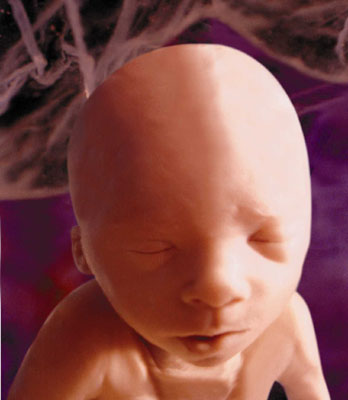
Unborn baby at 24 weeks
Share on Facebook

Woman calls her baby a child, aborts anyway

From the book Abortion: a Positive Decision:

“There was a window of time when we decided to have the child. It was beautiful, I felt so at peace, I had never felt that way before. I had always struggled to take care of myself, and suddenly that was 2nd to this child. A child by a man who I love very much, so it was a real beautiful thing. It lasted about a week and half, and then reality began to set in. I had to decide at that point that if I am going to keep this baby, then I have to start making changes in my life. I have to start telling my work and my family and the university and on and on. I began to see the implications of keeping the baby, that I would continue to work for low wages, if I could work at all, and he would continue to work for low wages.

What helped me make the decision the most was we literally put it down on paper. We said this is what we want, if we keep the baby, if we don’t keep the baby. We decided it would be much better if we could wait. Waiting was a much better choice. It just seems that obvious. It’s been a very difficult thing, because of my feelings for him and my feelings for the baby. But I don’t regret it. In the long run it has been good. I will finish my program and we’ll buy a house…”

Patricia Launneborg Abortion: a Positive Decision (New York: Bergin & Garvey, 1992) 35 – 36

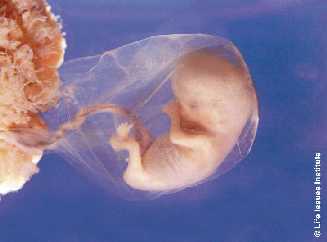
It is a pity that this woman had an abortion even though she acknowledges that she was pregnant with a “child.” The reason she gives, are they really reasons to kill a baby? The baby below is 8 weeks old, right around the time when most abortions are performed. Was her abortion justified?

8weekbluebackground

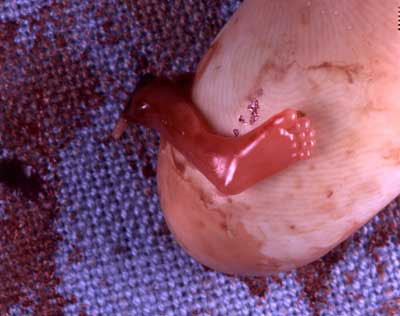
Below is a picture of the foot of an 8-week-old aborted baby, left behind after the suction tore the child apart:

abort8w10

Share on Facebook

Pro-choice author: quality of abortion services is “questionable”

Pro-choice author Carole Joffe interviewed clinic workers for a book she was writing. She said the following:

 “Though at the time of this study about 20 facilities offered abortion services in the metropolitan area in which Urban [the name the author gave to the abortion clinic featured in her book] is located, the clinic’s most immediate reference group was a group of four or five other clinics that resembled Urban in that they were also freestanding facilities that were private and nonprofit. Indeed, one of the factors that linked the small group was the common conviction that in some of the other abortion facilities – for example, certain hospitals and for-profit clinics – the quality of abortion services offered was questionable.

Carole Joffe The Regulation of Sexuality: Experiences of Family-Planning Workers (Philadelphia: Temple University Press, 1986) 50

Share on Facebook

Fighting suicidal feelings; What to expect when you reach out

The suicide of Robin Williams has shaken just about everyone, but for those of us who suffer with depression, bipolar disorder, or other mental health issues, it is especially hard. I want to address the difficult topic of suicide from the point of view of someone who has struggled with it. First, I’m going to talk about some reasons why you should ‘t do it. Second, I’m going to walk you through what happens when you reach out for help

There are many, many reasons why a person should not commit suicide. I’m going to talk about just a few.

Reasons you shouldn’t do it.

Suicide is devastating for the people who love you. Any death is tragic, and everyone has loved ones who will mourn their passing. But suicide is so much harder for people to deal with. It brings up such intense emotions of guilt (why didn’t I stop her/him? Why didn’t I see it how depressed she was?) anger (how dare he do that to us) and intense grief. Also, when a person commits suicide, it becomes much more likely that one of their loved ones will do the same. Copycat suicides are a real phenomenon. If you have children, they are 100% more likely to commit suicide sometime in their lives if you do it. Even for people who are not close to you, the suicide rate goes up. You can leave behind a legacy of suicide. If any of your friends struggle with suicidal feelings, it will hit them especially hard.

A book I read once said that suicide is like throwing a hand grenade into a room full of people who know you. You can’t control who will be hurt or killed by the shrapnel.

You might fail at suicide, and things could get a lot worse. The truth is, the majority of suicide attempts fail. You might survive your suicide attempt, and be left with long-term, life altering health problems. Every form of suicide can leave a person permanently damaged rather than dead. Taking pills can destroy your kidneys and liver. Hanging can cause permanent brain damage from lack of oxygen, leaving a person mentally disabled (what callous people call “retarded”) and far worse off than they were before. Jumping can shatter your bones and leave you permanently paralyzed. And guns – let’s not even go there.

There is no form of suicide that is 100% foolproof.

You will never know if things would’ve gotten better. No one knows the future. Things could get better. Especially if you seek help. One thing about depression is that when you are in it, it seems like it will last forever. That’s one of the symptoms of depression, one of the lies it tells you. You tend to believe that you will be miserable for the rest of your life and that suicide is the only way out. For the vast majority of people, that isn’t true.

Reaching out

If you are feeling suicidal, call a friend. If you don’t feel you can do that, call a hotline ( 1-800-273-TALK (8255). Or reach out to chat online http://www.suicidepreventionlifeline.org/. There is also an excellent forum where you can post anonymously about your suicidal feelings and get support. http://suicideforum.com/ It’s an active forum with an online chat room where you can get support for your suicidal feelings and give support to others.

If you are about to do it – if you’re at the point where you feel you can no longer fight your suicidal feelings, when the temptation is overwhelming, and you know you can’t fight anymore – you have to do the bravest thing you may ever have to do in your life. You have to call 911.

This is an intimidating thing. I’m going to walk you through exactly what happens if you call 911 or the police to help yourself, or if someone calls them on your behalf. That way, if you find yourself in the situation, it won’t be quite as scary.

First of all, I have a friend who works as a 911 dispatcher. She told me that the training manual they all study has an entire chapter on dealing with people who call because they feel suicidal. It’s okay to call 911 if you’re feeling suicidal. People do it all the time. The 911 operators are trained as to what to do. The operator will ask you a few questions, do you have a weapon, do you have a plan, etc. – and then she will send someone to come and talk to you.
Police and paramedics will come. They will ask you to come with them to the hospital. You will not be put in handcuffs or a straitjacket. You will not be locked up and put in the back of a police car. The only exception to this is if you threaten the police or become violent towards them. They are not there to arrest you and lock you up – they are there to help you.  As scary as this is, as hard as it can be – if it saves your life, it’s worth it. Think of your loved ones. Think of it as a gift to them and yourself- you are going through this in order to save your life and spare them the pain of losing you.

So what happens next? Well, they’ll take you to the hospital. At the emergency room, they will put you in a room of your own and you will wait for a psychiatric evaluation. The nurses and doctors will check in on you every now and then to make sure you’re safe, and they will probably take blood. This helps them check to see if your depression has a physical cause – for example, a thyroid disorder can cause depression. They may also ask for a urine sample. This is a good time to tell them about any prescription medicines you are taking and any health problems you have.

Here’s a tip- you’ll probably be waiting in the emergency room for a long time. Once they know you’re safe, the doctors and nurses will be busy dealing with people who are having heart attacks, strokes, or who come in with serious injuries. You will have to wait until these people are treated before you are screened. I recommend that before the ambulance drives you to the hospital that you grab a book or something else to keep you occupied. Because it can be hard to sit in the ER for hours with just your own thoughts.

When you are screened, a psychiatrist or psychologist will sit down with you and ask you about your suicidal feelings. It’s a good idea to be honest. After all, you’re getting help, and you won’t get it if you’re not honest. Tell him or her the truth. Some of the questions he will ask you include, do you have a plan to commit suicide? Have you ever attempted before? Do you suffer from any chronic mental health issues? Are you under the care of a counselor or psychiatrist? (If you are they will usually notify them)

The screener may decide that you’re okay to go home. Or, he may think that you need to be somewhere to keep you safe for the next couple of days. If this happens, he or she will offer you a chance to go into an inpatient unit. As long as you are cooperative, you will usually be placed in this unit voluntarily. This means you will be able to sign yourself out as long as they don’t think you’re in imminent danger of committing suicide. Occasionally, if they are really worried, they may give you an ultimatum- as in, we think you are in danger, so you can go in voluntary or if you resist, we will commit you. Go in voluntarily. If you become violent, or if they think you are in so much danger that you need to be watched constantly, they may commit you. This is an extremely scary thing – but even if they do commit you, there are very strict laws about how long you can hold a person without giving them the option to leave on their own. They will not lock you up and throw away the key. It’s unlikely that this will happen if you come in voluntarily, however. It usually only happens to people who are taken in against their will, who just made a serious suicide attempt, or who are violent and abusive toward staff.

It’s a very scary thing to go to a psychiatric hospital. But the truth is, it’s not so terrible. It’s something you can survive and get through, and it might help you. First of all, you can rest assured that no one has to know you were hospitalized unless you tell them. There are very strict laws about this. They won’t tell your parents. They won’t tell your boss. They won’t tell anyone unless you give them written permission to do so. If, while you’re inpatient, someone calls and asks for you, even a close friend or family member, they will tell them that they can’t confirm that you are in the unit. They give out no information about patients unless you sign a waiver saying that they can. If a nurse or mental health worker tells someone you in the unit without your written permission, she or he will be fired and the hospital can be sued. They won’t risk that.

Things that happen in the hospital

You will meet with a psychiatrist. He or she will want probably to put you on medication, probably an antidepressant, if you’re not already on one. Taking psychiatric medication can be very helpful. It will not change your personality, it will merely, in most cases, cause your depression to lift or at least become more manageable. Sometimes it takes a little while to find the right medication, but it can definitely be useful tool in fighting depression. No one has to know you are on psychiatric medication unless you tell them.

You have the right to refuse to go on the medication. Even if they pressure you to agree that you will take it while you are in the hospital, it is always your choice to continue taking it when you get home. No one can force you to be on a medication long-term.

You will go to group therapy. In some hospitals the sessions are mandatory, in others, you can choose whether or not to go. These groups will allow you to talk about the things that brought you to the hospital. They will be led by a psychologist or mental health professional. If you feel you can, you will be given the opportunity to share openly among people who often can relate to the issues you’re going through. You will probably never see these people again, unless you choose to keep in touch with someone, so you can be free to be honest. In other groups, they will teach you about different aspects of fighting depression, anxiety, and other issues. There may be an anger management group, a group on substance abuse, a group on handling suicidal feelings, etc. Some groups may be more helpful to you than others.

You will have a lot of downtime. Between groups, there will be a lot of free time. You can take advantage of the free time by journaling. Journaling can help you get in touch with your emotions and work things out. Usually they have a television on the unit, though since there are so many people there you probably won’t get a choice of what you want to watch. It’s a good idea have a book or two with you to read. You will not be allowed a cell phone, tablet, or other device while in the hospital. They will hold onto them for you until you leave. You can also sleep and get some rest.

The good thing to remember is that, even if your experience of the hospital is absolutely terrible, you won’t be there for long. The average hospital stay is 3 to 6 days. The days of long commitments and locking people up for extended periods of time are over. Nowadays, treatment at hospitals is geared towards getting you out and back to your life as quickly as possible. They will be watching for signs of improvement. Generally speaking, as soon as you can tell them that you no longer feel suicidal, they will let you go. Being in the hospital costs insurance money, and insurance companies don’t like to cover extended stays – sadly, that is another reason why hospital stays tend to be short. Oh speaking of insurance – if you don’t have it, you can still go in the hospital – there are often a lot of different types of financial help offered such as Charity Care, for people in hospitals. And even if you do get stuck with a bill, remember, it’s worth it to save your life.

The other thing that the hospital will do for you is set you up with ongoing mental health treatment. If you don’t already have a therapist, they will find you one. They may tell you where you can get more group therapy, if you find it helpful. They may tell you about support groups you can go to in the community. They will set you up with some kind of long-term treatment so that you can continue fighting your depression outside the hospital. They will not send you out of the hospital unless you feel ready to go and you have a place to go to for ongoing treatment.

This is the basic story of what will happen if you call 911 or friend calls 911 on your behalf. My hope is that if you need to get help, this article will make you more willing to do so. It’s easier when you know what to expect, when you’re not heading off into the unknown.

Reaching out for help is not a sign of weakness. Rather, it is a side of extraordinary bravery and strength. Asking for help does not mean you are a weak person – it means you are strong person. Everyone needs help throughout the life about certain things. Accepting this, and reaching out, is tremendous sign of maturity and courage. Your life is worth fighting for.

Please feel free to repost this article.

Share on Facebook

Abortion as a back up for birth control

Pro-choice British doctor David Baird, who championed the abortion pill:

“I believe that abortion is needed is a backup where contraception fails.”

Etienne–Emile Baulieu The “Abortion Pill” (New York: Simon & Schuster, 1990) 111

This is a little bit of honesty from a pro-choice activist. Most of the time, pro-choicers say that abortion is an agonizing decision and not a form of birth control for women.

9 – 10 weeks
9 – 10 weeks

Over 40% of abortions happen at this time or later.

Here is part of what is left after an abortion at 9 weeks.

abort9w5

Share on Facebook

Breast cancer survivor’s message to women considering abortion

Marie tells her story:

To anyone who is pregnant, young or older and not sure what to do, I urge you and beg you to read my true story. Maybe you’re not pregnant and just reading this. Feel free to pass this on either way. When I was 20 years old, I became pregnant and like many, I was scared and not sure what to do. I listened to family members who told me that I had my whole life ahead of me and that having the baby would “ruin” my life. One family member even told me that I would get big and fat, that nobody (including my boyfriend), would want to be with me and would go elsewhere.

I had an ultrasound at only 5 weeks along and could clearly see the heart beat on the ultrasound screen, as small as it was. I was touched by this and so was my mom (grandma), witnessed it as well. However, as time went on, my anxiety, uncertainty, and indecisiveness grew. When I was close to 10 weeks along, I saw another ob/gyn whom a relative recommended who performed abortions on a regular basis. She let me hear the baby’s heartbeat loud and clear, telling me that the heart beat sounded healthy for unborn babies of this age in the womb. I still could not believe in it and was very overwhelmed. She told me that the time was very close to where I needed to decide whether or not to have an abortion since I was getting close to the end of the 1st trimester and the baby was very much developed, despite he/she being about two to three inches in length.

My boyfriend at the time wanted the baby. He would lay his head on my stomach and cry, saying things like, “I’m trying my best to save you.” He knew I was very overwhelmed and stressed and was having a very tough time making a decision. He really wanted to be a dad. On January 16, 1996, a relative who felt abortion was the “right” thing to do drove me to the clinic. I was crying the whole way there out of guilt and fear. We first got to a clinic and found out we were at the wrong place. I was still crying as I noticed a very pregnant woman announcing that she was pregnant with twins to someone. I felt then by the delay of arriving at the wrong place that this was one more sign I should not go through with it but…the increasing fear and anxiety of having a baby and the unknown of it all took over once again and we headed to the other place which was a surgical center. I sat in the waiting room and cried. My relative told me comfortingly, “I’m telling you, this is the most loving and caring decision you could make. The quality of life is as important as life itself.” Soon they wheeled me in on a gourney, me still being clearly emotional and in tears. Regardless, none of the staff or the doctor asked if I was sure I wanted to go through with this. Had they asked me, I would have said, “no” and walked out.

I was soon in the operating room. I remember seeing clear coiled tubes on a table which my unborn baby would be dismembered and sucked through and I heard cheerful music being played, as if it were just another routine “surgery” about to be performed. I woke up later in the recovery room feeling very drugged and almost in disbelief that my baby was gone. A part of me had wondered if maybe they could have made a mistake and I still had my baby inside of me somehow. When I had to wear pads throughout the day due to the typical bleeding that takes place after an abortion, the reality of the permanent decision I made became all too real.

Meantime, years passed and I discovered something else I least expected which made me realize abortion can kill or harm more than just an unborn baby. A year ago I was diagnosed with breast cancer. I had surgery and radiation and declined chemo, as well as an estrogen receptor blocking drug called tamoxifen because both of these things can damage or destroy fertility and eggs. Being that I am in my late 30’s with no children, I just couldn’t see myself risking this. I’ve learned that even with fertility preserving methods such as freezing eggs, success rates are not very high so I made the decision not to go with all recommended treatments.

I don’t care what the doctors may tell you or may not want to tell you, abortion can greatly increase the risk of breast cancer. My type was lobular hormonal receptor positive and there are empirical scientific articles supported by research out there that clearly state there is a correlation between abortion and breast cancer because when a pregnancy is suddenly interrupted, there are changes in breast cells that take place because the cells are originally preparing to produce milk and the process is suddenly stopped, leading to the risk of irregular cell growth (cancer). These are not studies that are on religious sites or pro life sites. THESE ARE SCIENTIFIC ARTICLES that most doctors want to brush off. Don’t get me wrong, different factors can cause breast cancer and people can get it anyhow, but more than half the people who get it are much older than I and when you hear about younger people getting breast cancer, you really have to examine the situation and be educated about the abortion breast cancer link. I’m speaking from my own experience (and others’ out there). My experience speaks for itself. Keep in mind, I never drink, do drugs, etc, and have always tried to have a healthy lifestyle.

It’s an understatement to say that I regret my decision. Not only did I take an innocent unborn life, but part of my life was robbed as well. My child will never get to call me mom or blow out his/her birthday candles. He/she never had the chance to live because someone else chose for that baby. My child would have been 18 years old this August and I’m 38 now with no children. The father of my baby in heaven has since married and states he will probably never have the opportunity to have children again. I have not tried to get pregnant due to my career not being finished and my relationship situation being up in the air. I’ve never wanted to have a child out of wedlock and wanted to make sure that if I am blessed enough to become pregnant again, I want it to be the right situation. However, it’s reality that someone in their late 30’s has a much lower fertility rate than in their 20’s or early 30’s. Eggs age no matter what and in general, pregnancy is more difficult to achieve and maintain even if not impossible.

Not a day goes by that I don’t think of my child and what he/she would have looked like or been like personality wise. I always remember the August due date. Please know that there is a beating heart at only 3 weeks along and people don’t even know they are pregnant until way past then. Not only do I have to live with my decision but I also have the new health concern and threat of the breast cancer returning and having to wonder if it will rob my life too soon. If it weren’t for the abortion, there is a very high chance this concern would have never had to enter my mind. My story is proof that abortion can very well go beyond killing an unborn child…it can also haunt you later with a serious health threat (and possibly your life) down the road. I also have to now be concerned that with a possible future pregnancy, my hormone levels will go way up, possibly putting my risk of cancer recurrence very high. Not fun to have to worry about this and certainly not worth it!!!!!!!! Although it would not replace my unique child in heaven, I pray to be blessed with another baby and that I will be given another chance to have a baby in this life, living a long life with that child.

In closing, in memory of my child, I will share my story with as many as possible, in hopes they will take my story to heart and help to save unborn babies’ lives as more people choose against abortion. Please be aware that there are millions of people who cannot conceive and are on long wait lists for adoption, while tons of unborn babies are killed and devalued through abortion each minute. Please hear me, please trust me, abortion is not the easy way out! The reality of the decision will come back to haunt you later in life, (if not right away), emotionally and/or health wise!!!!!!!!!!!!!

Please don’t hesitate to contact me at caremints@aol.com and I will be there for you. Thanks for reading my story!!!

**************************************************************

Here are a list of studies that show that abortion increases the risk of breast cancer. They are in chronological order:

Segi M, et al. An epidemiological study on cancer in Japan. GANN. 48 1957;1–63.

Watanabe H, et al. Epidemiology and clinical aspects of breast cancer. [in Japanese], Nippon Rinsho 26, no. 8. 1968;1843–1849.

Dvoyrin VV, et al. Role of women’s reproductive status in the development of breast cancer. Methods and Progress in Breast cancer Epidemiology Research Tallin 1978;53-63.

Pike MC, et al. Oral contraceptive use and early abortion as risk factors for breast cancer in young women. Br J Cancer 43, no. 1. 1981;72-6.

Nishhiyama, F. The epidemiology of breast cancer in Tokushima prefecture. Shikoku Ichi 1982; 38:333-43 (in Japanese).

Brinton LA, et al. Reproductive factors in the etiology of breast cancer. Br J Cancer 47, no. 6. 1983:757-762.

Le M-G, Bachelot A, et al. Oral contraceptive use and breast or cervical cancer: Preliminary results of a case-control study In: Wolff J-P, Scott JS, eds. Hormones and sexual factors in human cancer aetiology. Amsterdam: Elsevier 1984:139-47.

Hirohata T, et al. Occurrence of breast cancer in relation to diet and reproductive history: a case-control study in Fukuoka, Japan. Natl Cancer Inst Monographs 69 1985:187-90.

LaVecchia C, et al. General epidemiology of breast cancer in northern Italy. Intl J of Epidemiol. 1987;16 3:347-355.

Ewertz M, et al. Risk of breast cancer in relation to reproductive factors in Denmark. Br J Cancer 58, no. 1 1988:99-104.

Luporsi E. (1988), in Andrieu N, Duffy SW, Rohan TE, Le MG, Luporsi E, Gerber M, Renaud R, Zaridze DG, Lifanova Y, Day NE. Familial risk, abortion and their interactive effect on the risk of breast cancer—a combined analysis of six case-control studies. Br J Cancer 1995;72:744-751.

Zaridze DG. (1988) in Andrieu N, Duffy SW, Rohan TE, Le MG, Luporsi E, Gerber M, Renaud R, Zaridze DG, Lifanova Y, Day NE. Familial risk, abortion and their interactive effect on the risk of breast cancer—a combined analysis of six case-control studies. Br J Cancer 1995;72:744-751.

Rosenberg L, et al. Breast cancer in relation to the occurrence and the time of the induced and spontaneous abortion. Amer J Epidemiol 127, no. 5 1988:981-989.

Howe HL, et al. Early abortion and breast cancer risk among women under age 40. Intl J Epidemiol 18, no 2 1989:300-4.

Remennick L. Reproductive patterns in cancer incidence in women: A population based correlation study in the USSR. Intl J Epidemiol 1989 (18) 3:498-510.

Adami HO, et al. Absence of association between reproductive variables and the risk of breast cancer in young women in Sweden and Norway. Br J Cancer 62, no 1 1990:122–6.

Laing AE, et al. Breast cancer risk factors in African-American women: The Howard University tumor registry experience. J Natl Med Assoc 85 1993:931-939.

Andrieu N, Clavel F, Gairard B, Piana L, Bremond A, Lansac J, Flamant R, Renaud R. Familial risk of breast cancer and abortion. Cancer Detect Prevent 1994;18(1):51-55.

Daling JR, et al. Risk of breast cancer among young women: relationship to induced abortion. J Natl Cancer Inst 86, no. 21 1994;1584-92.

Laing AE, et al. Reproductive and lifestyle factors for breast cancer in African-American women. Gent Epidemiol 1994;11:A300.

White E, et al. Breast cancer among young US women in relation to oral contraceptive use. J Natl Cancer Inst 1994;86:505-14.

Andrieu N, Duffy SW, Rohan TE, Le MG, Luporsi E, Gerber M, Renaud R, Zaridze DG, Lifanova Y, Day NE. Familial risk, abortion and their interactive effect on the risk of breast cancer—a combined analysis of six case-control studies. Br J Cancer 1995;72:744-751.

Bu L, et al. Risk of breast cancer associated with induced abortion in a population at low risk of breast cancer. Amer J Epidemiol 141 1995;S85.

Lipworth L, et al. Abortion and the risk of breast cancer: a case-control study in Greece. Intl J Cancer 61, no. 2 1995;181-4.

Rookus MA, et al. Breast Cancer risk after an induced abortion, a Dutch case-control study. Amer J Epidemiol 1995;141:S54 (abstract 214).

Daling JR, Brinton LA, Voigt LF, et al. Risk of breast cancer among white women following induced abortion. Amer J Epidemiol 1996;144:373-380.

Newcomb PA, et al. Pregnancy termination in relation to risk of breast cancer. J Amer Med Assoc 275, no. 4 1996:283-287.

Rookus MA, van Leeuwan FE. Induced abortion and risk for breast cancer: reporting (recall) bias in a Dutch case-control study. J Natl Cancer Inst 1996;88:1759-1764.

Talamini, R, et al. The role of reproductive and menstrual factors in cancer of the breast before and after menopause. European J Cancer 32, no. 2 1996:303-310.

Tavani A, La Vecchia C, Franceschi S, Negri E, D’avanao B, Decarli A. Abortion and breast cancer risk. Intl J Cancer 1996;65:401-05.

Wu AH, et al. Menstrual and reproductive factors and risk of breast cancer in Asian-Americans. Br J Cancer 73, no. 5 1996:680-6.

Melbye M, et al. Induced abortion and the risk of breast cancer. N Engl J Med 336, no. 2. 1997:81-85.

Palmer J. Induced and spontaneous abortion in relation to risk of breast cancer. Cancer Causes and Control 8, no. 6 1997:841-849.

Fioretti F. Risk factors for breast cancer in nulliparous women. Br J Cancer 1999 78 (11/12) 1923-1928.

Marcus, PM, et al. Adolescent reproductive events and subsequent breast cancer risk. Amer J Public Health 89, no. 8 1999:1244-1247.

Lazovich D, et al. Induced abortion and breast cancer risk.Epidemiol 11, no. 1 2000:76-80.

Robertson C, et al. The association between induced and spontaneous abortion and risk of breast cancer in Slovenian women aged 25-54. Breast 2001;10:291-298.

Sanderson M, et al. Abortion history and breast cancer risk: Results from the Shangai Breast Cancer Study. Intl J Cancer 96, no. 6 2001:899-905.

Ye Z, et al. Breast cancer in relation to induced abortions in a cohort of Chinese women. Br J Cancer 87, no. 9. 2002:976.

Becher H, Schmidt S, Chang-Claude J. Reproductive factors and familial predisposition for breast cancer by age 50 years. A Case control family study for assessing main effects and possible gene-environment interaction. Intl J Epidemiol 2003;32:38-50.

Mahue-Giangreco M, Ursin G, Sullivan-Halley J, Bernstein L. Induced abortion, miscarriage, and breast cancer risk of young women. Cancer Epidemiol Biomarkers & Prev 2003;12:209-214.

Meeske K, et al. Impact of reproductive factors and lactation on breast carcinomas in situ. Intl J Cancer 2004 110:103-109.

Palmer JR, et al. A prospective study of induced abortion and breast cancer in African-American women. Cancer Causes & Control 15, no. 2 2004:105-11.

Rosenblatt K. Induced abortions and the risk of all cancers combined and site-specific cancers in Shanghai. Cancer Causes and Control 17, no. 10 2006:1275-1280.

Tehranian N, et al. The effect of abortion on the risk of breast cancer. Iranian study presented at a conference at McMaster University. Available at:http://www.hdl.handle.net/10755/163877.

Naieni K, et al. Risk factors of breast cancer in north of Iran: a case-control in Mazandaran Province. Asian Pacific J Cancer Prev 8, no. 3 2007:395-8.

Henderson K. Incomplete pregnancy is not associated with breast cancer risk: the California Teachers Study. Contraception 77, no. 6 2008:391-396.

Lin, J et al. A case control study on risk factors of breast cancer among women in Cixi. Zhejiang Preventive Medicine, vol. 20, no. 6 June 2008:3-5.

Dolle J, et al. Risk Factors for Triple-negative breast cancer in women under the age of 45 years. Cancer Epidemiol Biomarkers Prev 18, no. 4 2009:1157–66.

Ozmen V, et al. Breast cancer risk factors in Turkish women–a University Hospital based nested case control study. World J Surgical Oncology 7, no. 37 2009.

Xing P, et al. A case–control study of reproductive factors associated with subtypes of breast cancer in Northeast China. Medical Oncology 2009

Khachatryan L, et al. Influence of diabetes mellitus type 2 and prolonged estrogen exposure on risk of breast cancer among women in Armenia. Health Care for Women Intl, no. 32 2011:953-971.

Jiang AR, et al. Abortions and breast cancer risk in premenopausal and postmenopausal women in Jiangsu Province of China. Asian Pacific J Cancer Prev 2012;13:33-35. Available at: http://www.apjcpcontrol.org/page/popup_paper_file_view.php?pno=MzMtMzUgMTIuMiZrY29kZT0yNzAxJmZubz0w&pgubun=i

Jiang AR, et al. Abortions and breast cancer risk in premenopausal and postmenopausal women in Jiangsu Province of China. Asian Pacific J Cancer Prev 2012;13:33-35. Available at: http://www.apjcpcontrol.org/page/popup_paper_file_view.php?pno=MzMtMzUgMTIuMiZrY29kZT0yNzAxJmZubz0w&pgubun=i

Yanhua, C, et al. Reproductive Variables and Risk of Breast Malignant and Benign Tumours in Yunnan Province, China. Asian Pacific J Cancer Prev 2012;13, 2179-2184.

Kamath R, et al. A study on risk factors of breast cancer among patients attending the tertiary care hospital in Udupi district. Indian J Community Med 2013;38(2)95-99.

Jabeen S, et al. Breast cancer and some epidemiological risk factors: A hospital based study, J Dhaka Med Coll 2013;22(1)61-66.

Huang, Yubei, et. al. A meta-analysis of the association between induced abortion and breast cancer risk among Chinese females. Cancer Causes Control. Cancer Causes Control Accepted Nov 11, 2013.

For more information, and to read about the science behind the abortion/breast cancer link, visit the Coalition of Abortion and Breast Cancer

Share on Facebook

Woman joins pro-choice movement. Could she have become pro-life instead?

This is how a woman became an abortion clinic escort.

First, she attended a pro-choice march.

“My participation in the pro-choice march was motivated by boredom and restlessness as much as by a desire to be of service. I had thought about getting involved in some kind of cause, but I didn’t know which one. Having been too young in the 60s to participate in the peace movement, I looked forward to attending a real political march. I didn’t attend the antichoice march held the same day because the newspaper letters to the editor with “pro-life” views seemed too cold, uncaring, and judgmental; one letter even said that any woman who died from an illegal abortion deserved to die.”

….

“One woman speaker at the post-March rally asked for volunteers to assist clients entering the Women’s Health Organization, the only women’s health care facility performing abortions in northeastern Indiana. First trimester abortions are performed at this clinic by an out of city physician (any local doctor doing abortions will be blackballed by the community in Fort Wayne, known as “the city of churches”).  As coordinator of clinic defense, the woman arranged for escorts to help those with appointments get past the antiabortion protesters. The escorts, both men and women, were volunteers with no official connection to the clinic. From her speech, escorting sounded like an exciting kind of service: necessary, different, dangerous, and more stimulating than stuffing envelopes. As a Christian, I also felt an obligation to work for justice and equality.”

Anne Eggebroten, ed Abortion: My Choice, God’s Grace (Pasadena, California: New Paradigm Books, 1994) 160

This shows that pro-lifers who say judgmental and cruel things about postabortion women drive people away from the movement. Had this person not been turned off from the pro-life cause, she might have ended up on the other side of the picket line.

Share on Facebook

Future abortionist: “abortion is beautiful”

“I am a young woman in my final year of medical school, training to be a kick-ass feminist doctor. I am fiercely committed to reproductive rights. Since my first year of school, I have been assisting with abortions as well as providing opportunities for other future doctors to learn this important skill. I believe abortion is a beautiful and powerful thing. I find anti-choice rhetoric to be predictable, hollow, and fraudulent.”

Quoted at Abortionclinicdays April 19, 2010 

A beautiful abortion at nine weeks.

aboort9w

Share on Facebook

Woman aborting disabled baby criticizes other aborting women

From a woman who had an abortion because her baby would have been disabled:

“These girls, they just don’t want their babies. And it’s a good thing; what kind of mothers would they be, anyway? They’re here for a 2nd, maybe a 3rd, abortion. They can’t be worried to do the right thing. Later, maybe later they’ll understand. But it’s just craziness for us, being put into a cattle car with them. It’s a real mill, and what makes it worse is, the rest of them just don’t want their babies.”

Rayna Rapp Testing Women, Testing the Fetus: the Social Impact of Amniocentesis in America (New York: Routledge, 1999) 237

She feels that aborting a baby for fetal handicap is different from aborting for convenience. She also feels disdain for women who abort more than once. Surprisingly, this disdain is often shared by abortion providers. 

Share on Facebook