Abortion haunted the “inner depths of my soul”

Cynthia Hardeman wrote about her abortion and its aftermath:

“My ex-husband and I decided to abort our third child because of the instability of our marriage, our finances, and our desires… Instead of seeking counsel, we chose to abort and give up. Little did we know what we would deal with the rest of our lives.

During my abortion I actually saw an innocent life ripped apart and trashed like garbage. The ordeal was enough to put me in bed weeping for days. To deal with the pain, I turned to drugs and alcohol. My first marriage disintegrated quickly, and I married 2 more times. I tried everything to ease the pain of what I thought was insanity.…

I was literally on the edge and suicide seemed the only way out. Being a Christian, I knew I needed help. That is when I began to deal with the tragedy that haunted the inner depths of my very soul. Healing has not been an easy process.”

Wendy Williams, Ann Caldwell Empty Arms: More Than 60 Life-Giving Stories of Hope from the Devastation of Abortion (Chattanooga, Tennessee: Living Ink Books, 2005) 35

Share on Facebook
Abortion crisis: doctors refuse to do abortions in England

An article in the British publication The Independent describes how more and more doctors in England are refusing to perform abortions:

“Britain is facing an abortion crisis because an unprecedented number of doctors are refusing to be involved in carrying out the procedure. The exodus of doctors prepared to perform the task is a nationwide phenomenon that threatens to plunge the abortion service into chaos, the Royal College of Obstetricians and Gynaecologists (RCOG) has warned.”

Part of this is due to the stigma of performing abortions. Abortionists are looked down upon by the public and the medical community.

“Distaste at performing terminations combined with ethical and religious convictions has led to a big increase in “conscientious objectors” who request exemption from the task, the RCOG says. A key factor is what specialists call “the dinner party test”. Gynaecologists who specialise in fertility treatment creating babies for childless couples are almost universally revered – but no one boasts of being an abortionist.”

More and more medical students and doctors are refusing abortion training:

“There is an increasing number of young doctors who are not participating in the training. The college and the Department of Health are really worried.”

Jeremy Lauranc “ABORTION CRISIS AS DOCTORS REFUSE TO PERFORM SURGERY” The Independent, 16 April 2007

Doctors are reluctant to kill babies like the one below in abortions.

9 – 10 weeks
9 – 10 weeks
Share on Facebook

Abortion worker finds her own abortion “frightening and the bewildering”

A nurse who worked with women who had abortions had an abortion herself. She describes the bewilderment and fear she felt. The nurse sent a letter to the makers of the program “Mixed Feelings”:

“I write anonymously as a nurse who has cared for women having abortions. Although I am familiar with hospital routine, it was quite different experiencing it from the other side. I find it frightening and bewildering, because no one bothered to explain any of what was going on. Nobody ever stopped to ask how I was feeling. In the hospital, everything was unreal and frighteningly out of my control. At one point, a nurse came in after several hours spent on my own to find me crying. She asked if I was in pain. I said no, and she walked out without a word. I think that I have learned that good nursing care means more than efficiently performing tasks. I certainly have never felt more alone and scared.”

Mary Kenny Abortion: The Whole Story (London: Quartet Books, 1986) 273

This nurse found out firsthand that having an abortion is not an easy experience for a woman.

Share on Facebook

Abortionist: in the future, abortion will be “no big deal”

Dr. Timothy Black, abortionist, suggests that in the future, abortion will be very easy for women::

“In the future, women will be able to discover very quickly whether they are pregnant, and if they are and don’t want to be, will very quickly have an early abortion. Walk in, walk out, no big deal.”

Mary Kenny Abortion: The Whole Story (London: Quartet Books, 1986) 290

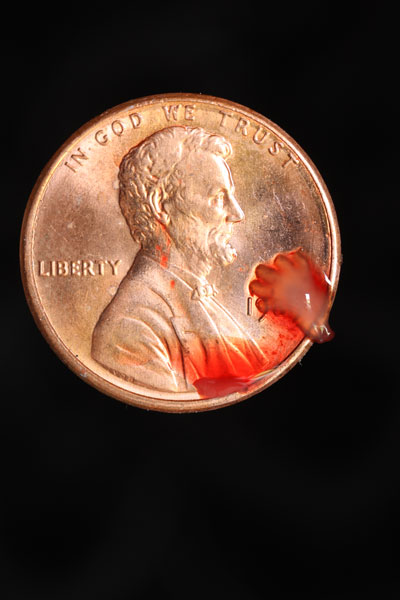
Tiny hand of baby aborted at six weeks
Share on Facebook

Man with Huntington’s chorea: Better a short life than abortion

A man with Huntington’s chorea in his family was asked if he would have wanted to be aborted. Huntington’s chorea usually strikes at age 40 or so, and causes rapid degeneration of mind and body. It is hereditary.  The man with the disease  said he would not have wanted to be aborted.

“Better a short life and a happy one than none at all. Better take the chance to live well until you’re 40!”

Mary Kenny Abortion: The Whole Story (London: Quartet Books, 1986) 136 – 137

Share on Facebook

Women don’t want to return to abortion clinics – don’t want postabortion counseling

Author Mary Kenny, who visited abortion clinics and witnessed abortions, discusses the idea of post abortion counseling at Marie Stopes and the British Pregnancy Advisory Service, which are abortion chains in England:

 “They have considered post-abortion therapy at Stopes, but cannot see how it could be done practically. The BPAS  says that after exhaustive efforts to offer post-abortion counselling, there was little demand for it.

For many women, an abortion is something to put behind them and forget. But even if they do want to reflect upon the experience afterwards, it is possible that they would wish to do so in a different context, and with different people. Returning to the scene of the operation might not be an altogether attractive proposition. Women are instructed to return for a physical check-up six week afterwards, and many opt out of that.”

Mary Kenny Abortion: The Whole Story (London: Quartet Books, 1986) 152

Abortion is so traumatic that most women don’t want to return to the “scene of the crime.”

crossed-ankles

Share on Facebook

Prayer for women after their abortions justifies abortion

Rosemary Radford Ruether from Woman-Church provides a new prayer for a woman who has had an abortion:

The article in First Things says:

“Woman-Church, provides the “new words, new prayers, new symbols” that will free women from patriarchy and allow them “to live the new humanity now.” Her community prayer for the rite of healing from an abortion.”

This is the prayer:

“O great Mother and Father, power of all life and new life, we are sorrowful this day . . . we are also angry. . . . We are surrounded by a world in which vast numbers of people go to bed hungry and where many children come into the world unwanted and without the most minimal opportunities for love and development. We don’t want to create life that way. We want to create life that is chosen, wanted, and can be sustained and nourished. Our sister has made her hard choice. . . . We affirm and uphold her in her ongoing life, as she gathers her life together and centers her energies on how she is going to continue to sustain her own life and the lives around her which it nourishes.”

Camille S. Williams “Abortion and the Actualized Self” First Things November 1991

10 week unborn child
Share on Facebook

Abortion clinic founder blames Planned Parenthood for closing

Sometimes abortion clinics close not because of pressure from pro-lifers but because of competition with other abortion clinics.

“We would not be closing today if Planned Parenthood had not started providing abortion services in the same town.”

Cindy George, “Planned Parenthood debuts new building”, HOUSTON CHRONICLE, May 21, 2010

Share on Facebook

Woman tells story of saline abortion

When Cindy Hendrickson was a teenager, she had a saline abortion. Saline abortions are seldom performed today. They were done by injecting a caustic saline solution into the uterus to kill the baby and then inducing labor.

Hendrickson says:

“When I told my parents about the pregnancy, dad decided I would have an abortion, even though I wanted to give my baby up for adoption. We told no one about the baby. My mother always obeyed my father, and I was afraid to disobey him, so I agreed to the abortion.

Mother and I went to a Houston clinic where dad said they had counselors to help me. Mother paid them $500 in cash and was told to leave me there. The counselor took all the girls (about 25) and taught us about birth control.

That was the last I saw of her. I was given a shot of Demerol, and around midnight the doctor came to my room and injected saline my uterus. The nurse never told me what would happen.

Later, I went to the bathroom and saw my baby hanging from the umbilical cord. As I screamed hysterically for help, I heard the nurses out in the hall talking and laughing.

After 15 minutes, my roommate went to get a nurse. She made me get back in bed with the baby hanging between my legs and said they had to wait until I passed the placenta. I lay in bed crying, trying not to touch the baby with my legs. Finally, they removed it. We went home…”

She writes about the emotional aftermath of her abortion:

“During college I started taking speed, stopped eating, and was anorexic (90 pounds.) I was on antidepressants for 20 years until recently… I spent 8 years after the abortion in destructive behaviors, going to three different secular counselors and never talking about the abortion.

A Christian counselor at Birth Choice helped me examine how I felt about my child, and I grieved for three days and nights. She suggested The Memorial as a place to honor my child, and that has given me peace.”

Wendy Williams, Ann Caldwell Empty Arms: More Than 60 Life-Giving Stories of Hope from the Devastation of Abortion (Chattanooga, Tennessee: Living Ink Books, 2005) 112 – 113

Share on Facebook

Dr. Albert W. Liley on quickening and abortion

Dr. Albert W. Liley, a widely recognized authority in fetal medicine, explains why conception, not quickening, should be the deciding factor in when a preborn baby should be protected:

“Historically, “quickening” was supposed to delineate the time when the fetus became an independent human being possessed of a soul. Now, however, we know that while he may have been too small to make his motions felt, the unborn baby is active and independent long before his mother feels him. Quickening is a maternal sensitivity and depends on the mother’s own fat, the position of the placenta and the size and strength of the unborn child. Quickening is hardly an objective basis for making a decision about the existence or the value of the life of the unborn child.”

H.M. Liley, Modern Motherhood (1969), cited by Heffernan, “Early Biography of Everyman,” p.18

10 weeks
10 weeks (before quickening) 
Share on Facebook