Marriage Counselor Discusses Aftermath of Abortion for Couples

Dr. Forrest C Stevenson, certified marriage counselor of Brighton, Michigan:

“As a marriage counselor, I have too often shared with a couple in this sorrow. They love each other, but as they look at each other, I see the hurt in their eyes. I’ve heard a woman say, “Seven years ago my husband said I could not have this baby. “I’m still in school, I’m going to get my education first.” I did what he said and I had an abortion. I wonder what that baby would’ve been like. Would he have had curly hair like his daddy? Would he have been a happy baby? Would it have been a girl? Would it have been a boy? What could’ve happened?”

Too many times I’ve heard a young man say, “I demanded that my wife get an abortion, but I wish that she had not done what I said.” These people may love each other, but the hurt of the guilt that they share together has grown like a wall between them. It is so serious they can hardly build an adequate life. Their marriage is a nightmare because of shared guilt.”

John R Rice The Murder of the Helpless Unborn… Abortion (Murfreesboro, Tennessee: Sword of the Lord Publishers, 1971) 32

Although this is a very old reference, the emotional aftermath of abortion has not changed that much in the past few decades. You can read about men who regret their partners’ abortions here and women who regret their abortions. 

Abortion still put a tremendous strain on couples’ relationships. One study showed that 80% of all relationships broke up in the aftermath of an abortion.

Share on Facebook

Frederica Mathews Green On Abortion And Women

Author Frederica Mathews-Green interviewed many postabortion women for a book she was writing. She says of her research:

“It was striking how frequently women in these groups said, “If I’d only had one other person to stand by me…” They weren’t asking for magical solutions. They were asking for a friend.”

Later in the book, she says that she had expected the women she interviewed to say that they were most concerned about material needs and goals like finishing an education or being able to afford a baby, but:

“Yet when we listened to women describe their situations in depth in the listening groups, a surprising theme emerged. In nearly every case, the abortion was undertaken to fulfill a felt obligation to another person, a parent or boyfriend. Our assumption that abortion decisions were prompted by the sort of practical problems – food, shelter, poverty, clothing – which a pregnancy care center could attempt to solve was not borne out. Instead, the woman felt bound to please or protect some other person, and abortion was the price she felt she had to pay.”

Later, Mathews Green continues:

“When postabortion women talk about the reasons for their decision, they talk most often about the failure of the baby’s father to be supportive, to fill the father’s role. Unexpected pregnancy can raise some breathtaking problems, but a partner’s vigilant love has a way of easing them. Imagine a woman discovering a pregnancy in a difficult situation, but her partner saying to her, “I love you, I love our baby, I’ll do anything I can to make this family work.” On the other hand, imagine a story from one of my listening groups: a married woman with two kids, living in reasonable security, to whom her husband says, “Only ignorant people have more than two kids. I don’t want this baby. You have to have an abortion.” Which child will survive?”

Frederica Mathews-Green. Real Choices: Offering Practical, Life-Affirming Alternatives to Abortion (Sisters, Oregon: Multnomah Books, 1994) 21, 33, 45


Share on Facebook

Clinic Worker: Women Would Become Depressed If They Didn’t Abort

The author of the pro-choice book Abortion: A Positive Decision quotes a 35-year-old abortion clinic supervisor:

“Women may say, oh, I don’t want to have a baby because I haven’t enough money, or my partner and I haven’t known one another very long. When I feel it’s good just to say, I don’t want a baby at the moment. I think that’s perfectly all right. There’s nothing stronger than that, when you think of what it takes to have a baby… If you’re forcing somebody to have a baby, making a lifetime decision against their will, then problems are going to turn up and they’re not going to be very happy about that. They’re probably going to be extremely depressed.”

Patricia Lunneborg Abortion: A Positive Decision (Westport, Connecticut: Bergin & Garvey, 1992) quoted in Tamara L Roleff. Abortion: Opposing Viewpoints (San Diego, Greenhaven Press, 1997) 104

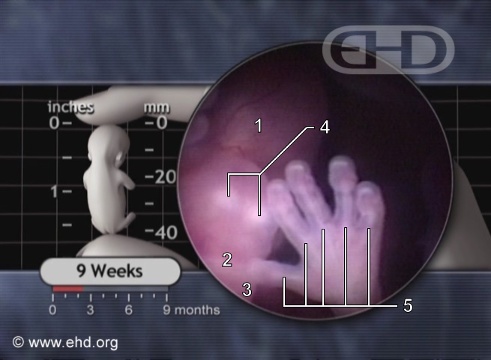
A woman can always put her baby up for adoption, and you have to ask the question – is a woman becoming depressed a good enough reason to kill a baby? Below is a picture of an aborted baby at nine weeks – 42% of all abortions happen after this point.

Share on Facebook

Doctors Refused to Do Amniocentesis Unless Woman Agrees to Abort Imperfect Children

16 weeks – amniocentesis is done around this time, so babies aborted because of fetal anomaly are usually this age or older.

In his book on obstetrics and gynecology, author William Arney reveals the following:

“Some doctors refuse to do amniocentesis unless the woman is willing to commit herself, before the test is done, to an abortion in cases defective fetuses  are found.”

William Arney, Power and the Profession of Obstetrics (Chicago: University of Chicago press, 1982) 183 quoted in Kathy Rudy. Beyond Pro-Life and Pro-Choice: Moral Diversity in the Abortion Debate (Boston, Massachusetts: Beacon Press, 1996) 13 (Rudy is pro-choice)


It is clear that many doctors put pressure on women to abort their disabled and imperfect babies. Read more quotes about the abortion of handicapped children here.

Share on Facebook

Abortionist On the Reasons Women Have Abortions

Abortionist Dr. Warren Hern, in his textbook on abortion, discusses the reasons why women who come to see him have abortions:

“A study of motivations for abortion has found that the majority are sought for socioeconomic reasons. Women seeking abortion seldom give the real reason for doing so to investigators studying the issue. The impression from clinical practice is that all but a few women seek abortions for reasons that can broadly be defined as socioeconomic, and many cite strictly economic reasons… As a rule, women do not make decisions about pregnancy prevention or treatment on the basis of statistical evaluations and medical advice but rather on the basis of personal attitudes and necessities. At times medical considerations enter the picture, but decisions are usually made on the basis of such factors as desire or lack of desire for parenthood, stability of relationships, educational status, emotional status, or economic status, among others.”

Warren Hern, Abortion Practice (Boulder, Colorado: Alpenglo Graphics, 1990) 10, 39

Quoted in Scott Klusendorf. The Case for Life: Equipping Christians to Engage the Culture. (Wheaton, Illinois: Crossway Books, 2009) 30

In another post on this page, Dr. Warren Hern discusses a woman who had an abortion because she was pregnant with a boy and wanted a girl.

Share on Facebook

Simone de Beauvoir on abortion

Feminist Simone de Beauvoir on abortion:

“It is often the seducer himself who convinces the woman that she must rid herself of the child. Or he may have already abandoned her… Sometimes she declines to bear the infant not without regret… Men tend to take abortion lightly; they regard it as one of the numerous hazards imposed on women by malignant nature, but fail to realize fully the values involved. The woman who has recourse to abortion is disowning feminine values, her values… Her whole moral universe is being disrupted.”

….

After abortion women “learn to believe no longer in what men say… The one thing they are sure of is this rifled and bleeding womb, these shreds of crimson life, this child that is not there. It is at her first abortion that a woman begins to “know.” For many women the world will never be the same.”

Simone de Beauvoir. The Second Sex. (New York: Bantam books, 1952) from

Frederica Mathews-Green. Real Choices: Offering Practical, Life-Affirming Alternatives to Abortion (Sisters, Oregon: Multnomah Books, 1994) 18, 49

11 week unborn baby (ultrasound)
Share on Facebook

Avoiding the Term “Abortion”

Glanville Williams, pro-choice activist in Britain:

“Many doctors attempt to avoid what they consider to be the unsavory connotations of the word “abortion” by speaking instead of the terms of “termination of pregnancy.”

Glanville Williams, the Sanctity of Life and the Criminal Law, the 1956 James S Carpenter Lectures at Columbia Law School (New York: Knopf, 1957) 147

There are the euphemisms used by the pro-choice movement – products of conception, fetal tissue, uterine contents, developing pregnancy – all words to use to describe the unborn baby. If you go to website of an abortion clinic, you will very seldom see the word fetus and definitely won’t see the word baby.

Psychologist Robert Lifton, in his book about Nazi doctors at the camps

“The language used gave Nazi doctors a discourse in which killing is no longer killing; and need not be experienced, or even perceived as killing.”

Robert J Lifton, the Nazi Doctors: Medical Killing and the Psychology of Genocide (New York: basic books, 1986) 445

James F Bohan. The House of Atreus: Abortion Is a Human Rights Issue (Westport, Connecticut: Praeger Publishers, 1999) 154

Share on Facebook

Pearl Buck, Nobel prize-winning author, on Abortion

Pearl Buck, Nobel prize-winning author of The Good Earth, had a daughter who was severely mentally handicapped, yet indicated that she would not have aborted her child

“[I]n this world where cruelty prevails in so many aspects of our life I would not add the weight of choice to kill rather than to let live…..

“I fear the power of choice over life or death at human hands. I see no human being, whom I should ever trust with such power – not myself, not any other. Human wisdom, human integrity are not great enough. Since the fetus is a creature already alive and in the process of development, to kill it is to choose death over life. At what point should we allow this choice? For me the answer is – at no point, once life has begun. At no point, I repeat, either as life begins or as life ends, for we who are human beings cannot, for our own safety, be allowed to choose death…”

Pearl S Buck, foreword, the Terrible Choice by Robert E Cooke at al. (New York: Bantam, 1968), X I

unborn baby at seven months, legal to kill in the United States

James F Bohan. The House of Atreus: Abortion Is a Human Rights Issue (Westport, Connecticut: Praeger Publishers, 1999) 28 – 29

Share on Facebook

Abortion Clinic Workers Can Be Disturbed by Sonographic Images

An article in ObGyn News describes the difficulty of using an ultrasound  machine in an abortion clinic:

After mentioning that women should not be shown the ultrasound because it may upset them,

“Staff members also may be affected by sonographic images and may need opportunities for venting their feelings and reconfirming their priorities…”

“Warns of Negative Psychological Impact of Sonography an Abortion” ObGyn News, February 15 – 28, 1986

Rachel M MacNair, PhD. Achieving Peace in the Abortion War (New York: iUniverse, 2009) page 59

Share on Facebook

Abortions for “Sex Selection” Upset Abortion Providers

In  an article in the American Medical News, the author discusses how certain abortions are hard on the abortion providers:

“One of the most vexing problems providers face is their feelings about procedures done for reasons that make them – or others – uncomfortable. Sometimes it’s “sex selection” – the patient wants a boy and is carrying a girl.”

Diane M Gianelli, “Abortion Providers Share Inner Conflicts” American Medical News, July 12, 1993

Some women do abort when they are carrying a girl instead of a boy. When opposing a Bill that would address this, Planned Parenthood insisted that this does not happen, but many abortion providers have admitted that it does.

14 weeks

Sex selection abortions, are, by definition, late-term abortions – they cannot be performed until an ultrasound can identify whether the baby is a boy or girl, in the second trimester.

Share on Facebook