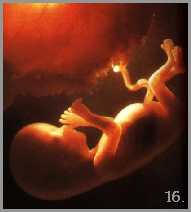
Why Rural Counties Have Fewer Abortion Clinics, Why There are Few Abortion Doctors

Many pro-choice groups have complained that most counties in the United States do not have an abortion clinic. They argue that rural women need to drive long distances to reach abortion clinics, and often blame pro-lifers for this. In reality, the main reason that clinics are usually located in cities has to do with money. From an article in the New York Times:

“In Detroit, and in other large metropolitan areas around the country, there are not too few abortion providers, as abortion proponents have lamented for years. There are too many. It is still true that fewer hospitals are providing abortions, fewer doctors outside abortion clinics are offering the procedure and 86 percent of counties in the country have no abortion provider.

But, over the past few years, as the number of abortions has declined, abortions increasingly have been concentrated in specialty clinics in cities and pockets of competition have developed.

So while women in rural areas must sometimes drive hundreds of miles to the nearest clinic, in cities and suburbs there are price wars and competition over amenities. Doctors have refused to train colleagues, fearing they will only help a potential competitor in a lucrative, often cash-only, business.

…. Clinic owners say they have little choice but to cluster in cities — that is the only way they can find enough patients. Ruth Arick, the owner of Choice Pursuits in DeLand, Fla., which does management consulting for abortion clinics, said that a population of about 200,000 is needed to support a full-fledged clinic.”

In addition, pro-choice people often blame pro-lifers for a shortage of providers, claiming that doctors fear violence. In reality, stigma is a major reason why doctors don’t do abortions. Another reason is the emotional trauma of tearing apart developing babies every day.

A third reason is that doctors don’t want to train competitors. From the New York Times article:

“One doctor in Detroit, who spoke on condition he not be identified, saying he feared hostility from his colleagues, said that when he finished medical school, trained in obstetrics and gynecology, he asked abortion doctors in the area to train him. He was turned away.”

GINA KOLATA “As Abortion Rate Decreases, Clinics Compete for Patients” The NY Times December 30, 2000

Abortion is a business, like any other. Clinics do not do abortions for free. Abortionists and clinic owners are out to make money off of the women who come in for abortions.


Share on Facebook
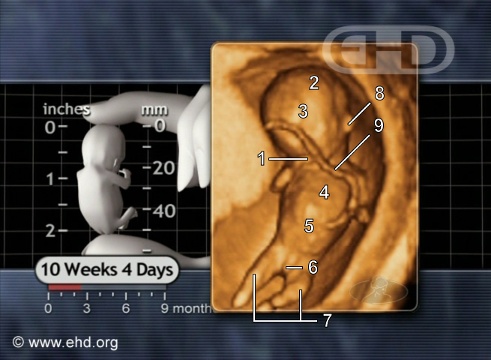
Father Frank Pavone on Repeat Abortions

Dr. Theresa Burke, from her book Forbidden Grief:

“Repeat abortions and replacement pregnancies are two common ways in which women reenact elements of their abortion trauma.”

Quoted in Father Frank A. Pavone “Ending Abortion: Not Just Fighting It” (New Jersey: Catholic Book Publishing Corp, 2006) 73

Quoted by Pavone also on page 73:

Dr. Philip Ney

“Tragedy is repeated not because we do not understand, but because we are trying to understand.”  Meaning that a woman is reliving her abortion experience trying to resolve the — a replacement child, but then realizes that the same reason she had an abortion before is still present.”

The quote is from Dr. Ney’s book Deeply Damaged.

From Dr. Pavone himself

“an underlying conflict, perhaps created by previous trauma, is unresolved.  We find we cannot resolve it by simply replaying it in our minds.  So we relive it.  This happens in many arenas of life.  The sexually abused child may become seductive; the child who lacked touch and affection may seek an emotionally cold partner, and so forth.  We repeat what we don’t understand, in the hopes of mastering it.

Repeat abortions can be repulsive even to people who call themselves “pro-choice” and even to those who work in abortion mills.  Sometimes the reaction is exasperated, indignant, “How could she do that??!!”  But we should change the question and ask instead, “How can I help you to heal?”  That question expresses the heart of the pro-life movement, a movement that knows that the destiny of mother and child are forever intertwined and that we can’t love one without loving the other.”

Read what abortion providers have to say about women who have repeat abortions here.

Share on Facebook

2 Studies Describe Emotional Impact of Abortion on Providers

Conclusion to two studies on abortion providers, done by authors who were pro-choice:

“Obsessional thinking about abortion, depression, fatigue, anger, lowered self-esteem, and identity conflicts were prominent.  The symptom complex was considered “transient reactive disorder” similar to “combat technique.”

Ambivalent periods were characterized by a variety of otherwise uncharacteristic feelings and behavior including withdrawal from colleagues, resistance to going to work, lack of energy, impatience with clients and overall sense of uneasiness.  Nightmares, images that could not be shaken and preoccupation were commonly reported.  Also common was the deep and lonely privacy within which practitioners had grappled with their ambivalence.”

Roe, KM “private troubles and public issues, providing abortion amid competing definitions” Social Science and Medicine, 1989 volume 29 number one, 1197

Share on Facebook

Legal Abortion Deaths After Roe

From the American Journal of Obstetrics and Gynecology:

“There has been no major impact on the number of women dying from abortion in the US… After all, it really makes no difference whether a woman dies from legal or illegal abortion, she is dead nonetheless. I find no comfort in the fact that legal abortion is now the leading cause of abortion related maternal deaths in the US.”

Dr. Dennis Cavanaugh “Effect of Liberalized Abortion on Maternal Mortality Rates” American Journal of Obstetrics and Gynecology (February 1978) 375

Many times, abortionists who operated illegally before Roe Vs Wade simply began operating legally after it, moving from the back alley to the “front alley.” There have been abortionists who killed women before Roe and then went on to kill women after Roe. Read about some of them in the “Providers Hall of Shame” section.

Read about women who died from legal abortions here. 

Share on Facebook

Pro-Choice Activist: Life is Not Sacred

“There clearly is no logical or moral distinction between a fetus and a young baby; free availability of abortion cannot be reasonably distinguished from euthanasia. Nevertheless we are for it. It is too facile to say that human life is always sacred; obviously it is not.”

“The Unborn and the Born Again” editorial, New Republic, July 2, 1977, 6

Share on Facebook

Student Compares Unborn Baby to Tapeworm

“If anything, a fetus is merely a parasitical creature that uses the mother as its host.Tapeworms are parasites that house themselves in the intestinal tracts of humans, feeding off the food the host consumes. Comparatively, a fetus is little more than a tapeworm. It is quite common for humans to annihilate parasites with medications or toxins, so why not allow for fetuses to suffer the same fate?”

MSU State News:Wad of cells does not equate to human life, abortion isn’t murder:7-26-2006

abortion at nine weeks – is this the remains of a tapeworm?
Share on Facebook

UK Clinic Worker on Abortion

According to one abortion clinic worker:

“I work in an abortion clinic…An early abortion, i.e. less than 11 weeks, can be completed in five minutes if the patient is under a general anesthetic. Later abortions take up to half an hour, and I won’t pretend, it’s pretty difficult to watch. I must admit, I almost passed out watching one of the later abortions, but I’m glad I saw it… I’m in a difficult position because I do have sympathy for the fetuses that are aborted at such late stages..

hand at 12 weeks

“Working in a Clinic, Sabrina has adapted to the working in the clinic and understands both sides of the abortion debate”:thesite.org/uk Quoted by Life Dynamics

Share on Facebook

Paper Presented to the Association of Planned Parenthood on Abortion

15 weeks – legal to abort in every US state

“the fetus was extracted in small pieces to minimize cervical trauma.  The fetal head was often the most difficult object to remove because of its size and contour.  The operator kept track of each portion of the fetal skeleton…”

A paper presented to the Association of Planned Parenthood Physicians in 1978

initial transcript, the Ankerberg Theological Research Institute “Is Abortion Justifiable?”  Televised program, January 1990 quoted in When Does Life Begin?  By John Ankerberg and John Weldon (Brentwood TN: Wolgemuth and Hyatt Publishers, 1989)

Share on Facebook

In Vitro Fertilization Scientist on When Life Begins

“Landrum B. Shettles, M.D., P.h.D. was first scientist to succeed at in vitro fertilization:

“The zygote is human life….there is one fact that no one can deny; Human begins begin at conception.”

Zygote is a term for a newly conceived life after the sperm and the egg cell meet but before the embryo begins to divide.

From Landrum B. Shettles “Rites of Life: The Scientific Evidence for Life Before Birth” Grand Rapids, MI: Zondervan, 1983 p 40

Share on Facebook

Black Australian Feminist Confronts Pro-Choice Racism

From the book Swimming Against the Tide, a book of feminist essays against abortion. Bobbi Sykes a black Australian woman, was at a televison interview with a pro-choice feminist who was white. She describes their conversation:

“A male interviewer organized a prominent white movement woman to debate the subject with me on television.  Unfortunately, the woman used the opportunity to scream at me that I wasn’t the right sort of black, and that I didn’t have a dozen children and live in the creek bed at Alice Springs… That I, representing an opinion of the black community, brazenly dared to confront and oppose an option of the white community, was sufficient to crack the veneer over the movement woman’s racism, and through that crack spewed forth the most virulent and racist comments that I had heard publicly for some time… privately, many similar events occur constantly.”

Ramazanoglu, C .  “Feminism and the Contradictions of Oppression” (Routledge , London, 1989) 191, quoting Sykes cap B. in Rowland, R. “Women Who Do and Women Who Don’t Join the Women’s Movement” (Routledge & Kegan Paul, London, 1984) 64

“Swimming Against the Tide: Feminist Dissent on the Issue of Abortion” edited by Angela Kennedy (Dublin Ireland: Four Courts Press, 1997)

Share on Facebook