“Why spend $50,000 to save one child?” what is life worth?

From a pregnant woman who was having her baby tested for Down Syndrome, with the intention of aborting if the child had it:

“I think it’s kind of like triage, or like euthanasia. There aren’t enough resources in the world. We’d have to move, to focus our whole family on getting a handicapped kid a better deal… Why spend $50,000 to save one child? And what sort of a life would it have? What sort of life would we have?”

Quoted in:

Rayna Rapp Testing Women, Testing the Fetus: the Social Impact of Amniocentesis in America (New York: Routledge, 1999) 146

Share on Facebook

Women gives reasons she will abort “retarded” baby

14 weeks
14 weeks

From a woman waiting for the results of her amniocentesis, who intends to abort if the baby has down syndrome or another defect:

“I would have a very hard time dealing with a retarded child. Retardation is relative, it could be so negligible that the child is normal, or so severe that the child has nothing… All of the sharing things you want to do, the things you want to share with a child – that, to me, is the essence of being a father. There would be a big void that I would feel. I would feel grief, not having what I consider a normal family.”

Rayna Rapp Testing Women, Testing the Fetus: the Social Impact of Amniocentesis in America (New York: Routledge, 1999) 133

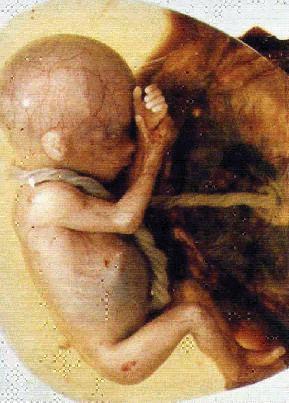
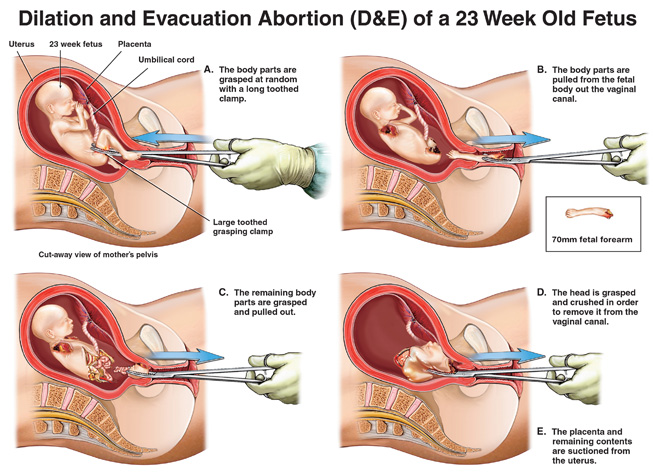
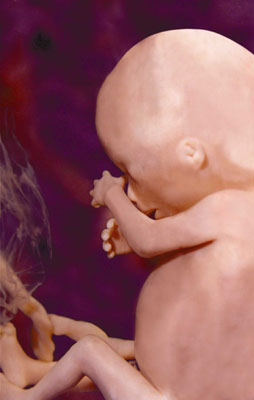
At the time the book was written, 1999, the only available test for down syndrome was amniocentesis, which is used at about 16 weeks. By this time, the baby is fully developed. (See picture below of a on the left at only 14 weeks) at this stage, the method of abortion used most is D&E, in which a baby is dismembered in the womb, her arms and legs pulled off and extracted by forceps and her skull crushed.

de

Share on Facebook

Aborting a down syndrome baby because he can’t go to Cornell?

One father, a computer technologist, said the following about what he would think if the baby turned out to have Down’s:

“I’m sorry to say that I just couldn’t accept that. I mean, I’ve worked hard to get where I am, I worked hard at Cornell. And I want the same for my child. I want to teach my child, and have him learn. Maybe it’s unfortunate, maybe I should be more accepting. But I don’t want a child with retardation.”

Later, in the same book, he said:

“I’m sorry to say I couldn’t think about raising a child with Down’s. I’m something of a perfectionist. I want the best for my child. I’ve worked hard, I went to Cornell University, I’d want that for my child. I’d want to teach him things he couldn’t absorb. I’m sorry I can’t be more accepting, but I’m clear I wouldn’t want to continue the pregnancy.”

Rayna Rapp Testing Women, Testing the Fetus: the Social Impact of Amniocentesis in America (New York: Routledge, 1999) 90, 133 – 134

He and his partner were having amniocentesis done with the plan to abort the baby if he or she had down syndrome.

Share on Facebook

Woman getting amniocentesis: it’s like playing God

16 weeks – the average age at which amniocentesis is done. Her abortion would've taken place after this time.
16 weeks – the average age at which amniocentesis is done. Her abortion would’ve taken place after this time.

From one patient who had an amniocentesis to find out if the baby she was carrying would be disabled. She intended to abort if anything was wrong with the baby:

“If something turns out to be wrong, maybe I’ll be happy I’ve had it. But in some ways, I wish it wasn’t available, I wish I didn’t have to know… I’ve had a couple of abortions before, so it isn’t that. But there’s something about this that’s like playing God.”

Rayna Rapp Testing Women, Testing the Fetus: the Social Impact of Amniocentesis in America (New York: Routledge, 1999) 117

Share on Facebook

Doctor to new mother of Down syndrome baby: Don’t worry, some of them die young

The mother of a baby with down syndrome describes what the doctor said to her after the delivery:

“She was tiny, but she was great, like she was just the cutest thing. And then my husband comes in, and he looked weird and immediately he said, “The baby, something is wrong…” And all I could think of was that she’s blind, I guess that was probably the worst thing I could ever have imagined. But the doctor had just called him and told him that Rose was a Mongoloid. We took a half hour to get it out of him, like he couldn’t finish telling me the story, and then the doctor came in and said, “What your husband just told you is right.” He was, like, very down on the whole thing, very negative. He said, “The only blessing is that they don’t tend to live very long.” So he thought it would be a good thing if our new baby would die. What more can I say?”

Rayna Rapp Testing Women, Testing the Fetus: the Social Impact of Amniocentesis in America (New York: Routledge, 1999) 266 – 267

Share on Facebook

Doctor yells at new mother of baby with Down syndrome

A woman whose baby was born with down syndrome talks about how the doctor who helped her deliver treated her:

“My doctor was so angry with me. He couldn’t believe I didn’t take that test. “How could you let this happen?” He yelled at me. “You’re 40!” But I think something else: even though he’s mentally retarded, he could be a good person… It’s just like finding out you have a new job. You just do it, and you accept it, that’s all there is to it.”

Rayna Rapp Testing Women, Testing the Fetus: the Social Impact of Amniocentesis in America (New York: Routledge, 1999) 263

Share on Facebook

Doctor tells mother of baby with down syndrome: “don’t expect much”

The mother of a child with down syndrome talks about how her doctor reacted when her baby was born:

“So they diagnosed Amelia right away, on the delivery table. She was barely out, I barely got a chance to catch my breath or marvel at my first baby when the doctor pours this bad news all over us. “She’s got down syndrome,” he says to us, very coldly. And after he tells us about blood testing and confirmations and all this stuff, we say to him, “But what does this mean? What should we expect?” And just as coldly he says, “Don’t expect much. Maybe she’ll grow up to be an elevator operator. Don’t expect much.” We clung to each other and cried.”

Rayna Rapp Testing Women, Testing the Fetus: the Social Impact of Amniocentesis in America (New York: Routledge, 1999) 263

Share on Facebook

NOW pres: It’s ok, Margaret Sanger didn’t just hate Blacks

Laurie Bertram Roberts, Mississippi State Pres. of the National Organization of Women, comments on Margaret Sanger’s racism:

“First of all, Margaret Sanger did not work on abortion. She worked on birth control. Context is everything. I will never deny that Margaret Sanger was connected to the eugenics movement, what they (abortion opponents) never bothered to say is that eugenicists also wanted to limit the birth rate of poor white people and disabled people. It wasn’t just Black people; it was a whole lot of people they deem to be unfit.”

Quoted in “Thank God for Stupid Enemies” Speaker for the Dead WEDNESDAY, APRIL 16, 2014

From Anna Wolf “Using the KKK to Fight Abortion Rights” Jackson Free Press April 16, 2014

Margaret Sanger was the founder of Planned Parenthood. She was also an avowed racist (she spoke at at least one KKK meeting)  who did indeed advocate sterilizations of the  handicapped and poor.

Share on Facebook

Woman aborts baby with down syndrome- wanted a smart child

A female college professor decided to have an abortion when her baby tested positive for down syndrome.

“I’m not proud of this, but to be honest, I don’t want to cope with a mentally retarded child. My mother did volunteer work in the schools, with MR kids. She’s deeply against abortion. But she’s not against abortion for this. I guess some of her attitudes must’ve rubbed off on me. The thing that entrances me is having a smart child.”

Rayna Rapp Testing Women, Testing the Fetus: the Social Impact of Amniocentesis in America (New York: Routledge, 1999) 225

16 weeks.  Most cases of down syndrome are diagnosed by amniocentesis around this time
16 weeks. Most cases of down syndrome are diagnosed by amniocentesis around this time
Share on Facebook

Researcher discusses the technology that allows women to abort disabled babies

Former abortion clinic worker Rayna Rapp, who herself had aborted a disabled baby, wrote a book where she interviewed men and women going through the process of amniocentesis to detect  abnormalities in their babies. She has many quotes from these men and women, some of whom aborted, some of whom did not, in her book, but I would like to present two quotes from the author herself. In these, she talks about the conflicting values between supporting the disabled and aborting them before they are born.

“Over the years of this study, I learned a great deal about two related and tension fraught issues. The first is the need to champion the reproductive rights of women to carry or refuse to carry to term a pregnancy that would result in a baby with a serious disability. The second is the need to support adequate, non-stigmatizing, integrative services for all the children, including disabled children, that women bear. The intersection of disability rights and reproductive rights as paradoxically linked feminist issues has emerged as central to my political and intellectual work.”

In the second quote, she discusses how the technology that is aimed that destroying disabled unborn babies cannot be “neutral”,:

“It is hard to argue for the neutrality of a technology explicitly developed to identify and hence eliminate fetuses with problem-causing chromosomes (and, increasingly, genes): the biomedical and public health interests behind the development and routinization of the technology itself evaluate such fetuses as expendable. Ethicists and counselors are surely right to respond that parents of such potentially atypical fetuses have a right to know as well as not to know about the chromosomal status of their fetus, and to use the information however they may wish, whether that means preparing for the birth of a child with special needs or ending the pregnancy. But the very existence and routinization of the technology implies anything but neutrality. It assumes that scientific and medical resources should be placed in the service of prenatal diagnosis and potential elimination of fetuses bearing chromosome problems.”

Rayna Rapp Testing Women, Testing the Fetus: the Social Impact of Amniocentesis in America (New York: Routledge, 1999) 8, 59

Share on Facebook