Judith Fetrow and Pro-Life Activists

A pro-life article told the following story:

“Some former abortion clinic workers have been won over to the pro-life side because of the love they experienced from people who demonstrated against their clinics. Norma McCorvey, former lead plaintiff as Jane Roe of Roe V Wade, is one. The case of another, Judith Fetrow, is striking because she initially experienced hostility from pro-life demonstrators at the Planned Parenthood abortion clinic where she worked. On one occasion, she was so upset by her work that she decided to leave the clinic. But on her way out, demonstrators started shouting at her, “Murderer! The blood is on your hands!” Fetrow felt as though “someone had kicked me in the stomach,” so she went back to the clinic and “back to work.”

But a sidewalk counselor named Steve reached out to her, chatting with her in a friendly way. “It took some time,” Fetrow recalled, “it took enormous dedication, and it took the patience of a saint. But over several weeks we developed a friendship across the lines, based on trust.” Fetrow again left the clinic, but this time she did not return.”

Story recounted in Mary Meehan spring/summer 2000 The Ex-Abortionists: Why They Quit. Human Life Review 26 (2/3), 7 – 28, 8 and 21 in Rachel M MacNair and Stephen Zunes. Consistently Opposing Killing: from Abortion to Assisted Suicide, the Death Penalty, and War (Bloomington: Author’s Choice press, 2011) 135

Read Fetrow’s testimony here. 

Share on Facebook

Woman Conceived in Rape Speaks out

Julie Makimaa of Holland, Michigan was conceived in rape and born in 1964.  She discovered this  21 years later when she met her birth mother. She researched and helped write the  book Victims and Victors, about women who became pregnant as a result of rape:

Excerpts from her Capital Hill Briefing:

“An overwhelming number of Americans feel abortion should be allowed for rape and incest. But the information that shapes their views is very one- sided. It presents abortion as the only solution, and that solution is presented without question.

Many pro-lifers have been convinced we need an exception to the right to life for rape and incest. We somehow believe the sacrifice of a few in rape and incest is the price we have to pay to obtain protections for the majority.

The ACLU, in the late 60s and early 70s, searched for rape victims who’d be willing to challenge the laws prohibiting abortion. They were unable to find a rape victim, but they did find Norma McCorvey, who became Jane Roe of Roe vs Wade, who claimed she was a victim of a gang rape by three men and a woman. It wasn’t until many years afterwards that Norma revealed that was a lie. Sarah Weddington  and Linda Coffee, her attorney, needed an extreme case to make her look pitiable. Rape seemed to be the ticket. 

We’ve heard women should not be forced to carry a rapist’s child, that a pregnancy would create unbearable psychological trauma, that the child would be a constant reminded of her rape.

The child is described as less valuable than the rest of us. The children will suffer physical and psychological deformities. Male children will be rapists. They will be criminals. Children carry the evil genes of their fathers. They will never love, never contribute to society, . They will never have normal lives. This is the way the majority of Americans view rape and incest pregnancies.

Out of 164 women who carried to term, 64% of them are raising their own children. These women grew to love their child. They didn’t view it as the evil rapist’s child. They grew to love it as their child.

Of the 28 girls pregnant through incest, 50% of them carried to term. Of these, 50%, 60% are raising their children.

The woman who is pregnant though incest typically is forced into abortion to hide what is going on. The family members are taking her to an abortion clinic because they don’t want to be discovered and she’s put back into the abuse. People forget that for a lot of young girls, the pregnancy is finally the way out, the proof where someone else is brought in and pulls her out of that situation.

Women who carried their children to term grew to love their children, a bond was established with their child. They were victims in the assault, but they chose a higher path. They said “I was a victim, but I want to do something good” to redeem what happened to them, the pain they suffered.

They told us over and over again the most difficult part was the pregnancy but in the years that followed they felt good about the decision they made. They had a child or they released a child for adoption. They gave life to someone who many said shouldn’t be here, shouldn’t be born. But they felt there was some purpose to this life. 

[Of the] women who chose abortion, the incest victims were taken by their families to abortion clinics. There was no real choice in that. Because of the reaction of their families, they felt they could not even suggest or voice their feelings for this child. If they said “What if I want to carry this child to term?” people reacted by saying, “What? You love this rapist’s child?” they said the effects of the abortion caused greater trauma than the assault.

The woman who has been a victim will suffer pain. There are days when she won’t want to carry this child to term. But these women over and over have said “Knowing what I know now giving life was a good decision.”

Share on Facebook

Pro-Life Mother Chooses Life Despite Rape

This is the testimony of Rebekah Berg, who was raped and chose to give life to her son, who was conceived in the assault.

“My son is the product of rape, and he is the exception to the rule, as they say. Multitudes of women in my situation have had abortions, giving different reasons for their choice. But that child is still a child, no matter how he or she was conceived. I certainly did not choose to be raped and definitely did not choose to become pregnant. No more did my child ask to be conceived. I had no right to take his life because of the horrible situation that happened to me.

The thought that he would bear the same genes of my rapist was one of the questions that continue to linger at my soul during my pregnancy. Was I going to birth another rapist? Was I doing more harm than good with giving him life? My own son’s gentle spirit and thoughtfulness of others confirms that there is not a “rapist gene.” When I look into my son’s eyes, I only have love and have only loved him since he was laid on my chest after birthing him.”

Kristin Hawkins. Courageous: Students Abolishing Abortion in This Lifetime (Students for Life of America, 2012) 16

Share on Facebook

Man Recounts Partner’s Abortion

In Glamour magazine, a man identified only as Walt says the following about his partner’s abortion:

“I said, “What do you want to do?” She suggested abortion, thinking this would make it possible for me to continue to paint, that that in turn would prolong our relationship… She’s my age, 35, and it may have been her last chance to have a child. I believe she would be much happier if she’d had it – but I would be unhappy having a child I never saw and didn’t live with. I guess I sound like a real cad. Maybe I was.”

In the Essay “Better Living (for Men) through Surgery (for Women)” by Leslie Keech from Rachel McNair, Mary Krane Derr, and Linda Naranjo-Hubbl. Pro-Life Feminism: Yesterday and Today (New York: Sulzburger & Graham Publishing, Ltd.) 238

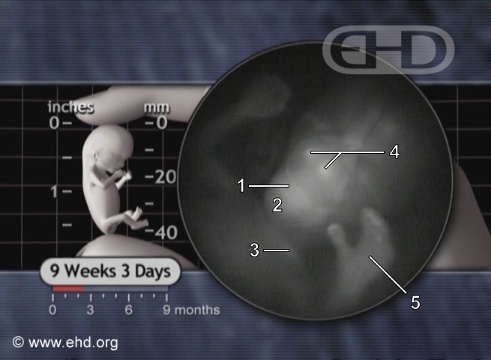
remains of an abortion at eight weeks


Share on Facebook

Grandmother of Aborted Baby Feels Grief

Sometimes abortion hurts all those involved, not just the mother, the siblings, and the father.  From a schoolteacher in her 40s:

“Advising my daughter to have an abortion led me into a long, suicidal siege. I’m not over it yet. I can picture a baby who never even existed.”

James Patterson and Peter Kim, The Day America Told the Truth (New York: Prentice Hall press, 1991) 33

Intuitively, the woman knows that a baby did exist – a baby that was killed in the abortion.


Share on Facebook

Men Do Grieve For Their Lost Children

In a book on grief, which researched men and women’s reaction to abortion,  the author makes the following statement:

“Some fathers will feel angry and cheated by the woman’s decision… Many men involved in the termination of the pregnancy they have fathered will experience grief too and may need recognition of their mourning for the loss child.”

Raphael B. The Anatomy of Bereavement (New York: Basic Books, 1983) 240

Read testimonies from postabortion men and get more info on this issue.

Share on Facebook

What I, A Post Abortive Sibling, Wanna Say To The Abortion Minded/Post Abortive Parents

First of all, I do not hate you, judge you, etc. On the contrary, I wanna give you a hug, and tell you that I am here for you. I know that there are people who have left or will do so, when they find out what you are thinking/did.

That’s not me. I know that for many, it is a painful decision, sometimes chosen for you, or because of difficult circumstances. I am so sorry for all the condemnation you have and will likely receive in the future.  As much as I am spreading the word about how much abortion can hurt us, siblings, I am also trying to see to it, that all of you are treated with love and respect.

Admittedly, before finding out about mom’s abortion, I gave little thought to the the whole issue beyond feeling it was wrong, and wondering why anyone would choose it (for the most part). But after hearing her story, it made me realize how hard it was for her.

It was during a very dark time in her life, and I could see that nearly 11 years later she was still hurting from it. It also made me remember that I had heard her speaking to a young woman about abortion with such conviction, never knowing that she was speaking from first hand experience. This girl was convinced and has become very prolife since then.

It hurt badly, to find out that we had lost a brother, especially in such a horrible way. But to this day, one of the things that hurts most about it, is that it took place during my lifetime, and I did nothing to help.

I cringe thinking about the things I may have said or done unintentionally that likely caused her great pain. I wish I had been able to comfort her when she found out, and maybe I could’ve done more to help out and what not.

Maybe she wouldn’t have considered aborting. Granted, I was 10, I know, deep down that it was not my fault, but it is still a struggle. I hope and pray that on the day of the abortion, and the day after, etc. I didn’t do anything to hurt her even more than she already was.

I hate knowing that for so many years, she told just a very few people, suffering mostly in silence. And to this day, there are many that do not know. Keeping this silence myself, to some extent, for this amount of time (nearly 7 years) has made me understand how hard it must be for you, especially if you have been silent even longer.

One of my biggest reasons for being in this movement is to encourage people like you to be respected and allowed to share your stories without judgement. You deserve to be able to receive healing and not carry the burden alone, plus you can possibly improve the life of someone else who is going through a similar pain.

Another thing the abortion did to me, was make me so much more sensitive to comments and images. While I believe that abortion does take a life, I am not cool with calling these parents murderers, etc. I believe there are other, more sensitive ways of speaking about it. I also wish that the images were more discreetly displayed, being sensitive to those who are traumatized by their abortions, etc. I aim to treat all of you, as I wish my mom to be treated. And will very often speak up in your defense. Her decision to abort did not make me love her less!

Frankly, I stayed away from the abortion issue for years to avoid the pain, and would love to see things change, so less people would feel that way. But is has made me more understanding of why some would choose the pro choice movement, and desire to respectfully explain how my views have changed over time.

I admire my mom for many reasons. She’s been through A LOT in her life, but has so much more compassion for those in similar situations, and has become less judgemental, etc (not harshing on her  before, mind you). My siblings and I are trying to follow that example in the way we see and deal with people.

One of the things I admire most about her, is the fact that she told us about the abortion. That took a lot of strength. She shared with us the abortion date, etc. I’m so happy that that day is no longer a secret, and we can all try to help each other through it, etc. Believe it or not, knowing about what happened, has brought us even closer together, and made me more thankful for the siblings I do have here, as annoying as they can be 😉

I truly hope that by sharing this with you, that those who have not yet shared with their kids from fear or whatever, you can feel encouraged and strengthened. Great healing can come for you and them, and I am there for both. Seriously, I would love to speak to your kids if they felt up to it.

To all reading this, post abortive or non, pro life or pro choice, those in agreement or not, etc. I ask you to be respectful.

This is very personal, and is such an important part of why I do what I am doing, that I may have been a little scattered in writing it. I am sure that not everyone will agree with this, but am sharing this anyway in the hopes that some are affected in a positive way. Please feel free to pass this around to others, if you feel it would be of comfort, etc to them. Thank you in advance, for respecting my request.

*Reposted with permission from: www.survivingsibling.wordpress.com

Share on Facebook
Woman Who Was Raped and Had an Abortion Speaks Out

A woman who was raped and had an abortion now regrets it and wants people to stop using rape as an argument to keep abortion legal. She spoke in a pro-life rally in Mississippi.

“I was raped a month before I turned 18. And because of that rape I was so fearful and so shameful that I chose abortion, out of fear. My rape was nothing compared to what I did to my child. What my rapist did to me does not compare to what I chose to do to my baby. My rapist didn’t kill me, I’m standing here alive right now. I have three beautiful children at home and a husband who loves me. But I chose to kill my child out of the shame, out of guilt, out of fear because of what a man did to me. Rape is no excuse for abortion. I want to say that.… Rape, I’m not a victim, I’m not a victim anymore, I’m a survivor. I’m a mother of a child who I aborted who, thank the Lord, is in heaven – and because of Jesus Christ, I’ll be with that child again – and I pray for my rapist every day… But I’m tired, as a person who was raped in a person who had an abortion, I’m telling you right now, I’m tired of using rape as an excuse.… For years I lived in depression, contemplated suicide, attempted suicide, I spend years drinking to numb the pain, to numb the horrific nightmares, was later diagnosed with posttraumatic stress disorder, not just because of the rape but because of the abortion. I was done with my rape, I was trying to conceive how in the world like I could choose to kill my child. How could I not be strong enough. Who was gonna speak for me as an 18-year-old girl who didn’t have a family to support her. No one did… We have got to speak up, it’s not just about the babies, it’s about the moms like me who think they’re making a good decision but they’re not.”

For the full testimony, watch the video. Religious beliefs expressed in testimonies are not endorsed by clinicquotes.

Share on Facebook

Interview with Men in Prison Shows That Some Suffer after Abortion

One researcher interviewed men in prison whose partners had had abortions. Their responses show grief and sorrow.

4 married men whose partners had abortions.

“I’m hurting just as bad as she.”

“It’s not the child’s fault. It was wrong.”

“I resent her for doing that. It drew a piece from me.”

“My wife’s abortion about killed me. It was rough. There’s always room for one more.”

Several inmates said the following of their male friends whose partners had abortions:

“He quit school and then lost his job because of major depression.”

“He turned to alcohol. He’s always talking about the baby. He is miserable about the whole thing…”

“My friend went through a lot of pain… Through the years it caused problems. He talked about it several times. Women don’t take the men into consideration.”

Pierce L. Abortion Attitudes and Experiences in a Group of Male Prisoners. Newsletter of the Association for Interdisciplinary Research in Values and Social Change January/February 1994; 6 (2) 1 – 8;pp 1-2

Share on Facebook

Incest Victim Tells of her Trip to Planned Parenthood

Here is a story from a victim of incest who opposes abortion in cases of rape and incest:

She was abused by her brother and also by an older friend of the family. Here is her story in her own words:

“About three or four months after the abuse began, I was late for a period. I told my brother this, and he informed me that I “should’ve made guy wear a rubber, you idiot.” [Referring to the family friend’s abuse] I did not know what a “rubber” was, or where it was worn, or why. All I knew was that if you did not have periods, you were pregnant. And if you are pregnant, you’re in trouble.

….

[She describes going to her Sunday school teacher for help, who directed her to Planned Parenthood]

So my older brother took me to Planned Parenthood.

I had never been to a doctor without my mother, and I had never had a gynecological exam. The whole visit was terrifying. No one explained anything. I was examined, gave urine and blood samples, and was shown a chart of an egg going around a big circle marked by days of the month. I was asked questions like “frequency of intercourse?” And “method of birth control preferred?” I did not know what intercourse meant, so I just said “a lot,” and I had no idea what birth control methods existed. No one asked who my “partner” was, nor expressed any dismay, concern, or even interest that a 12-year-old girl needed a pregnancy test.

I heard a lot about “being responsible” and “taking control of my body.” Someone gave me a handful of condoms on the way out, and made a joke about being an assortment – red, blue, and yellow. The yellow ones were called Tinglers. I stuffed them in my purse, and threw them away later.

My older brother maintained a strong silence throughout the entire time – no one asked him a single question.

Two days later I received a phone call telling me the test was positive, and to come in the following Saturday morning with a sanitary napkin and a friend who could drive. The caller never used the word “pregnant” or “abortion.” I did not keep that appointment; my period started that evening.

The sexual abuse ended a couple of months later, as the family friend moved away my older brother began to abuse two younger neighborhood children instead.

It was not until three years later that I discovered, in a high school biology class, that you cannot get pregnant from oral sexual contact. I also found out what intercourse was, and that I’d never had it.

I remember the feeling of horror that came over me as I realized that I’d been scheduled for abortion.…

Over the years, I found that my story is very common in two aspects… The first is the fact that my experience with Planned Parenthood was not an aberration. The sexual attitude often championed by Planned Parenthood is a serious factor in preventing the discovery of sexual abuse of young people. Had anyone shown even the least bit of disapproval or concern, I would have divulged the truth and begged for help. Everyone around me seemed to accept as normal that a 12-year-old girl could and should be sexually active (so long as she is responsible – remember the “rainbow”!)” And remember to who took me to Planned Parenthood – an older brother with an urgent interest in my being aborted! Abortion on demand, no questions asked, makes it easier for incest and child abuse to continue. Abortion for incest victims sounds compassionate, but in practice it is simply another violent, deceptive tool in the hand of the abuser.

The other unhappy aspect of this situation is that incest, rape, and child abuse are far more common than most pro-lifers want to admit….

Abortion defenders need to realize that while abortion may keep one of the results of incest and sexual abuse from seeing the light of day it does absolutely nothing to protect a young girl from continued abuse, and, in fact aids the abuser and his crime. Furthermore, birth control counseling and abortion often indirectly contribute to the victim’s sense of shame, guilt, and blame for what is happening, since she is told to “take control” and “be responsible” for her “sexual activity,” implying that this situation is, indeed, within her power to control.”

Rachel McNair, Mary Krane Derr, and Linda Naranjo-Hubbl. Pro-Life Feminism: Yesterday and Today (New York: Sulzburger & Graham Publishing, Ltd.) 262-263

Share on Facebook