Women Want to Know Risks of Having an Abortion

In a study entitled “Women’s preferences for information and complication seriousness ratings related to elective medical procedures” in the August 2006 edition of the Journal of Medical Ethics, 95% of women surveyed claimed that they would want to know all of the risks of elective medical procedures, including abortion, before agreeing to that procedure. According to an article on the study:

Priscilla Coleman, David Reardon, and Matthew Lee, the study of a diverse sample of 187 largely low-income women seeking obstetric and gynecological services found that they overwhelmingly wanted to be informed of all known risks associated with elective procedures in general and with abortion in particular….

The study revealed that 95% of the women surveyed at the St. Joseph Regional Medical Center in Milwaukee, Wisconsin, expressed a desire to be informed of all possible complications associated with elective medical procedures, including abortion. This was found to be true regardless of how common or uncommon the particular complications were.

Study Reveals Women Want Information on Abortion Risks, NRL News Volume 33 Issue 9 September 2006 Page 20

Pro-Choice organizations usually oppose informed consent laws, which require clinics to inform women about the risks of abortion procedures prior to performing them.

Share on Facebook

Rise In Breast Cancer Follows State’s Decision to Fund Abortions

“After Washington state began to provide public funding for abortions in 1970, the breast cancer rate among the poor rose by 53%, while the rate for rich women dropped by 1%.”

Mona Charen, Conservative Chronicle, November 2, 1994, quoted in Tamara L Roleff. Abortion: Opposing Viewpoints (San Diego, Greenhaven Press, 1997) 157

Share on Facebook

Number of Abortions: Legal Vs. Illegal

Many pro-choice activists say that abortion has always been with us. They are right. But the numbers of abortions being performed today, in the legal era, are MUCH greater than the number of abortions that were being performed before abortion became legal. Surveys say that over 70% of all women would not even consider abortion if it was illegal.

To combat the pro-choicers who say that abortion was always common in the United State, look at the following statistics:

A well known study estimates the number of illegal abortions prior to 1967 range from 39,000 in 1950 to 210,000 in 1961, with a mean of 98,000.”

Barbara Syska, Thomas Hilgers, and Dennis O’Hare “An Objective Model for Estimating Criminal Abortions and Its Implications for Public Policy” In New Perspectives on Human Abortion edited by Thomas Hilgers, M.D., Dennis J Horan, and David Mall (Frederick, M.D.: University publications of America, 1981) 178

Within seven years of Roe versus Wade, legal abortions jumped to 1.2 million a year. In 2012, there were over a million abortions.

Stanley K Henshaw at al., “Abortion Services in the United States, 1991 and 1992,” Family Planning Perspectives vol. 26, no. 3 (May – June 1994), 101

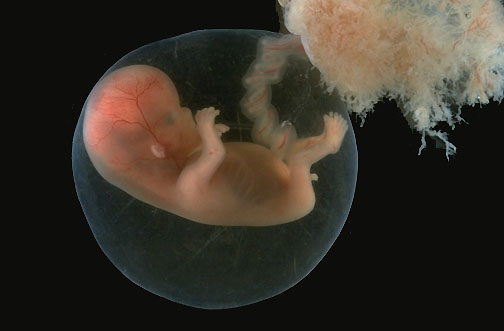
9-10 week old unborn baby- average age for an abortion
Share on Facebook

Abortion and Child Abuse

Does Abortion Prevent Child Abuse?

One argument for legalized abortion is that it would prevent unwanted children from being born, and therefore prevent child abuse.

When people argue against abortion, they often hear that abortion is a blessing because it prevents unwanted children from being born. These unwanted children, we are told, would be abused and neglected if they were brought into existence. Putting aside for the moment that abortion itself is child abuse, that it is killing a child that already exists and is growing in the womb, statistics do not show that abortion reduces child abuse. It is a myth.

For one thing, the rate of reported child abuse has risen exponentially since abortion was legalized in the 1970s. While it may be true that child abuse is more frequently reported now than it was 30 or 40 years ago, surely we would see some reduction in the numbers if it was true that abortion was preventing children from being abused. At the very least, we would not see such an incredible increase.

Studies have also shown that it is wanted children, not unwanted children, that are more frequently the victims of abuse.  Around the time that people were first debating whether abortion should be legal, a pro-choice publication attempted to prove a link between unwanted children and child abuse. However, they were unable to prove correlation. According to the writeup in Eugenics Quarterly magazine:

“There is a contention that unwanted conceptions tend to have undesirable effects… The direct evidence for such a relationship is almost completely lacking, except for a few fragments of retrospective evidence. It was the hope of this article to find more convincing systematic research evidence and to give some idea of the amount of relationship between unwanted conception and undesirable effect on children. This hope has been disappointed.”

This quote appeared in E. Pohlman. “Unwanted Conception, Research on Undesirable Consequences” Eugenics Quarterly, volume 14, 1967, P143

Even a pro-abortion publication, with all the bias that the authors of the study brought to the table, was unable to confirm a link between unwanted pregnancies and child abuse.

It has been suggested that many people who have unplanned pregnancies and originally don’t want the baby grow to love the baby after the baby has been born. Other women put their baby up for adoption and he or she goes to a loving home. It may be the parents of wanted, planned babies that have high expectations for their children and become angry when the children do not fulfill them. They may turn abusive when this happens.

According to a paper put together by the Rocky Mountain Psychological Association, most women who gave birth to a “unwanted” child later say that they are glad they have the child and would go through the pregnancy all over again to deliver them. According to the authors of the study:

“”It is clear that mothers who initially believed their pregnancy to be “the worst thing that ever happened to them” came to feel about the same degree of affection for their children as the mothers who were initially “ecstatic” about the pregnancy.

Most women who were most regretful of the pregnancy now claim that they would have the child again if given the opportunity [whereas] one of every six mothers who were initially pleased with pregnancy would choose not to have the child again.

[They conclude]… Initial feelings about pregnancy are predictive of how a mother will eventually feel about her child only to a very limited degree.”

P. Cameron et.al., “How Much Do Mothers Love Their Children?” Rocky Mt. Psychological Association, May 12, 1972

Child abuse is more frequently related to psychological issues in the mother and/or the father rather than how much the baby was wanted before birth. Most abusive parents were abused themselves as children, others have extreme stresses in their lives or poor coping skills which make them more likely to mistreat their children. It is been suggested by some psychologists that abortion itself may increase the amount of child abuse that goes on. A culture that discards babies before their birth does not value children after their birth. Those who’ve grown up feeling that abortion is acceptable, that one can get rid of the child who is therefore disposable, may lack maternal feeling for a child that is born. After all, most people intuitively realize there is not that much difference between a baby a month before birth and a month after it is born. In addition, women who have abortions may have unresolved issues of guilt that may lead them to abuse children later in life.

Abortion does not solve the problem of child abuse. Rather, abortion is a form of child abuse. Look at this picture of an 8 week-old unborn baby:

Now look at what this baby looks like after an abortion:
Abortion is child abuse because it pulls the arms and legs off babies and crushes their skulls. Nearly every abortion stops a beating heart; every single one tears apart a developing child. Abortion does not prevent child abuse.
Share on Facebook

Late Term Abortion Ban in Nebraska Drives Abortionist Out of State

Late term abortionist Dr. Leroy Carhart has left Nebraska after a law was passed banning abortions after 20 weeks.

Citing evidence that unborn babies feel pain as early as 20 weeks, legislators in Nebraska have passed a law banning abortions after this point in pregnancy.  Since the law has been enacted, abortions in Nebraska have dropped by 10%. This statistic comes from the Nebraska Health & Human Services Department.

Pro-lifers credit this drop to the fact that one prominent abortionist who practiced in Nebraska for years has left the state. Dr. Leroy Carhart performed late-term abortions at his abortion clinic. After the ban on late-term abortions became official, he packed up and moved to Maryland, where he continues to perform abortions late in pregnancy.

20 weeks

By 20 weeks, an unborn baby is fully developed and many doctors believe he or she can feel pain. If the baby is female, she has a uterus and ovaries of her own. The baby sleeps and wakes, and even dreams – REM eye movements have been recorded in unborn infants of this age. He or she reacts to loud noises and soon will recognize his or her mother’s voice.  The only part of the baby that is not fully developed is the lungs – they are not strong or developed enough to breathe air, which prevents the baby from surviving if he or she is born alive. Babies as early as 21 weeks have survived premature birth, but viability (the official time when babies are considered able to survive being born premature) is generally considered to be 23 to 24 weeks.

Pro-life activists who enacted the law were hoping that the pro-choice movement would challenge it in court. Had this happened, the law may have led to the overturning of Roe V Wade, the Supreme Court case that legalized abortion throughout the United States. Pro-choice groups have not taken this step, perhaps because they feared the overturning of Roe V Wade if the court finds in favor of the new law.

Read more about late term abortions:

Share on Facebook

Abortion Numbers Down in Wisconsin

The statistics are in for the number of abortions in Wisconsin, and they reveal that abortions have dropped by 9% throughout the state.  According to the Department of Health and Human Services, there were 8542 abortions in 2009 and only 7825 in 2010.

There are many possible reasons for this decline. Pro-choice activists usually credit reductions in abortions to increases in the use of birth control. This may indeed account for some lower numbers, as fewer unplanned pregnancies obviously leads to fewer abortions. However, the high visibility of pro-life activists as well as the Internet may also be a factor. Because of the Internet, many people have seen pictures of unborn babies at different stages of development and pictures of aborted babies. These pictures as well as other pro-life information may be swaying more people towards the pro-life position – or least encouraging them to choose life when they become pregnant or have a partner who becomes pregnant.

Whatever the reason for the drop in abortions, it is a cause for celebration. Even many of the most extreme pro-choice activists admit that abortion is a necessary evil, an unfortunate event that should be avoided if possible. Therefore, anyone but the most hardened pro-abortion activist should feel that these numbers represent an encouraging trend in the state of Wisconsin.

Share on Facebook

Abortion Damages Relationships between Parents and the Surviving Children

A study came to the following conclusion:

“Abortion can produce a deep, subtle (and often permanent) fracture of the trusting relationship that once existed between a child and a parent.”

Garton, J. “The Cultural Impact of Abortion and Its Implications for a Future Society” In: Mannion M, editor. Post-abortion Aftermath (Kansas City: Sheed and Ward, 1994: 88 – 99; P91

Siblings of aborted babies often suffer. Read the testimony of one sibling here.

Share on Facebook

Laws Requiring Waiting Periods Before Abortion Reduce Suicide Rate

Mandatory waiting periods before abortions reduce the suicide rate among women ages 25-64, according to a study.

In the study “Mandatory Waiting Periods for Abortions and Female Mental Health”by Jonathan Klick, it was determined that the suicide rate of women between 25 – 64 dropped by 10% in states where waiting period and counseling  (informed consent)  legislation was passed. When adjusted for other factors, the number increased to 30%.

The study came to the following conclusion:

It would appear as though waiting periods (and the counseling that usually accompanies them) induce a more reasoned approach to the abortion decision, avoiding rash decisions on the part of the pregnant women. Better decision-making processes presumably lead to fewer regrets later on, lowering the incidence of depression and, ultimately, suicide. These results suggest mandatory waiting periods represent public policies that generate large welfare gains for women faced with unwanted pregnancies.

The study appeared in Health Matrix: Journal of Law-Medicine, volume 16, P 183, 2006 FSU College of Law, Law and Economics Paper number 05 –27

Suicide rates are much higher among women who have aborted versus women who have not. For example, one study shows that the suicide rate for women who aborted 6 to 7 times greater than in women who have never had an abortion.

(Gissler, Hemminki & Lonnqvist, “Suicides after pregnancy in Finland, 1987-94: register linkage study,” British Journal of Medicine 313:1431-4, 1996; and M. Gissler, “Injury deaths, suicides and homicides associated with pregnancy, Finland 1987-2000,” European J. Public Health 15(5):459 63,2005.)

Another study shows that Up to 60% of aborting women have suicidal thoughts.  31% had thoughts of suicide after abortion. In another survey, approximately 60% of women with post-abortion problems reported suicidal thoughts, with 28% attempting suicide and half of those attempting suicide two or more times

D. Reardon, Aborted Women, Silent No More (Springfield, IL: Acorn Books, 2002).

Teen girls are 10 times more likely to attempt suicide if they have had an abortion in the last six months than girls who have not had an abortion.

B. Garfinkel, et al., “Stress, Depression and Suicide: A Study of Adolescents in Minnesota,” Responding to High Risk Youth (University of Minnesota: Minnesota Extension Service, 1986); M. Gissler, et. al., “Suicides After Pregnancy in Finland: 1987-94: register linkage study,” British Medical Journal, 313: 1431-1434, 1996; and N. Campbell, et. al., “Abortion in Adolescence,” Adolescence, 23:813-823, 1988. See the “Teen Abortion Risks” Fact Sheet at www.unfairchoice.info/resources.htm for more information.

Planned Parenthood another pro-choice organizations vehemently oppose laws that would require a waiting period and counseling before abortions. For example:

One proposed law would require the abortion clinic or hospital to provide a woman with information on the probable age of her fetus and details of the abortion procedure and to offer her information about the pregnancy and other options available. Unless her life is at stake, the woman would then have to wait 24 hours before having the abortion. The information could be given by phone or in person.

According to pro-choice groups, these laws are unnecessary and burdensome to women.

“I just think it is patronizing and unfair to women and women’s health.”

Delegate Clifton A. “Chip” Woodrum, Roanoke Democrat

Stephen Dinan “24-Hour Abortion Wait Progresses in House” February 3, 2001 The Washington Times,  8

Share on Facebook

Study on Women Who Had Abortions Reveals Disturbing Statistics

A 2004 psychological study showed the following results among American women:

64% felt pressured by others to choose the abortion

79% received no counseling on alternatives

17% desired pregnancy

39% felt emotionally attached to the pregnancy

52% felt they needed more time to make the decision

51% believe that abortion is morally wrong

30% more unsure of abortion was morally wrong

65% subsequently experienced multiple symptoms which they attributed to their abortions

Vince M Rue, Priscilla K Coleman, JJ Rue, and David C Reardon. “Induced Abortion and Traumatic Stress: A Preliminary Comparison of American and Russian Women.) Medical Science Monitor, 2004 10 (10): SR5 – 16

Share on Facebook

79% Of Pro-Life Pregnancy Center Workers Would Work with Pro-Choicers

The abortion debate is very polarized and often very nasty. Pro-choice activists and insult pro-lifers and call them names, and, sadly, some pro-lifers reciprocate this bad treatment.

Yet in an interview with many pro-life crisis pregnancy center workers (these are people who minister to women who are pregnant and the postabortion women) the majority said that they would be willing to work with pro-choice activists to help women:

“79% said yes to the question “Would you be willing to work with pro-choice activists to alleviate [pregnant women’s] problems, if beliefs about abortion were not raised as an issue?”

Frederica Mathews-Green. Real Choices: Offering Practical, Life-Affirming Alternatives to Abortion (Sisters, Oregon: Multnomah Books, 1994)16

This willingness to work with others on the opposing side is commendable. Perhaps if pro-life and pro-choice activists can put aside their differences, even if only for short time, things for pregnant women could be a lot easier.

Share on Facebook