Nurse’s Association opposes bill that said nurses could do abortions

Quick Fact: Senate Bill 1501 from California would’ve allowed nurse midwives and physician’s assistants to perform abortions. The California Nurses Association opposed this bill,. knowing it to be an obvious health risk for women. Fortunately, the bill did not pass.

Robin Marty, Jessica Mason Pieklo Crow After Roe (Brooklyn, New York: ig Publishing, 2013)  211

Share on Facebook

The canary in the mine; we are losing, says abortion provider

“This is the canary in the mine…. I mean, we’re clearly losing. There is no question, we’re losing.”

Diane Derzis is president of the Jackson Women’s Health Organization, the only abortion provider in the state of Mississippi. She is discussing the clinic regulations that are threatening to shut down her abortion business.

Fewer abortion clinics mean more babies like the one below surviving instead of being brutally killed.

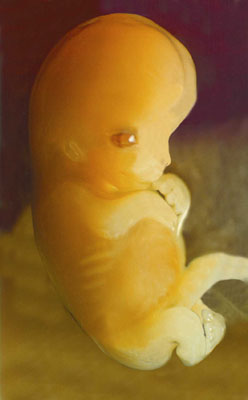
Six-week-old unborn baby

Clinic regulations also prevent the terrible conditions found in some clinics.

Share on Facebook

Some women do not have abortions due to protesters, says clinic administrator

Journalist Frank Main wrote an article about an abortion clinic and interviewed its administrator, Esther McGuire. He says:

“Women seeking abortions must walk past protesters with the protection of pro-choice clinic escorts. Some of the women become angry, while others burst into tears. Fewer women come back another day, while a handful decide to keep their babies, McGuire said.

“I’m not sure that’s so bad if they were that uncertain anyway,” she said.

Whether or not this abortion clinic administrator really is as accepting of women changing their minds as she seems, or whether she is merely trying to give that impression to an interviewer, this quote shows that women DO change their minds as a result of pro-life activity outside of abortion clinics. Sidewalk counseling DOES save lives.

Main goes on to say:

“McGuire said some women who have obtained abortions at the Delta women’s clinic went on to protest abortions at the clinic, underlying what she described as widespread hypocrisy about the issue.”

8 week old unborn baby – most abortions are done at this time or later
8 week old unborn baby – most abortions are done at this time or later. Even saving ONE baby like this one is a tremendous victory.

Or it could mean that these women were emotionally or maybe even physically  hurt by their abortions, and that after they experienced the reality of how horrible abortion was, they wanted to spare other women the same trauma that they went through. Many postabortion women are now pro-life and are active in crisis pregnancy center work or sidewalk counseling. Many times, they are the most effective pro-lifers because they have been there. They are not hypocrites; rather, they know firsthand the destructive power that abortion has over women.  They know what it’s like to face a crisis pregnancy, and they want to help others.

Even a “handful” of lives saved is a victory.

Frank Main “Clinic Administrator Believes Women Must Have an Option” (Baton Rouge, Louisiana) Morning Advocate July 5, 1992

Share on Facebook

A High School Student Learns To Spread the Pro-Life Message

I wrote this article when I was in high school. It talks about my pro-life beliefs and how I learned to be brave enough to speak about abortion. It was published in American Life League’s youth magazine Voice for the Unborn. Unfortunately, this magazine only lasted a few issues.

NOTE: at the time of the article I was a devout Catholic. Today I am an atheist. But it talks a little bit about what I saw as my relationship with God and how I prayed about the issue.

The Guts to Speak Out by Sarah Terzo, Voice volume 1/issue three

It was my fourth week as a junior in a new high school. I had finally, after plenty of minor disasters, figured out how to open my locker, memorized my way around the building, and discovered that the school had no swimming pool or elevator (there are people who love to give new students some “help” when we asked questions.) Now my main concern was making friends, fitting in, and establishing a good reputation.

In my old school I had done some work on the school newspaper, and I decided to see if I could be part of the newspaper staff here too. I figured getting involved with activities would help me meet people.

“The newspaper,” Tara said, “is devoted mainly to political and social issues. We do a few articles on school sports and events, but we also include editorials and a big feature story every month which takes up most of the paper.”

That sounded different from my old high school paper. I went with Tara to the first meeting. There were a lot of people there, and I knew some of them from my classes. Matt, a guy I had noticed from gym class, was there. He smiled at me.

The editor-in-chief, a tall senior girl named Kelly, breezed in and the meeting started. We all sat around the table to discuss the next issue of the newspaper. I found an old copy of the newspaper and leafed through it. I was in for a surprise.

A large ad for Planned Parenthood was printed across from pro-choice editorial. The feature article was about student activism. It was devoted partially to a national student organization, to which I discovered many of the newspaper contributors belonged. The organization described itself as being “dedicated to human rights, including a woman’s right to have an abortion.”

“We’ve decided that this month’s feature article will be on homosexuality,” Kelly said, “and gay rights.”

Tara spoke up. “We have a good opportunity to promote equality and fairness. Everyone has a right to choose their own lifestyle. Problems start when small groups try to force their moral values on everyone.”

“Like with abortion,” someone else said. “Women have a right to reproductive freedom. It’s mostly all these Catholics and religious fanatics who want to take away that right.”

“What do you think?” Matt asked, looking straight at me.

I jumped. “Well, I…” I stammered. It felt like everyone was looking at me. “Should I tell these guys how I feel?” I wondered. “No way. I’m not taking them all on!”

“I think we should give out article assignments,” I said. A few people laughed. Tara smiled, and everyone started discussing school business. “Whew,” I thought. “Looks like I’ll have to avoid certain issues.” Inside a part of me felt bad for not saying anything, but I told myself I was just trying to fit in.

Surprisingly, the subject of abortion came up again the next day, among different people. This was right around the time a doctor botched an abortion in New York City. The eight-month-old “fetus” he’d been trying to kill was born with one arm. In my Spanish class, some kids were talking about it.

“I’ve always supported abortion,” one girl was saying. “I’m only 16. If I got pregnant now, I’d get one. I can’t drop out of school to support a baby. It’d ruin my life.”

“I don’t know why it’s such a big deal. Most abortions happen when there’s just a ball of cells. That was an exception.”

Others joined in, giving their pro-abortion views.

Finally, I said, “I wouldn’t have an abortion. Abortion kills a baby, not a ball of cells.”

“I feel the same way,” someone said. “But everyone needs to be able to decide if abortion is right for them.”

I didn’t say anything else. No one was paying attention to me anyway. But all that day, I kept thinking about those two conversations. I thought about a book I had once read, called Abortion: the Silent Holocaust by John Powell. I knew that abortion is murder. The unborn child had a lot more to lose than I did. Then I remembered a statistic I had heard once, and pushed to the back of my mind because I didn’t want to think about it. Abortion kills 4000 children a day. [Editor’s note – this was written in 1992. The number is now closer to  3000 – the pro-life movement is winning] One every 20 seconds. More people had been killed by abortion than by the Nazis. If I had lived in Germany in the 1940s I would have been compelled to work against the Holocaust. Here, speaking out against evil could cost me a few friends. There, it might have cost me my life. I grabbed a piece of paper, and in the middle of chemistry class, I wrote a letter to the editor for the school paper. I would have until the end of the school day to turn it in.

But I chickened out. I got as far as the newspaper office, letter in hand. But I chickened out.  I didn’t want everyone on my case, and I didn’t want to think about it anymore. I stuck the letter in my purse and went home.

When I checked the mail that night, I found my first issue of Voice [a pro-life teen magazine]. Talk about coincidence! I read it from cover to cover. As I read it I realized that not everyone agreed with the people at my school. There were teenagers like me who were against abortion. I got down on my knees and said a prayer.

“Lord,” I prayed, “Thank you for my life and all you have given me. Please fill me with your spirit and help me overcome my shyness. Father, please give me another chance to do something about abortion. In Jesus’s name, Amen.”

The next day passed without incident, and until school ended. I went to a rehearsal for a play I was in. Rehearsal ended early. While waiting for my mom, I just sort of wandered into the newspaper’s office. Kelly was there.

“Could you please write us a letter to the editor?” Kelly asked. “We need another one and the paper has to go to print tonight.”

I almost died. I took out the wrinkled letter and handed it to her. Then I ran. My mom was waiting for me, anyway.

That weekend, I went to the library to do some research. When I was done, I felt confident enough to discuss the issue with anyone who questioned me about the letter.

I was very nervous when the newspaper was distributed week later. At first, few people said anything to my face. In one of my classes, a girl loudly disagreed with me, but she refused to listen to any of my facts. Mainly, I was concerned with how Matt, Tara, and the others would react. Tara didn’t say anything at all to me that day. In fact, from then on, she was not as friendly as before. Matt told me he disagreed with my letter.

“But I still think it’s pretty cool you wrote it. Some of those girls never had anyone stand up to them before.”

Some of my liberal “friends” drifted away, but many seemed willing to accept the fact that I had a different opinion.

Since writing the letter, I have become more active in the pro-life movement. I’ve received information from Human Life International and have been raising money for a local crisis pregnancy center which provides information and intervention for women considering abortion. It has been a month since I decided to speak up for the voiceless victims of abortion, and I’ve not regretted it for one moment.

Still, it is upsetting when people don’t see. How can anyone look at a picture of an unborn baby, complete with little fingers and toes, and not see human life? I asked God these questions one night, in the quiet of my room. He did not give me a direct answer. But He turned my thoughts to Jesus’s life on earth. I thought of how Jesus must’ve felt when he performed miracles for people and they still did not believe in him. I thought of the apostles, trying to spread the message of salvation through Christ. So many refused to listen. At that moment, I felt very close to God and very happy. There was a sense of deep peace and joy which I knew nothing in this world could ever touch. In doing God’s work, I have become closer to him. My relationship with God has not always been perfect since then, but it is been better.

Now there is talk of Roe versus Wade being overturned, and abortion promises to be a big issue in the election and, therefore, will be discussed in our everyday lives. I am equipped as never before, with information. This is the end of my story. It’s been very “everyday” and non-heroic. But there are simple, daily victories to be one also in this battle for life. As the new generation, our job should be to spread information to other future American leaders. For me, the story is just beginning.

Share on Facebook

Over one third of OB/GYN residents have no training in abortions

According to Medical Students for Choice, an organization that advocates for medical schools to train more abortion providers over a third of OB/GYN residents have no training in first trimester abortions. The organization also says that nearly all family practitioners lack this training:

“97% of family practice residents and 36% of OB/GYN residents have no experience in first trimester abortion procedures.”

Robin Marty, Jessica Mason Pieklo Crow After Roe (Brooklyn, New York: ig Publishing, 2013)

Share on Facebook

On collecting “fetal tissue”

One article discussed the H. Ronald Zielke Brain and Tissue Bank for Developmental Disorders, hosted by the University of Maryland School of Medicine. It contains fetal tissue.

“According to the bank’s 234-page “Catalog of Available Tissue,” updated July 1, it also stores tissue from hundreds of fetuses, including those with chromosomal disorders, anencephaly (a brain malformation)—and many with no disorders at all, marked as “control” tissue and spanning ages 10 to 39 weeks.”

the-1-week-fetus (1)

How does it get this “tissue”?

“Jennifer Boulanger of the Allentown Women’s Center in Allentown, Pa., said her clinic supplies tissue to the University of Washington. She said her clinic is not paid for the donations, but the university provides her staff with the supplies needed to collect and ship the specimens….To ensure tissue freshness, “the specimens are FedExed overnight” to Seattle, …The recipient, named misleadingly the Birth Defects Research Laboratory at the University of Washington in Seattle, has been sponsored by the National Institutes of Health (NIH) for over four decades. It’s known within the research community as a top government distributor of fetal tissue. Last year the Puget Sound Business Journal stated the lab “in 2009 filled more than 4,400 requests for fetal tissue and cell lines.”…  To date, it has retrieved the products of 22,000 pregnancies. According to a description the lab provided in its most recent grant applications, an increase in nonsurgical abortion methods has “created new obstacles to obtaining sufficient amounts of high quality tissue. To overcome these problems and meet increasing demand, the Laboratory has developed new relationships with both local and distant clinics.”

Daniel James Devine “The Demand for Death: Medical Research & Fetal Tissue” Religion Today August 08, 2011

Share on Facebook

Steven Mosher describes scene of forced abortion in China

Steven Mosher was an anthropology student in Stanford University’s PhD program who witnessed how Chinese women were forced to have abortions during fieldwork in China. He’d originally been pro-choice and supported population control but described:

6 months
6 months

“There were 18 women, all from 5 to 9 months pregnant, and many red eyed from lack of sleep and crying. They sat listlessly on short plank benches arranged in a semi circle about the front of the room, where He Kaifeng, a commune cadre and Communist Party member of many years standing, explained the purpose of the meeting in no uncertain terms. “You are here because you have to “think clear” about birth control, and you will remain here until you do.”…

[After reasoning and bribery failed to convince the women to have abortions]

“None of you has any choice in this matter. You must realize that your pregnancy affects everyone in the commune, and indeed affects everyone in the country.” Then, visually calculating how far along the women in the room work, he went on to ask, “The 2 of you who are 8 or 9 months pregnant will have [an abortion by] cesarean; the rest of you will have a shot which will cause you to abort.” Several of the women were crying by this point.”

Steven Mosher, Broken Earth: the Rural Chinese (New York: Free Press, 1983) 225

Share on Facebook

How many people agree with Roe vs. Wade: Poll Numbers Over the Years

Quinnipiac University Poll. Jan. 30-Feb. 4, 2013. N=1,772 registered voters nationwide. Margin of error ± 2.3.

“In general, do you agree or disagree with the 1973 Roe v. Wade Supreme Court decision that established a woman’s right to an abortion?”

Agree

Disagree

Unsure

%

%

%

1/30 – 2/4/13

63

30

7

2/14-20/12

64

31

5

4/14-19/10

60

35

5

7/8-13/08

63

33

5

8/7-13/07

62

32

6

11/28 – 12/4/05

63

32

5

7/21-25/05

65

30

6

5/18-23/05

63

33

5

This poll shows that the majority of Americans from 2005 t0 2013 support Roe Vs. Wade.

Most Americans, however, do not know that Roe Vs. Wade legalized abortions throughout the third trimester of pregnancy. Go here for more info on late term abortions.

Do you know what abortion is like? Read doctor’s descriptions of abortion procedures here. 

Seven-week-old unborn baby – most abortions happen around this time

Another poll:

NBC News/Wall Street Journal Poll conducted by the polling organizations of Peter Hart (D) and Bill McInturff (R). Jan. 12-15, 2013. N=1,000 adults nationwide. Margin of error ± 3.1.

“Do you approve or disapprove the Roe versus Wade U.S. Supreme Court decision? If you don’t know enough about this to have an opinion, please just say so and we’ll move on.”


Approve

Disapprove

Don’t know
enough

Unsure


%

%

%

%

  1/12-15/13

39

18

41

2

Little hand left over from an abortion at 7 weeks

This second poll mischaracterizes the decision of Roe Vs. Wade. Roe v. Wade actually said that the state could not regulate abortion in the first two trimesters (so it legalized first and second trimester abortions, up to 24 weeks) but that the state COULD regulate it in the third trimester. Not that it HAD to, just that it could. That is why some states have laws against late term abortion. So this poll is misleading.

“The Supreme Court’s 1973 Roe versus Wade decision established a woman’s constitutional right to an abortion, at least in the first three months of pregnancy. Would you like to see the Supreme Court completely overturn its Roe versus Wade decision, or not?”


Yes,
overturn

No, not
overturn

Unsure


%

%

%

  1/12-15/13

24

70

6

  12/9-12/05

30

66

4

  7/8-11/05

29

65

6


14 week old unborn baby

Remains of a fourteen week old baby after abortion.

abort14w3

Another poll:

Pew Research Center. Jan. 9-13, 2013. N=1,502 adults nationwide. Margin of error ± 2.9.

“In 1973 the Roe versus Wade decision established a woman’s constitutional right to an abortion, at least in the first three months of pregnancy. Would you like to see the Supreme Court completely overturn its Roe versus Wade decision, or not?”


Yes,
overturn

No, not
overturn

Unsure/
Refused


%

%

%

 
  1/9-13/13

29

63

7

 
  Republicans

46

48

6

 
  Democrats

20

74

6

 
  Independents

28

64

8


  11/3-6/05

25

65

9

 
  7/13-17/05

29

65

6

 
  6/8-12/05

30

63

7

 
  1/03

31

62

7


This poll also mischaracterizes Roe Vs. Wade

Below; Late term abortion, legal in many states. For example, in my  home state of NJ, there are no restrictions on how late a person can get an abortion.

abort11

Read about how the baby above was found by pro-lifers at an abortion clinic. 

Another poll:

USA Today/Gallup Poll. Dec. 27-30, 2012. N=1,012 adults nationwide. Margin of error ± 4

“Would you like to see the Supreme Court overturn its 1973 Roe versus Wade decision concerning abortion, or not?”


Yes,
overturn

No, not
overturn

Unsure


%

%

%

 
12/27-30/12

29

53

18

 
5/8-11/08

33

52

15

 
5/10-13/07

35

53

12

 
5/8-11/06

32

55

13

 
1/20-22/06

25

66

9

 
7/7-10/05

28

63

9

 
Unborn baby at 9 weeks
From an aborted baby at 9 weeks. The coin is there to show the size of the remains of the aborted child so that  his/her age can be verified by a look in an embryology textbook
From an aborted baby at 9 weeks. The coin is there to show the size of the remains of the aborted child so that his/her age can be verified by a look in an embryology textbook

Are the pictures on this site real?


Share on Facebook

Woman on her way too an abortion clinic sees Choose Life license plate, chooses against abortion

Sometimes something as simple as a “Choose Life” license plate on a car makes a huge difference in someone’s life. One article tells the story of a woman who was on her way to an abortion clinic:

“On her way to the abortion clinic she followed a car with a Choose Life license plate. As she got closer, she could not bring herself to keep her appointment. The message on the plate spoke so loudly to her. She followed through with her pregnancy and now has a nine-month-old son.”

As told by Russ and Jill Amerling in Judy Madsen Johnson Stories from the Frontlines: the Battle against Abortion, (self published, 2014) 97


Share on Facebook

South Carolina abortions dropped by 53% between 1988 and 2004

Abortions in South Carolina peaked at 14,133 in 1988. In 2004, the number of abortions had dropped to 6,565, a 53% reduction that far exceeds the national decline.

LET COMMON SENSE PREVAIL National Right to Life News June 1, 2008

Share on Facebook