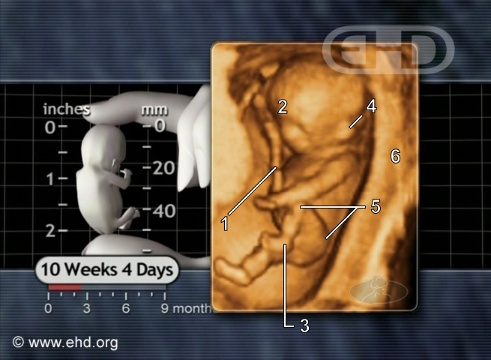
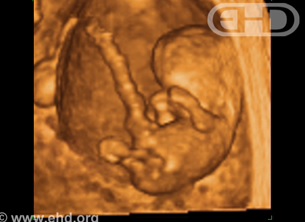
“For me there wasn’t a moral question… I don’t have a problem with this fetus thing, either – if it dies or lives and all this sort of thing. I mean, I don’t ever remember wondering if the fetus thing lives, but I believe that the self is the most important thing…. And I think my friend Jenny said that a baby isn’t a baby until you love it, and I think that that’s a part of it. It wasn’t a person yet. It was a possibility that was on its way, but one that I couldn’t have then.”
Sumi Hoshiko Our Choices: Women’s Personal Decisionsabout Abortion (New York: Harrington Park Press, 1993) 95
Above: If I love this being above, does that make him a baby? If I stop loving him, does he go back to not being a baby again?
“But I really feel good that I made the decision, not to have the baby. Again, I pretty much had made my decision, talked to myself, you know, constantly, talked to my sister, talked to the baby. ‘Cause I definitely believe that when you get pregnant, I don’t care if it is just a little … little form there… It feels, picks up on the vibes. I really do believe that. So it was important for me to let the baby know that. It just wasn’t a good idea to have another baby right now. Not this time in my life. That it was time for me to get on to other things that I have to do for me. Both times I felt that the baby understood that wasn’t the right time for it to come.”
Sumi Hoshiko Our Choices: Women’s Personal Decisionsabout Abortion (New York: Harrington Park Press, 1993) 89
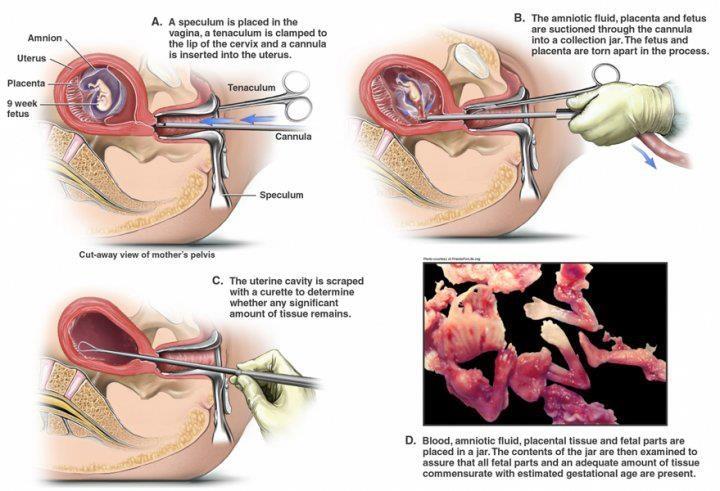
Did her babies really “understand” and accept the fact that they was going to be torn limb from limb in an abortion? Below are graphs of the two most common abortion procedures in the United States (and also very common worldwide)
If the baby could think and perceive, do you really think he or she would understand and accept their fate?
Norma Goldberger, abortion clinic owner and abortion counselor on what happened after abortion was legalized:
“The number of women who decided to have an abortion was phenomenal. A study by Kinsey, performed when most abortions were illegal, documented that 10% of women had a history of at least one abortion by the age of fifty. Now that abortion was legal in some states that percentage was rising.”
Norma Goldberger Abortion Confidential: Secrets of an Abortion Clinic Owner (CreateSpace , November 23, 2014) Kindle Edition
Pro-choice organizations like to say that one in three women have an abortion in their lifetime but the research is suspect.
The Clergy Consultation Services had centers where abortion minded women came to be referred for abortions before and right after Roe Vs. Wade. Norma Goldberger ,who would later run an abortion clinic, wrote about getting a job at one.
“After interviewing me, and making sure I was pro-choice since I was visibly pregnant, he offered me the counseling position, saying I was the answer to his prayers. He explained he was inundated with women seeking information on how to secure an abortion.… The Rev. sent me over to a free clinic called Open Door Clinic, which served many of the students of the Ohio State University… Since I was about six months pregnant, I needed to assure everyone that I was pro-choice…
The clinic solicited free drugs from doctors’ offices presumably to dispense in our free medical clinics. The other staff members were all hired because it is in the knowledge of drugs and drug use. The first thing they did was to scour the drug donations for “useful” medications for themselves.”
Norma Goldberger Abortion Confidential: Secrets of an Abortion Clinic Owner (CreateSpace , November 23, 2014) Kindle Edition
The story of a woman whose secret abortions haunted her:
… I recall a story my mother shared with me when coming onto my puberty. She told me that my paternal grandmother on her deathbed was quite frightened of dying. She confessed to my mother, who attended her passing, that she was “afraid to meet all her dead babies on the other side.” It seems Grandma had induced several abortions which were secrets kept from family and friends alike. At death’s door, Grandma confronted her previous liasions with mortality and murder, carrying this hidden fear for years.
End of first trimester
That story made a strong impression on me, as I had been taught through the popular “planned parenthood” information materials that abortion was more like a tooth extraction than murder. A little painful, but not such a moral crisis. How could this be true when Grandma carried that guilt all her life? I couldn’t imagine similarly repenting my dentistry operations upon my deathbed.
7 week ultrasound. 2/3 of abortions happen at 8 weeks or later, this is under that
From a woman named Tracy, who had an abortion against her boyfriend’s wishes.
“He wanted me to keep it… He would beg me to keep it. “Don’t kill it; don’t kill it. That’s my baby,” you know?? This back and forth, back and forth…
Then I got pressure from my family. My aunt said, “Keep it. I’ll take care of it. I’ll keep it and you can go to school.” I’m not going to give you my child, you know? At the time I was staying with my aunt, and she’s a lesbian. So she won’t be having any more kids.… And she has a fairly large house. Financially she’s pretty much stable. And she wants a child, but I guess she would rather have mine. So her and her girlfriend, they want my child. That’s pressure from another end, right? “We could take this room here and we’re going to fix up the nursery.” So it’s like a tug-of-war…
I was 17 at the time and he [the father of her baby] was about 19 or 20. And he was like, “Keep it; I’ll do anything for the child.”…
In the back of my mind, my first reaction was, I am not going to keep this baby… I have all these dreams; my life is going to change. I can’t do the things I want to do. I don’t think I could lead a normal life of being a teenager. I would just miss a whole bunch of things.…
Then, after the abortion, I just didn’t want to see [the father of the baby] anymore. Isn’t that something?”
Sumi Hoshiko Our Choices: Women’s Personal Decisionsabout Abortion (New York: Harrington Park Press, 1993) 168 – 170
The abortion clinic she is describing belongs to Curtis and Glenna Boyd. They do late-term abortions. Babies like the one below (and ones quite a bit older) are dismembered at this “bright and airy” clinic.
A late term abortionist talks about the reasons women get abortions late in pregnancy:
It’s a natural question: “why did she wait? Why wasn’t she there at six weeks rather than 18?” Maybe she had irregular periods, she didn’t have Mother Nature’s early warning system. All kinds of reasons. Maybe she was raped — there’s another level of denial that goes with that. There’s also the decision-making process. Women assess all their responsibilities and resources, and ask — do I have enough to be a good mom and have a baby? For some people they do that really fast, and for other people it takes longer.
18 weeks
Conversations about stress in a relationship, changes in employment status. Those decisions take longer. And then there’s the access to care — that gets into that issue of disparities. Poor women have to make the arrangements: time off work, time off school, childcare, travel. If you have a waiting period, you have to travel twice and it’s that much more expense. Those factors can all delay a woman.