From one clinic worker, in an article about abortion stigma.
“I wish we could stamp out all the negative connotations about abortion and instead show the truth: someone you love has had an abortion. It’s not uncommon. Regular girls have them. It takes strength, courage, bravery, and determination. There’s nothing irresponsible about it and it’s not a frivolous choice. People who have abortions think about the future. They think about now. They think about others.”
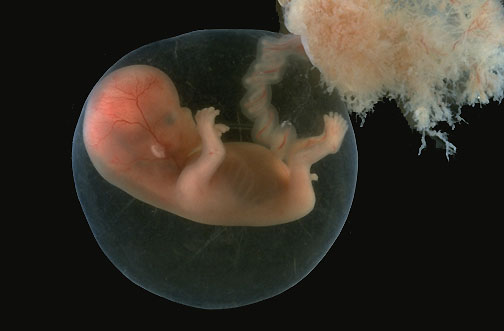
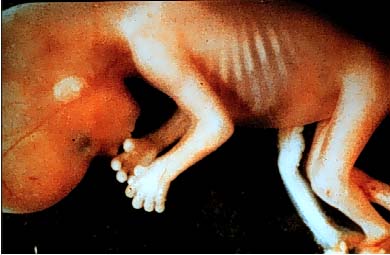
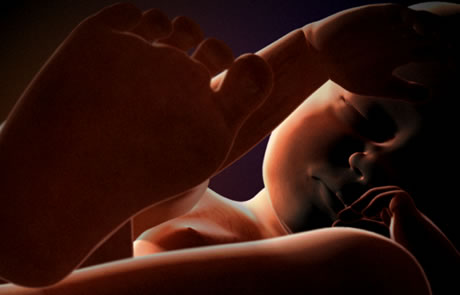
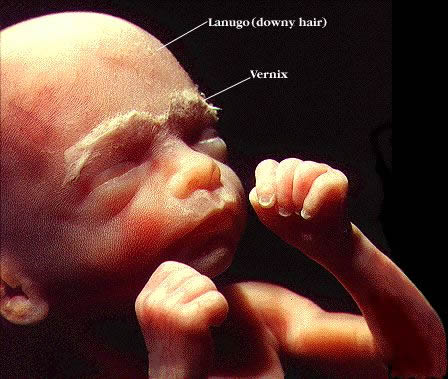
Does it really take bravery to kill an unborn child like this one?
From a woman who aborted a down syndrome baby – she expresses negative feelings towards a woman who asked her when she was going for the “abortion”.
“The truth was, until I heard the word “abortion,” it hadn’t occurred to me that I was actually having one.
I was, of course. But we’d been using euphemisms for days, ever since my doctor called to say my amniocentesis results “weren’t good.”we’d say “when we go to the hospital” or “the appointment” or “after procedure, we can try again….
I’m quite certain that I made the right choice for the three of us. [Her, her husband, and the unborn baby]”
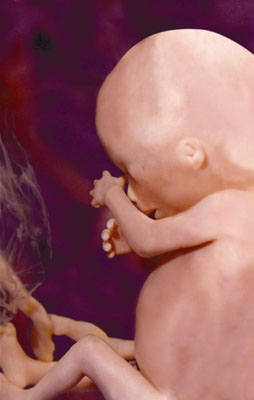
16 week old unborn baby
The woman maintains that she made the best decision for her baby, who was a boy. Since Down Syndrome is not detectable until 16 weeks or so, the baby was at least 16 weeks old when she had her abortion. At this stage, abortion is done by D&E, where the baby is torn apart with forceps, the doctor first extracting an arm, leg, etc. Read more about D&E abortions here. And watch a video of the procedure here.
It is interesting to note the distortion of language that takes place to justify the killing, and the brutal killing, of the baby.it reminds me of this quote by a Nazi.
Hermann Pfanmuller, who ran a hospital for the disabled and decided which of his patients would die in the gas chambers of Nazi Germany, declared that he:
“worked… solely in the interest of the patients in [his] care.”
Michael Burleigh, Death and Deliverance: Euthanasia in Germany 1900 – 1945 (New York: Cambridge University press, 1994) 129
and
One Holocaust scholar observed that, after poring through thousands of Nazi documents, he happened upon the word “killing” only once – in an edict concerning dogs.
Raul Hilberg, the Destruction of the European Jews (New York: Holmes & Meiers, 1985), volume 3, 1016
Nazi quotes from James F Bohan. The House of Atreus: Abortion Is a Human Rights Issue (Westport, Connecticut: Praeger Publishers, 1999)
Deborah Kendrick is a mother who is blind due to a rare form of cancer that strikes in childhood and is hereditary. A doctor expressed sorrow that a prenatal test to determine whether the baby was susceptible to cancer had not yet been perfected. In the article “Life-And-Death Decisions Are Made to Easily” Kendrick speaks out against eugenic abortion. At the end of the article, she says:
“If my position on these issues seems uncharacteristic of other opinions expressed in this column, well, maybe it’s because it’s so personal. Had the tests been available when my mother was pregnant with me, I might not be here.
My daughter is the light of my life. She doesn’t know, unless she reads this, the Dr. once told me that her birth shouldn’t happen.”
“Today, though, there are so few providers who will perform terminations that the people who do agree to provide them end up taking the bulk of procedures. It can be hard… Doing them over and over and over again can be really taxing. All of us who provide abortions believe in what were doing and think it’s a good thing and a right that needs to be available. But when you’re in the clinic and in that group of people doing it, it can be tough, and you can get really tired. I don’t think it will ever make me stop doing terminations, but it can move people to tears. And it’s not just me – it extends to the nurses and the people who help us in the operating room… I even know people who feel they can’t tell their families what they do; their families think they work on labor and delivery.”
Cheryl Alkon “Confessions of an Abortion Doctor” Boston Magazine, December 2004
Under current US law, an unborn baby only becomes a person when he or she is born. Traveling down the birth canal a few inches means the difference between murder and simply a medical procedure. One pro-life activist makes the following argument:
“Recently, in San Francisco, an unborn child was partially removed from the womb in order to have a renal tract obstruction repaired. After the surgery, the child was replaced in the womb to continue the pregnancy. Was this a person while out of the womb and then a nonperson again when back inside? Or, since the procedure involves the removal of the lower half of the body from the womb, did the child achieve personhood for its buttocks but not for its brain? These are the scientific anomalies of the Supreme Court’s decision. No wonder [former Supreme Court] Justice Sandra Day O’Connor has said that Roe versus Wade is on a collision course with itself.”
Eugene F Diamond, “an Open Letter to the Open-Minded” Fellowship of Catholic Scholars Quarterly volume 27, Winter 2004
“After Washington state began to provide public funding for abortions in 1970, the breast cancer rate among the poor rose by 53%, while the rate for rich women dropped by 1%.”
Mona Charen, Conservative Chronicle, November 2, 1994, quoted in Tamara L Roleff. Abortion: Opposing Viewpoints (San Diego, Greenhaven Press, 1997) 157
“I quit my job at the clinic to write my dissertation but also because I had enough of the clinic. I didn’t consider it to be a feminist place. While the clients got adequate medical care and the counselors were solicitous, I thought the staff, in general was overly directive, paternalistic, and even callous at times.”
Wendy Simonds. Abortion at Work: Ideology and Practice in a Feminist Clinic (New Brunswick, New Jersey: Rutgers University Press, 1996) page 7
A woman who became an abortion activist explains why she got involved:
“They were out where you could see them, and you just [sighs and stutters]… I saw a lot of people who had abortions, and they said, this is what happened, this is what I killed. It was a very emotional experience for a lot of them… What I really saw was a lot of hurting people… I mean, the mothers is what really got me. When I saw all these women who were going through postabortion syndrome, and then most people don’t even recognize it is a real disease. I saw people that were really hurting and millions and millions upon millions more were doing this over and over… Seeing the babies – that made an impression on me that will probably stay with me forever – but I don’t think that was it. I guess a lot of it was hearing people stories… I was opened up to just really what abortion was doing to people. Especially to the mothers. So I decided that something needed to be done.”
She became involved in the Rescue movement, a movement in the late 1980s and early 1990s where large groups of pro-life protesters blocked abortion clinics in an attempt to prevent women from entering them and having abortions.
“When I go to a rescue, I’m trying to save people from hurt, trying to keep people from ruining their lives… I don’t think people know what the abortion is going to do to their child’s life and to their life. And to show them that they are valuable. Because people just do not feel valuable… When I see the women coming in. They’re thinking, “What about me? The most important thing is what situation I’m in, people aren’t going to help me, people aren’t going to love me. I’m going to be abandoned.” That’s really the first place to start. From there you can help the baby… It is a family problem, a social problem that can only be solved by dealing with the whole family… Not just to help the mother, but to help the whole family. Because if she’s going to keep that child, and if I don’t have a healthy mother, the child not going to feel good about themselves either. So by helping her, then I can help everybody.”
Carol JC Maxwell. Pro-Life Activists in America: Meaning Motivation and Direct Action. (Cambridge: Cambridge University Press, 2002) 140 -143
One hospital worker who had no particular feelings about abortion volunteered to help perform a late term abortion when the assisting nurse, a Catholic, refused. He says of the experience:
“I remember very vividly passing instruments to a well known abortionist on the northeast side of Atlanta as he removed pieces of a then deceased child from its mother’s womb. It was like a puzzle, the doc pieced the corpse together to be sure it was all there. He then delivered the placenta.”
Personal correspondence with Sarah Terzo, Jan 12, 2013
“Long-term physical effects still haven’t really been studied. For example, RU-486 crosses the blood follicle barrier and has been found in the egg follicles of women taking the drug. How this might affect future fertility, pregnancy, and the health of future children is not yet known…
As an artificial hormone, RU-486 interacts with a host of other hormone receptor sites scattered throughout the body.… Not only does RU-486 block the work of progesterone, but, because of its similar chemical structure, it also blocks the normal activity of cortisol, a hormone crucial to many of the body’s metabolic, nervous, circulatory functions. While most progesterone receptor sites are found in various organs of the female reproductive system, every tissue of the body binds cortisol, theoretically opening every system of the body to RU-486’s toxic effects.
Not only does RU-486 linger in all the body’s tissues for several days, but it is also absorbed into the cells in the area where RNA and DNA are stored. What effects this has on a woman’s DNA or RNA is unknown. But phenyl, an important part of the RU-486 molecule, is known to be toxic substance for humans.”
Tamara L Roleff. Abortion: Opposing Viewpoints (San Diego, Greenhaven Press, 1997) 153