From one abortionist, who has dealt with thousands of abortion patients, a comment on the fact that many abortions take place because the male partner wants them:
“It’s never simple. But when it comes to a choice between the man and the pregnancy, many women yield. They do with the man wants.”
Don Sloan, M.D. with Paula Hartz, Abortion: a Doctor’s Perspective, a Woman’s Dilemma (New York: Donald I Fine Inc., 1992) 171
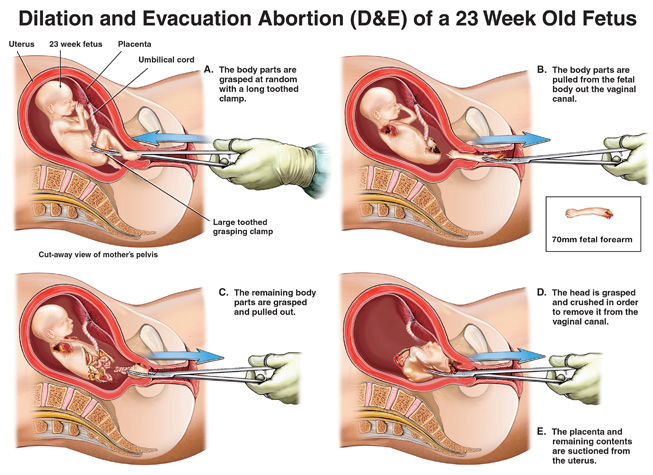
Dr. Bernard Nathanson, former abortionist, on the D&E procedure:
“This [the D&E procedure] strikes me as rash and irresponsible… The surgeon is working blind, and the womb is soft from pregnancy, and the relatively large chunks of jagged bone and cartilage wreak havoc if they are not removed with great skill.”
Bernard N Nathanson, M.D. with Richard N Ostling. Aborting America (Garden City, New York: Doubleday & Company, 1979) 44
A 1977 paper presented to the annual meeting of Planned Parenthood physicians said the following about their abortionists:
“As the doctor tends to take responsibility and assume guilt for the procedure, she or he may have disturbing undercurrent ruminations or dreams.”
Nancy B Kaltreider , M.D., Sadja Goldsmith, M.D., MPH, and Alan J Margolis, M.D. “Second Trimester Abortion by Dilation and Extraction (D&E) Surgical Technique and Psychological Reactions,” unpublished paper, P6
Rachel M MacNair, PhD. Achieving Peace in the Abortion War (New York: iUniverse, 2009) 13
Pro-Choice author Magda Denes recounts her experiences joking around with abortion clinic workers:
“… Several of us sit in the cafeteria around a luncheon table, eating overdone, tasteless stew. “What do you think this is made of?” Someone asks. “Venison,” I say. “Pigeon,” says Betsy. “Don’t be silly,” says one of the counselors “there is a hell of a lot cheaper meat to be found around here.” All of us laugh, guffaw, splutter, and slap each other on the arms. It is the funniest thing we have heard in years… “Get a hold of yourself, ladies,” Rachel says. “This is unseemly.” She is right, of course, but all of us laugh again. “I think it’s a Greek dish,” says Teresa, laughing so hard that tears begin to roll down her face and we can barely understand her. “It’s fetustu.” There is no containing any of us now. “There is mincemeat pie for dessert,” someone shouts. “And that isn’t tomato juice you’re drinking, ” adds somebody else. Most of us are doubled over. The air is filled with the shrieks, and gasps, and gurgles. My sides begin to ache.”
Magda Denes, PhD. In Necessity and Sorrow: Life and Death in an Abortion Hospital (New York: Basic Books inc 1976) 246
James Tunstead Burtechaell quotes a Planned Parenthood worker:
“For women who have completed their ideal family size, the decision to abort can be excruciating. It’s a lifestyle choice, and we are not taught to think in such a self-centered way.”
James Tunstead Burtechaell, C.S.C. Rachel Weeping: the Case against Abortion (San Francisco, CA: Harper & Row Publishers, 1982) 92 to 93
“You could hear crying in the holding room… crying of women who already had the abortion. I remember the sounds, the smells, the suction… You could hear the sound of the motor of the pump, the suction when the baby was being withdrawn, the clinking of the utensils.… [She recalls] this hurts so bad [and then thought] this is what I get, of course it’s going to hurt… Look what I’m doing… I just remember the crying… So many people crying.”
Only her husband and eldest son know about her two abortions which he had in high school. At the time of the quote, she was 35.
James D Slack Abortion, Execution, and the Consequences of Taking Life (New Brunswick: Transaction Publishers, 2009) 67
Former abortionist Professor Stuart Campbell on how parents react when they see the high quality ultrasounds which he pioneered:
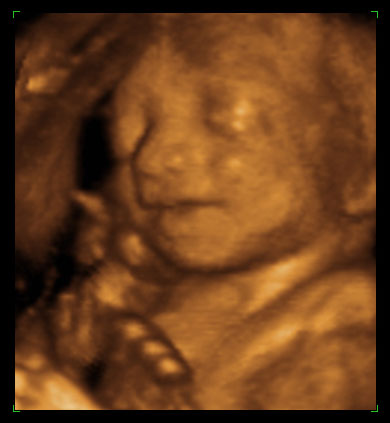
“They are overwhelmed. Husbands kiss their wives’ abdomens. They actually start talking to the baby for the first time. They can recognize the features, see who the baby looks like, but it’s not just that, it’s also the baby’s behaviour: you see eyelids opening, opening its mouth, sucking its thumb, doing baby-like things.?… Parents come to me and they are so astonished by what they see…Most of them have no idea about the life inside the uterus, what the placenta does, what the yolk sac is for, about the growth and development of the baby. When you look at the pregnancy books, they tell you about lifestyle, smoking, what to eat, what not to eat, sex, all that stuff, but not so much about the foetus. In this book I’ve tried to be realistic about that.”
22-24 weeks
The ultrasound technology was instrumental in Campbell’s decision to quit doing abortions. He remains pro-choice for early abortions, but opposes them after 20 weeks.
Magda Denes, who observed at an abortion clinic and wrote a book about it, on how she became hardened to the abortions and the death of the babies:
“Sensibility is blunted through exposure. After weeks of trailing Holzman from from OR 1 to OR 2, my sense of meaning dulls. I begin to see “cases,” “cervical apertures,” “fetal tissue.”… I worry about snags in tempo during operations, but no differently from the way I worry about an unfamiliar noise in the motor of my car. One time the circulating nurse loses her wedding ring during surgery. She discovers the loss at the end of the operation as the orderly is about the fold the bloodied sheets on the floor. She takes the filled plastic bag from the wastebasket and empties it into the middle of the sheets. Both kneel and with their bare hands rummage frantically in the pile of placental tissue and blood and chopped up fetal body parts. “It has to be here,” she says nearly in tears. “We’ll find it,” he reassures her. I am all for them. Is frightful to lose one’s wedding ring.… Hours later, when the scene reasserts itself in my mind, I do not recognize myself. Is inhumanity a habit? Is indifference the result of the attrition of meaning? If so, one must watch the self like an enemy.”
Magda Denes, PhD. In Necessity and Sorrow: Life and Death in an Abortion Hospital (New York: Basic Books inc 1976) 239 to 240
Linda Couri worked for Planned Parenthood first as a volunteer and then as an employee. she had an abortion herself before working at Planned Parenthood. An article (TIM GRAVES “From Planned Parenthood to Pro-Life” National Catholic Register Aug 24, 2011) says the following:
For Couri, her abortion at the Planned Parenthood business revealed that “there is nothing joyful about abortion. Some women are complacent, but most just bare-knuckle their way through it.”
….
“Throughout the next decade, she thought little about the abortion and her complicity in ending the life of her unborn child, “tucking it away in a comfortable, intellectual place.” Like many post-abortive women, the experience led her to get involved in pro-abortion political activism. Indeed, Couri contends that the movement to defend legal abortion is fueled by post-abortive women.
Couri became a volunteer, and later an employee, of Planned Parenthood. She worked in Champaign, Ill., about a three-hour drive from Chicago, and she presented sex-education classes in schools.
As the only mental-health professional on staff, she also counseled girls seeking abortions. But, according to Couri, she actually focused on preparing these young women for their abortions by reviewing the steps of the procedure. The counseling part of the interview mostly consisted of her asking patients: “Do you know what you’re doing?” “Is this what you want to do?”
Memories culled from those “counseling” sessions still haunt Couri. One woman, a married university professor with three children, was clearly struggling with the decision. She could have gone either way. In the end, she had the abortion, and Couri never saw her again.
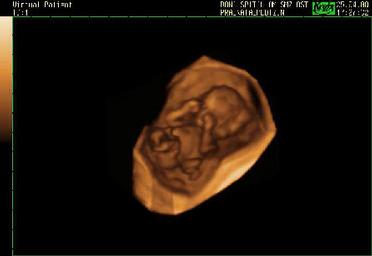
nine – 10 weeks – many abortions are done at this age
Now, Couri expresses “a lot of regret when I think of her. I could have dissuaded her from having an abortion, and I didn’t.”
Truth be told, while working at there, Couri had become conflicted about the morality of abortion: She supported Roe v. Wade, but she also believed the unborn child was a human being and that abortion destroyed the child’s life.
During one counseling session with an unmarried 16-year-old, Couri offered a range of options: Keep the child and rear him herself, put the baby up for adoption, or have an abortion.
Then the girl asked, “If I have an abortion, am I killing my baby?”
Couri responded, “‘Kill’ is a strong word, and so is ‘baby.’ You’re terminating the product of conception.”
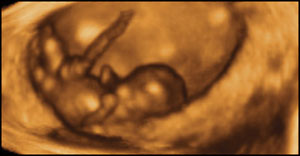
seven weeks
Couri was haunted by guilt and was uneasy about the girl’s abortion. Her questions had triggered doubt in Couri’s mind. the article goes on:
Yet, in her heart, Couri knew better, and she later shared her concerns with her supervisor.
Most Planned Parenthood staffers are women, Couri noted, and many, like her, will privately concede that they have mixed feelings about abortion:
“You can’t be a woman and not be conflicted about it.”
Her supervisor suggested that the 16-year-old’s choice for abortion would be the lesser of two evils. For Couri, the telling point was that abortion was acknowledged as an “evil.”
Couri began attending mass. Her pro-abortion friends and coworkers made fun of her. She wore her Planned Parenthood badge to church, and was still working there. When a priest who was counseling her brought up her involvement with PP, she reacted with hostility. But later, at a retreat, she decided to leave PP. Eventually, she began to suffer what she called a “nervous breakdown” and went to the church for help. When she got involved with Project Rachel, she became pro-life and is now a pro-life speaker.
Another thing that made her question her stance and eventually led to her leaving was stated in another article:
She read journals where women recorded their feelings right after abortions and was amazed that many of them were upset and said, “I’ve killed my baby.”