Pro-life researchers Elizabeth Ring-Cassidy and Ian Gentles revealed that the conclusions of many abortion studies are misleading:
“There are often glaring inconsistencies between the actual research results and the summaries and conclusions of articles… Attempts to minimize negative results and to explain away findings that are not consistent with accepted opinion exist throughout the literature on abortion sequelae. A medical practitioner or family counselor is then left to wonder: Whose finding should be accepted?”
They cited, for example: Taylor VM, Kramer M.D., Vaughan TL, Peacock S. Placenta previa in relation to induced and spontaneous abortion: a population-based study. Obstetrics and Gynecology 1993 July; 82 (1) 88 – 91; P91
In this study, they found that women who have abortions are 28% more likely to have placenta previa. However, they discounted this finding as insignificant. Also, the excluded from consideration the women who had no live births after abortion. Had they included these women, the risks would’ve been increased by 50%.
“Taylor’s conclusion provides a useful illustration of a fact noted elsewhere ….that the conclusions of research studies on abortion after affects often minimize the significance of the data gathered.”
They give another example: Daling, JR, Chow WH, Weiss NS, Metch, BJ, Soderstrom, R. Ectopic Pregnancy in Relation to Previous Induced Abortion, Journal of the American Medical Association 1985 February; 253 (7): 1005 – 8
“women who had two or more induced abortions increased their risk of ectopic pregnancy 2.6 times. While admitting that this finding is “worrisome”, they nonetheless concluded that “it remains unresolved whether having a legal induced abortion in the United States imparts an excess risk of EP [ectopic pregnancy].” The abstract of the study states that the research shows that abortion “does not carry a large excess risk.” Here again, the conclusion is at odds with the data.
Elizabeth Ring-Cassidy and Ian Gentles. Women’s Health after Abortion: The Medical and Psychological Evidence Second Edition (Toronto, Canada: The deVeber Institute for Bioethics and Social Research, 2003) 8, 43-45, 52
La Verne Tolbert never worked in an abortion clinic, but she was a Planned Parenthood board member for five years. She was the only African-American member on the board during that time. She says of her first meeting:
“I attended my first board meeting filled with anticipation. It was quite a short bus ride from the mid-town office where I worked as an editor over to the Margaret Sanger Clinic, named after Planned Parenthood’s founder. Over time I noticed that several of the board members arrived in chauffeured limousines. Who were these men of wealth, I wondered, and why were they so interested in the people who lived in the inner city?
Once in the building. I walked past the clinic that served primarily African-American and Latino girls. The elevator took me upstairs to an imposingly large boardroom, and I took my seat with the striking observation that I was the only person of color in the room. The majority of board members were male, and the handful of women appeared to be much older than my twenty-seven years.
….
Early in my volunteer service on the board, I learned about the biggest challenge that Planned Parenthood of New York City faced. For every abortion that was performed, a death certificate had to be issued by the Department of Health. They wanted to reverse this law.Death certificates? Does that mean the babies were alive?Like millions of other Americans, I debated about when life really begins. When is the fetus viable? When can it live on its own? Abortion could not be murder if, indeed, all that was aborted was a “mass of tissue.”
Part of our responsibility as board members was to become familiar with abortion procedures. We read documents detailing how abortions were performed, and for me, that’s when the viability debate ended. I learned of two kinds of abortions—saline and dilation and evacuation, also called D&E. I would later learn about a third type, late-term or partial-birth abortion.
In saline abortions, babies inhale a salt solution that is introduced into the womb. The mother experiences premature labor and delivers a dead, burned baby. In instances where the baby is born still breathing, he or she is placed into a plastic bag, which is then sealed, and the baby is suffocated.
Note: this procedure is no longer performed today because it had such a high complication rate and also sometimes resulted in babies being born alive. Gianna Jessen and Melissa Ohden are two young women who survived saline abortions and went on to be adopted.
The dilation-and-evacuation abortion literally tears the baby apart limb by limb. The instrument used, insanely called a “straw,” is actually a powerful suction device. It is inserted into the mother’s uterus, where it searches for an arm or leg of the baby. Once it latches on, it tears that limb from the baby’s body. Each limb is subsequently torn apart and suctioned, or “evacuated.” Since the head is too large to pass through the nozzle of the “straw,” the doctor has to insert an instrument that looks much like a clamp. It grasps the baby’s head and crushes it into smaller pieces, which are then evacuated. A nurse puts all the pieces of the baby onto a nearby table, reassembling the body to make certain that all parts have been successfully removed from the uterus.
I was horrified. I came to the next meeting shaking with disbelief and filled with protestations. Holding up the papers, I said that these procedures were traumatic for both the mother and her baby.
An older woman sitting directly across from me looked me coldly in the eye and said in a low, rabid voice, “It is not traumatic!” I was stunned by her insensitivity and chilled by her icy stare.
I was on the verge of resigning from the board. Now that I understood what was really involved, I wanted no part in this abortion business. But the question, “Who will speak up if I leave?” kept me in a quandary. Eventually deciding to remain, I determined to be a thorn in their side and often cast the lone opposing vote.
….
Tolbert now says:
“Abortion stops a beating heart.A person who is pregnant is going to have a baby … it is not a mass of tissue.”
Tolbert is now a minister and pro-life activist on the Issues 4 Life board.
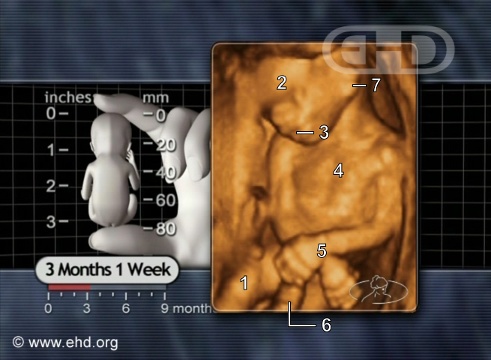
16 weeks – amniocentesis is done around this time.
When health insurers do enter the field [of genetic counseling], some enterprising company may offer to pay for amniocentesis and abortion, if indicated, but not for subsequent medical care of the offspring, should abortion be refused.”
Dr. Gilbert S. Omenn, Medical Genetics Division, University of Washington. Quoted in “M.D. Predicts Forced Abortion.” National Right to Life News, July 1975, page 4
Cases of this have already happened. When health insurance will cover the abortion of a disabled child, but not that child’s care, parents are being coerced into aborting their handicapped children.
“Each country will have to decide its own form of coercion and determine when and how it should be employed. At present, the means available are compulsory sterilization and compulsory abortion. Perhaps someday a way of enforcing compulsory birth control will be feasible.”
Alan F. Guttmacher, M.D., former Medical Director of the Planned Parenthood Federation of America (PPFA). Medical World News, June 6, 1969
“People who carry genetic disease should be prevented from having children. We ought, in conscience, to have a humane minimum standard of reproduction, not blindly accepting the outcome of every conception. And we ought to act on our genetic information to prevent the birth of children below that minimum.”
Bioethicist Joseph Fletcher, during his address of the second national Symposium on Genetics and Law, held in May of 1979 in Boston and sponsored by the March of Dimes.
Tommy Tucker was an abortion doctor who killed two women, injured many more, allowed people with no medical training to perform abortions in his clinic, and allegedly killed a newborn baby that survived abortion. He surrendered his license, But, according to Ron Fitzsimmons from the National Coalition of Abortion Providers:
“Tommy should get the appropriate penalty, On the other hand, I really do think Tommy in many ways is a victim.”
USA Today, Abortion debate turns to regulation of doctor: 7-7-1994
Quoted by life dynamics
Read a first-hand account of a woman who worked in abortion doctor Tommy Tucker’s clinic and her heart rending account of the woman he let bleed to death on the abortion table
One clinic worker discusses how many women do not tell their partners, parents, or friends about their abortions, and come in for them alone:
“…While lots of women involve loved ones in their decision and some even bring partners, parents or friends to the clinic, lots of women don’t. For most of these women, I think its about self-preservation. They don’t tell because they expect their parents or partner to be unsupportive, perhaps even try to prevent them from having an abortion. I think the majority probably tell them later, when the fear that the unsupportive loved one can block their choice is gone. These women sometimes express guilt for not telling, but it strikes me as smart. It makes sense to call only on people one can expect support from. It only makes me mad that some women can’t rely on their closest family and friends to support them, no matter what.”
Women who hide their pregnancies from the very people who could help them find alternatives are forced to struggle with the terrible decision of abortion alone. This clinic worker is not the first to suggest that her patients considering abortion refrain from telling anyone who might encourage them to have the baby or offer practical, life-affirming help.