“It’s everyone else”

Maureen Freely, feminist:

“Our feminist canon tells us that an unplanned, unintended, unwanted or ill-timed baby is likely to “ruin” a mother’s life.  Any woman who is gone on to give birth to one of the above in spite of these warnings can tell you, actually, it’s not the baby who ruins your life.  It’s everyone else.”

Freely, M. “what about us?  An Open Letter to the Mothers Feminism Forgot  (Bloomsbury, London, 1995) 16

Every pro-lifer should support single mothers and poor families in our society, which often does not value children.A more positive attitude about babies and their mothers is important.

Share on Facebook

Woman has abortion because she didn’t want to miss ski vacation

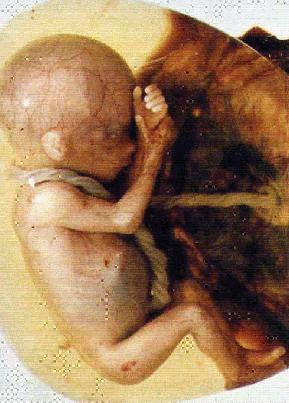
Feet of an unborn baby aborted at 10 weeks

“The British gynecologist P. Greenhalgh writes of a rich mother of three who came to her for an abortion.  She wanted a fourth child but not just yet, since the family had already reserved a ski vacation months down the line.  Many OB/GYN specialists have stories like this, and, when one hears them, it’s easy to see why women feel so guilty about owning up to the pedestrian nature of their reasons [for having an abortion.]”

Christopher Caldwell “Pro–Lifestyle” The New Republic April 5, 1999

Share on Facebook

68% of legal abortion deaths caused by physician error

A study cited in a book on second trimester abortion found that 86% of cases where women died from legal abortion “could’ve been prevented” and that 68% was because of the physician making a mistake (“physicians performance”):

“A review of fatal cases indicates that 86% of the deaths might have been prevented if there had not been some problem in carrying out the tasks needed to avoid the death… In 68% of these cases, there was a problem with the physician’s performance.”

Gregory S Berger, William E Brenner, Louis G Keith Second Trimester Abortion: Perspectives After a Decade of Experience (Boston, Massachusetts, 1981) 22

Read about abortion doctors and clinics and their multiple lawsuits and malpractice cases  here


Share on Facebook

Abortion should be legal because murder is common?

This prochoicer uses very convoluted logic to oppose laws against abortion. He claims that banning abortion makes no sense because murder is common in society, therefore preventing murder by banning abortion is pointless.

14 week sonogram.Thousands of abortions are done every year at this stage

“There is much discussion about the destruction of the fetus, called murder by some… This particular form of murder, if it be that, seems a somewhat hypocritical concern in a society that does little to prevent some 30,000 annual criminal murders and that condones, as do most societies, murder in the service of the national goals determined by its leadership.”

Stephen Fleck, “a Psychiatrist’s View on Abortion” in David F Walbert and J Douglas Butler, editors.  Abortion, Society and the Law (Cleveland: Case Western Reserve press, 1973) 181

A very strange pro-choice argument indeed

Share on Facebook

Children who are abused are often children who were wanted by their parents

This is an old quote, but I thought I’d put it up because many pro-choice people claim that abortion prevents child abuse. This researcher explains how wanted children are often the ones that are abused:

“Many young mothers who had every desire to get pregnant, with great expectations that the baby would resolve one of their many problems, find themselves even worse off than before. The baby does not – or is not able to meet these needs.”

Ray E Helfer “Diagnostic Process and Treatment Programs” (National Center for Child Abuse and Neglect, 1975 [DHEW Publication OHD 75 – 69]) P. 28

Share on Facebook

Abortionists have nightmares and “strong emotional reactions”

From a book on late term abortions:

“The two physicians who performed the D&E procedures…felt technically competent, but noted strong emotional reactions during or following the procedures, and occasional disquieting dreams.”

Second Trimester Abortion: Perspectives After a Decade of Experience (Berger, Brenner, Keith, eds, Martinus Nijhoff Publishers, 1981), in the chapter “Psychological Impact on Patients and Staff,” p. 246.

In a D & E, performed mainly in the 2nd trimester, the baby is torn apart with forceps.

Here is a diagram of the procedure

In the picture of the D&E abortion at 16 weeks

It is easy to see why abortionists have nightmares!

Read more about the procedure here

Learn more about the emotional effects of abortions on  providers here

Share on Facebook

Very religious Christian woman comes in for abortion

A clinic worker described one of the women who came to her clinic for an abortion:

“Another [woman coming in for an abortion] who identified herself as Christian, was very active in her church. Before the abortion she said, “I’m in church six days a week, yet here I am.”

She said that her religion forbids abortion, but after a good conversation she said that maybe her church was “too comfortable” in its position against abortion. She thought maybe they needed to examine the aspects of the issue that they were comfortable with.

Even though she was steeped in her religion and its teachings, she knew in her heart that she was making the right choice.”

Krista Jacob. Abortion under Attack: Women on the Challenges Facing Choice (Emeryville, CA: Seal Press, 2006) 150

Had this woman gone to a crisis pregnancy center, the counselor would have immediately seen that her ambivalence and religious beliefs were red a flag that indicated that she might have extreme emotional distress after her abortion.

The counselor would be talking about support systems, about getting help from her church in handling the unplanned pregnancy. The counselor would be finding a way that both mother and baby could live.

This also goes to show that even Christian women active in their churches get abortions. Pro-lifers should not assume that just because a woman is Christian, she will never be an abortion patient. Christian women can panic and feel desperate, just like non-christian women.

Share on Facebook

Clinic worker is “resentful”

14 weeks

From a nurse who assisted doctors who performed 2nd trimester abortions

‘I used to be intellectually very positive about the subject of abortion, but the part of me that has to do it feels really resentful.'”

Second Trimester Abortion: Perspectives After a Decade of Experience (Berger, Brenner, Keith, eds, Martinus Nijhoff Publishers, 1981), in the chapter “Psychological Impact on Patients and Staff,” p. 245.

Those who work at abortion clinics have to see the aftermath of abortion (the aborted children) every day. They sometimes become resentful of their patients, especially those who take abortion lightly


Share on Facebook

Pictures: Abortion at 22 weeks

Here is a picture of a healthy baby at 22 weeks

This is an aborted baby at the same age.


Thinking of having an abortion? Want to talk to someone? Go here or dial 1 800 395 HELP.All calls confidential.   and if for whatever reason they can’t help you, you can also try this directory.

Birthright is another excellent organization that helps women considering abortion. They have many centers throughout the world. They are not affiliated with any religion. I called them once. When I told them I was pro-life, they made a point to tell me they were “not political” They will not try to sway your decision.

If you have had an abortion and need support, here are some links for you to try.

Also, feel free to email me at sarah5775@gmail.com

Note: if you have come here considering an abortion, please consider reading some of the stories of women who have had them. Go to Women’s Stories section.

In addition, every woman has a right to know the risks of any type of surgery. Abortion clinics and organizations such as Planned Parenthood make a great deal of money off of performing abortions. They may not always give accurate information about abortion’s risks.

A number of studies have been done over the past thirty years. Many of these studies have appeared in very highly respected medical journals.

For example, a study in BJOG: An International Journal of Obstetrics & Gynecology, in 2006 found that an abortion raises the risk of a future miscarriage by 60%.

Researchers say this is due to the fact that forced dilation can weaken the cervix, which may cause it to give way in future pregnancies, as well as the possibility of uterine scarring. For the same reasons, other studies have shown that ectopic (or tubal) pregnancies and premature births in future pregnancy are also more common among women who have had abortions. Premature birth can cause disabilities in future children.

In addition, a study in Journal of the Royal College of General Practitioners recorded that one in ten abortion patients faces immediate complications after surgery, with one fifth of those being life-threatening.

Several studies have linked abortion to problems in relationships. For example, one study in The Journal of Public Health.

See studies here

In another study that appeared in International Review of Family Planning (Vincent M. Rue “Abortion in Relationship Context” International Review of Natural Family Planning Summer 1985 p 105) 70% of relationships ended within six months of a woman’s abortion.

Note: Some Pictures are labeled by fetal age. In an abortion clinic, length of pregnancy may be determined by the time since the woman’s last menstrual period (LMP) However, conception occurs two weeks after the period ends. Therefore, the age of the unborn baby is two weeks less than the stated time of pregnancy.

Express your feelings about these pictures and about abortion. post a comment.

Share on Facebook
Sex Selection service gears advertising towards Asian American Community

The book Bearing Right: How Conservatives Won the Abortion War  describes how NARAL supported a procedure that would allow sex selection to couples doing IVF. They would check the sex of embryos and only implant the ones of the desired sex. The procedure was pioneered for use when a couple had genetic problems, but it was soon used for sex selection.

“NARAL promoted the  postconception technique, known as preimplantation genetic diagnosis (PDG) as a means of eliminating “inherited diseases” and “genetic defects.” It was already approved for screening out embryos of either sex in families that might pass down a serious inherited disease through that sex. Dr. Norbert Gleicher, chair of a chain of fertility clinics, had a number of clients who didn’t carry such a disease but felt they had too many kids of one sex or not enough of the other. They were willing to pay an extra $3,000 or so to get rid of embryos of the others….Gleicehr took the question to his company’s ethics committee, which concluded that it was not only ethical but also imperative to offer PGD for this purpose. So Gleicher put the question to the ASRM ethics committee. In late September, John Robertson, the committee’s acting chairman, sent Gleicher a letter affirming that the clinic “might ethically offer preimplantation genetic diagnosis for the sake of “gender variety” to a family. Gleicher announced that he would begin selling the service immediately….By July 2002 dozens of clinics were selling PGD in the United States…No law restricted the uses to which PGD could be put. Some doctors casually admitted to helping clients eliminate male or female embryos for nonmedical reasons. “What is medical need?” one clinic operator asked the Los Angeles Times, ”Isn’t the right to happiness and health a part of this?”

William Saletan Bearing Right: How Conservatives Won the Abortion War (Berkley: California: University of California Press, 2004)  274-275

A group of feminists sent a letter in protest of the practice

“Nearly concurrent with Robertson’s approval of PDG for sex selection, ads placed by American fertility practitioners offering both pre-and post-conception sex selection have targeted the South Asian community in North America…Those marketing this “service” to South Asians are surely aware that sex selection in India disfavors female children, capitalizing on the strong son preference and overall gender discrimination.”

Nahar Alam et. Al. letter to J Benjamin Younger, MD, 1/15/02


Share on Facebook