According to one physician, writing in the BritishJournal ofVenereal Disease:
“Infection in the womb and tubes often does permanent damage. The fallopian tube is a fragile organ, a very tiny bore tube. If infection injures it, it often seals shut. The typical infection involving these organs is pelvic inflammatory disease, or PID. This condition affects nearly 15% of all those who submit to induced abortion.”
Quoted in George Grant Grand Illusions: the Legacy of Planned Parenthood(Franklin, Tennessee: Adroit Press, 1988, 1992) p 34
In this excerpt from the testimony at one of the partial-birth abortion ban trials, an abortionist is asked what kills the baby during a late term trimester abortion.
Q. Now, the actions that you just discussed, separating the cord, crushing the skull, or disarticulation, do you know which of any of these would be immediately fatal?
A. No. I have no idea, because I don’t — I don’t know. –
Dr. William Fitzhugh, abortionist, in sworn testimony in Carhart vs. Ashcroft, Lincoln, NE, March 30, 2004.
Monica Migliorino Miller was in jail for blocking the door of an abortion clinic when she discovered a fellow prisoner was a former clinic worker. They had the following conversation, which Miller recounts in her book:
“I asked her how she felt about working there and she said, “It was the woman’s decision.” I said “your job involved you in taking innocent life.”
But she kept saying “I didn’t do anything, It was the woman’s decision.” She admitted that she did assist Tarver [the abortionist] in the abortions. I tried over and over again to help her realize her involvement with the process of killing. I asked her “do you think the unborn are human?”
And she agreed! She said, “Yes they are. They have a heart, a brain, and everything.”
I asked her “What if a woman were stabbing her born child – would you help her do that?” She said: “No” I asked her “Would it be okay for me to stab you just because it was “my decision?”
She said: “that would be your decision and it would be my decision to live or die. People got to die anyway.”
Monica Migliorino Miller Abandoned: the Untold Story of the Abortion Wars (Charlotte, North Carolina: St. Benedict Press, 2012) 266
A Planned Parenthood board member explains the importance of indoctrinating children with the pro-abortion message:
“It’s going to be a long war, with changing strategies, so we have to teach our children, too, to be vigilant. The language of choice has to be part of their everyday vocabulary. That way they can’t be silenced without it feeling unnatural. It was the children that were the turning point in the South in the 60s and in Soweto. It has to be the children who are the turning point in the movement if we are ever to gain the momentum necessary to turn back the opposition.”
Audrey Bracy Deegan, Planned Parenthood National Board, and Board of Planned Parenthood of Rhode Island
Quoted in Gloria Feldt the war on choice: The Right-Wing Attack on Women’s Rights and How to Fight Back (New York: Bantam Dell, 2004) 240
As long as their children are brainwashed with the pro-abortion message, pro-choicers like Deegan have h0pe for the future. I wonder if it ever occurs to the children of pro-choice leaders like her that they too would have been aborted (i.e. killed) had they been in their mothers’ wombs at an inconvenient time.
Kellie Copeland, executive director of NARAL Pro-Choice Ohio, on HB 125, a bill that would ban abortions after a fetal heartbeat can be heard. It was dubbed, “the Heartbeat Bill”:
“They can give it whatever cute name they want. (HB 125) is a virtual ban on abortion. It’s a direct challenge to Roe v. Wade. By the time you find out you’re pregnant, abortion is already illegal.”
“Men hurt a lot more than they’re given credit for. Counseling for men, to give them a chance to express bottled up feelings… Is very, very important.”
Prof. Art Shostak, Drexel University
“For Men Only” Easton Publishing Company, PO Box 1064, Jefferson City, MO 65102
Day 1: Sperm joins with ovum, to form one cell smaller than a grain of salt. The new life has inherited 23 chromosomes from each parent, 46 in all. This one cell contains the complex genetic blueprint for every detail of human development – the child’s sex, hair and eye color, height, skin tone
Days 3 – 4: The fertilized egg travels down the fallopian tube into the uterus, where the lining has been prepared for implantation
Days 5 – 9: During this time, the fertilized egg implants itself in the rich lining of the uterus and begins to draw nourishment.
Days 10 – 14: The developing embryo signals its presence through placental chemicals and hormones, preventing the mother from menstruating
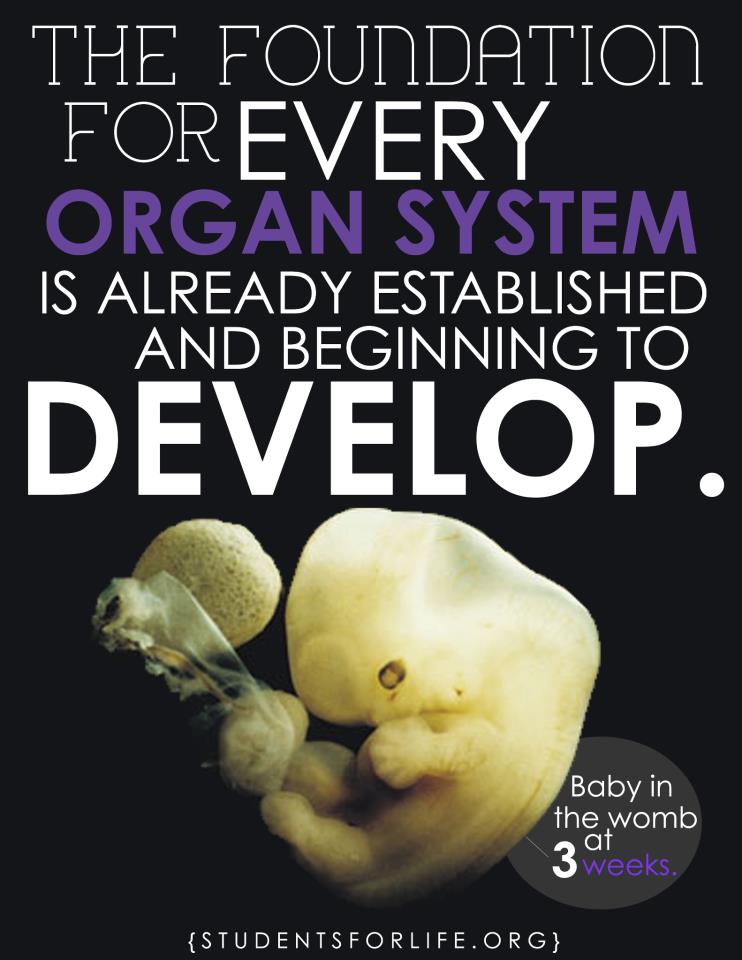
Day 20: Foundations of the brain, spinal cord, and nervous system are already established
day 21-25
Day 21: The heart begins to beat
Day 28: The back bone and muscles are forming. Arms, legs, eyes and ears have begun to show.
Day 30: At 1 month old, the embryo is 10,000 times larger than the original fertilized egg – and developing rapidly. The heart is pumping increasing quantities of blood through the circulatory system. The placenta forms a unique barrier that keeps the mother’s blood separate while allowing food and oxygen to pass through to the embryo.
Day 35:5 Fingers can be discerned on the hand. The eyes darken as pigment is produced.
day 37-40
Day 40: Brain waves can be detected and recorded
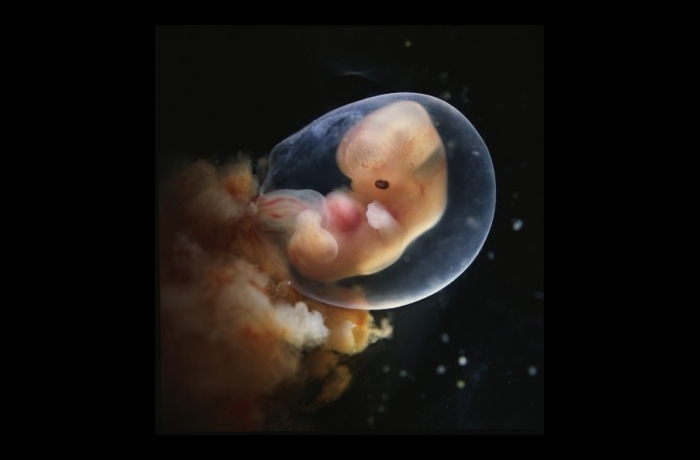
Week 6: The liver is now taking over the production of blood cells, and the brain begins to control movement of muscles and organs. The mother is about to miss her 2nd period and has probably confirmed that she is pregnant.
Week 6
Week 7: The embryo begins to move spontaneously. The jaw forms, including teeth buds in the gums. Soon the eyelids will seal to protect the embryo’s developing light-sensitive eyes, and will reopen at about the 7th month
week 7
Week 8: At a little more than an inch long, the developing life is now called a fetus – Latin for “young one” or “offspring.” Everything is now present that will be found in a fully developed adult. The heart has been beating for more than a month, the stomach produces digestive juices and the kidneys have begun to function. 40 muscle sets begin to operate in conjunction with the nervous system. The fetus’s body responds to touch, although the mother will not be able to feel movement until the 4th or 5th month.
Week 9: Fingerprints are already evident in the skin. The fetus will curl its fingers around an object placed in the palm of its hand.
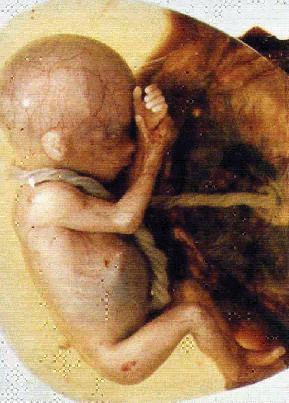
week 9-10
Week10: The uterus has now doubled in size. The fetus can squint, swallow and wrinkle its forehead.
Week 10
Week 11: At this time, the fetus is about 2 inches long. Urination occurs. The face has assumed a baby’s profile, and muscle movements are becoming more coordinated
Week 12
Week 12: The fetus now sleeps, awakens and exercises its muscles energetically – turning its head, curling its toes, and opening and closing its mouth. The palm, when stroked, will make a tight fist. The fetus breathes amniotic fluid to help develop its respiratory system.
Week13: Fine hair has begun to grow on the head, and sexual differentiation has become apparent
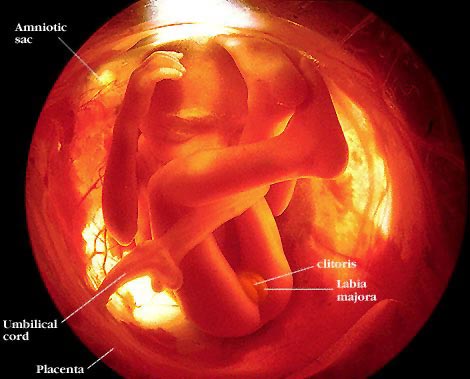
Month 4: By the end of this month, the fetus is 8 to 10 inches in length and weighs a half pound or more. The mother will probably start to “show” now. The ears are functioning, and there is evidence that the fetus hears quite a bit: the mother’s voice and heartbeat as well as external noises. The umbilical cord has become an engineering marvel, transporting 300 quarts of fluids per day and completing the round-trip of fluids every 30 seconds.
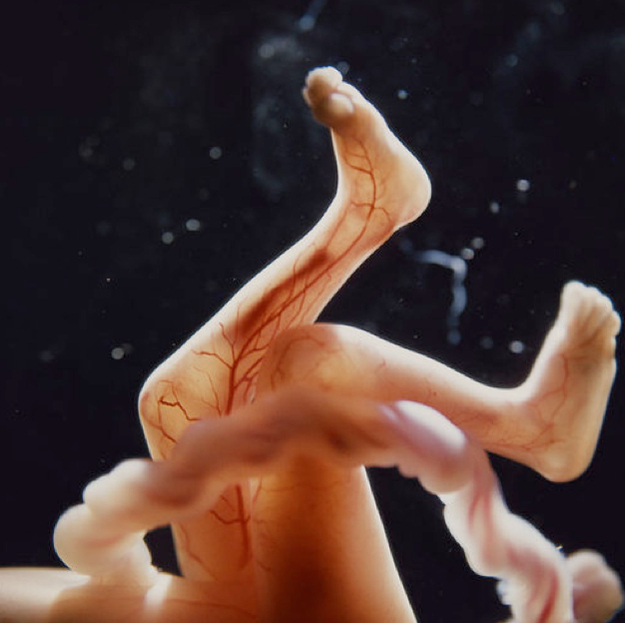
14 weeks
Month 5: Half the pregnancy has now passed, and the fetus is about 12 inches long. The mother has definitely begun to feel movement by now. If a sound is especially loud or startling, the fetus may jump in reaction to it
Week 16- 4th monthWeek 20 (5th month)
Month 6: Oil and sweat glands are functioning. The delicate skin of the growing baby is protected from the fetal waters by a special ointment called “vernix.” If the baby were born in this month and given the proper care, he would survive.
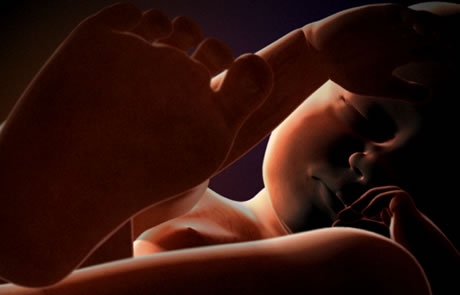
Month 7: The baby now uses the 4 senses of vision, hearing, taste and touch. He can recognize his mother’s voice.
Month 7
Month 8: The skin begins to thicken, with a layer of fat stored underneath for insulation and nourishment. Antibodies increasingly build up. The baby absorbs a gallon of amniotic fluid per day; the fluid is completely replaced every 3 hours.
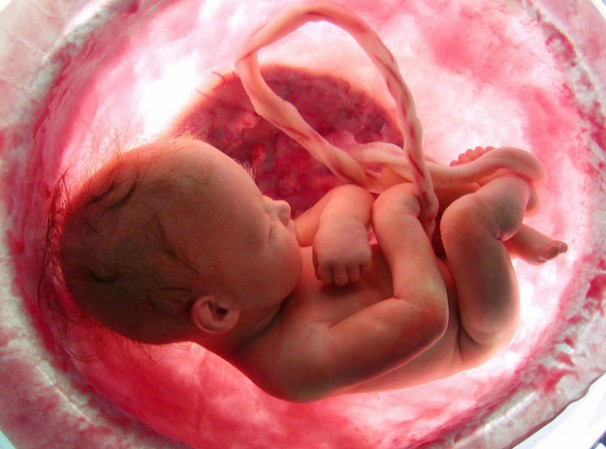
Month 9: Toward the end of this month, the baby is ready for birth. The average duration of pregnancy is 280 days from the 1st day of the mother’s last menstrual period, but this varies. Most babies (85% to 95%) are born somewhere between 266 and 294 days. By this time the infant normally weighs 6 to 9 pounds and his heart is pumping 300 gallons of blood per day. He is fully capable of life outside the womb.
Month 8
Source: “The First 9 Months” Focus on the Family 1989
RH Reality Check had article by Kathleen Reeves in response to another article where another pro-choicer describes witnessing an abortion.
9 to 10-week-old unborn baby – almost half of all abortions happen at this time or later
“I’ve witnessed abortions not as a journalist but as a volunteer at Planned Parenthood. I assist the doctor, scrub technician, and anesthetist with room set-up and other simple tasks during the procedure, and I support the patients before, during, and after the abortion—taking their blood pressure, encouraging them to breathe deeply if they’re upset or in pain, holding their hands. It’s true that it’s an intense emotional experience, especially the first time you witness it. First, it’s overwhelming for someone outside the medical profession, like Sarah Kliff, and me, to be present for a surgical procedure.”…. I was exhausted, physically and emotionally, after my first day at Planned Parenthood. I think it’s wise that Kliff, after writing about abortion for years, has finally seen the procedure. If she’d like to further explore her emotional reaction to it, I’m sure her local Planned Parenthood would be glad to have her help.”
While early suction abortion may not reveal recognizable body parts, later abortions do. The person witnessing abortion may not see the recognizable parts traveling down the suction tube, but carefully examining the remains as early as 7 weeks post-conception will show arms and legs in the aftermath.
Former abortion clinic director Abby Johnson tells the following story:
“About 3 months before I left Planned Parenthood, we had a young woman in the clinic who I had counseled before her abortion. She was very noticeably upset about having an abortion. I questioned her and encouraged her to go home and think about her decision. She was insistent…this abortion must happen today. This is what she wanted. She was just emotional, she said. She asked if I would be in the room with her to hold her hand during the procedure. I was happy to do that for people I counseled…especially those that were nervous or upset.
12 weeks 3D sonogram
We got her in the room, I sat down beside her, got her blood pressure cuff on, and the sedation was given. But the sedation didn’t make much difference. She cried even harder. So hard she was shaking and her body was moving off the table. The doctor entered the room in the usual manner. He was about to sit down on his stool and realized she was very upset.
Then he did something that left me speechless. He walked over to her and stood next to my chair. He took her hand and began talking to her. “Why the tears?” he said. “I just feel really guilty about doing this,” she responded. He asked her why she felt guilty. She said, “Because I just know this is a sin.” He paused for a minute and looked at her…he was looking at her so carefully…so cautiously…I had never seen one of our doctors treat a patient like this before. He smiled gently at her and said, “No. It is not your sin. It is mine. I will take on your sin. I commit the sin. Not you.”
He patted her hand, walked back to his stool and sat down. Her crying stopped. It was bizarre. Did he really think he was committing a sin? How could he do it if he really thought that? Did he think he was taking on the sins of these women by helping them obtain abortions? What a heavy burden to bear. It was hard for me to process…it still is.”
From a woman who was being tested to see if her baby had down syndrome or another handicap; she had been considering abortion if the baby was discovered to be disabled. She’s describing what she saw on the ultrasound:
“I was on this incredible high, like I saw the head and the little shoulders and then I came home and I suddenly crashed because I thought, there was this little person, I mean, it looked like a little person.
And I was more upset than I’d ever been because what would I do? You know, would I have an abortion? Because here I’ve seen it, and it looks like a little person.”
Rayna Rapp Testing Women, Testing the Fetus: the Social Impact of Amniocentesis in America (New York: Routledge, 1999) 129