
Single women and emotional trauma after abortion

From the article “Counseling Single Abortion Patients: A Research Overview and Practice Implications” by Paul Sachdev:

“Young single women are particularly vulnerable to intense emotional trauma upon unwanted pregnancy as they generally lack the needed emotional support and participation from the male partner involved in the pregnancy. Frequently, the pair-relationship terminates following pregnancy and abortion.”

Gail Grenier-Sweet, ed “Pro-Life Feminism: Different Voices” (Lewiston, NY: Life Cycle Books, 1985) 236

Read studies about abortion’s emotional effects here.

Read stories and testimonies from post-abortion women here. 

Share on Facebook
Suicider’s Anonymous director on Abortion and Suicide

Meta Uchtman, regional director of Suiciders Anonymous, spoke at the Cincinnati City Council Sept 1, 1981 in support of the Parental Notification ordinance for abortion :

“The Cincinnati group has seen 5,620 members in 35 months. Over 4,000 were women of whom 1,800 or more had had abortions. The highest suicide rate is in the 15 to 24 age group. There is a direct link….it is an act of cruelty to remove parental duties and rights during an abortion crisis….Any experience that forces an individual to feel that sense of lonely isolation and complete abandonment is a crisis and when you exclude someone (parents) who can reach a hand out to you, someone who cares- the crisis is worsened. Without the strength and health from a family, you are actually giving birth to a suicide.”

From Right to Life Committee of Greater Cincinnati Inc. Newsletter (September 1981) p 102-103 of Gail Grenier-Sweet, ed “Pro-Life Feminism: Different Voices” (Lewiston, NY: Life Cycle Books 1985)

Share on Facebook

Planned Parenthood physician admits that abortion damages women emotionally

Dr. Fred E Mecklenburg, professor of obstetrics and gynecology at the University of Minnesota Medical School and member of the American Association of Planned Parenthood physicians:

“There are no known psychiatric disorders which can be cured by abortion. In addition, there are none which can be productively improved by abortion… [Instead], it may leave unresolved conflicts, coupled with guilt and added depression, which may be more harmful than the continuation of the pregnancy.

Furthermore, there is good evidence to suggest that serious mental disorders arise following abortions more often in women with real psychiatric problems. Paradoxically, the very women for whom legal abortion may seem most justifiable are also the ones for whom the risk is highest for postabortion psychic insufficiency…

When abortion is substituted for adequate psychiatric care – and there is ample evidence to suggest that this is already happening – then there is a distinct danger of minimizing establish psychotherapeutic principles. Unfortunately, it is the distressed woman who ultimately faces the dulling impact of this minimization. She is the one who cries for help, and she is also the one who was turned away.”

Quoted in Thomas Hilger’s “the Medical Hazards of Legal Induced Abortion” in Abortion and Social Justice Editor’s Thomas W Hilger’s and Dennis J Horan (New York: Sheed and Ward, 1972) 40


Share on Facebook

Study shows 73.1% of Japanese women felt “anguish” after abortion

“According to one survey, 73.1% of Japanese women who have had abortions report “anguish” about what they have done. 59% felt that abortion is something “very bad” 16% felt it was considerably bad, 17% felt it was somewhat bad, and only 8% thought it could not be considered bad.”

David C Reardon Aborted Women: Silent No More (Westchester, Illinois: Crossway books, 1987) 122

Share on Facebook

Dr. Angelo, Boston psychiatrist speaks out about aftermath

Dr. E Joanne Angelo, an assistant clinical professor of psychiatry at the Tufts University School of Medicine and a psychiatrist in private practice in Boston:

“Women who have had abortions… may turn to alcohol or drugs to get to sleep at night or to deaden the pain of their waking hours, or throw themselves into feverish activity in an attempt to forget their sorrow, guilt and shame. Deep feelings of loneliness and emptiness may lead to binge eating, alternating with purging and anorexia, or intense efforts to repair intimate relationships or develop new ones inappropriately, or to an insatiable need to replace lost child at any cost.”

In a Special Word to Women Who Have Had an Abortion (National Conference of Catholic Bishops, Washington DC, 1999)

Read about the studies about psychological dangers of abortion here.

Read women’s stories of abortion regret here.

Share on Facebook

Linda Bird Francke: 71% express negative feelings after abortions

Linda bird Francke interviewed women right after they had their abortions. She found that:

71% expressed some type of negative feeling about their abortion experience.

Keep in mind that she talked to these women as soon as they got off the abortion table. Most post-abortion women claim they feel relief after their abortions. Feelings of guilt and loss usually appear later. The fact that 71% of women were already feeling bad about having an abortion mere minutes after the procedure is very telling.

Linda bird Francke The Ambivalence of Abortion (New York: Random House, 1978)

See studies on abortion’s emotional after-effects here.

Read women’s stories here. 

Share on Facebook

Abortion involves guilt and regret, says provider

From an abortion provider:

“No other medical treatments involve so much potential guilt and regret as the decision to have a child/not have a child….It’s more than treatment for yourself for cancer – it’s a lifetime commitment to another human being or the loss of the opportunity for that commitment.”

Carole Joffe Dispatches from the Abortion Wars: the Costs of Fanaticism to Doctors, Patients, and the Rest of Us (Boston, Massachusetts: Beacon Press, 2009) 127

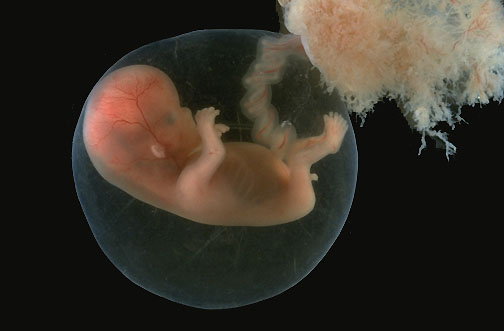
Abortion clinic workers know that abortion is a traumatic choice to have to make. if abortion was simply the removal of a ball of cells, or a blob of tissue, instead of the killing of a baby like the one below, abortionists would not be so upset when women have repeat abortions.

1st trimester ultrasound
Share on Facebook

Clinic Counselor; Women don’t open up

From a counselor in an abortion clinic:

“Abortion is very emotional for everyone. The women think, let’s get it over with fast. They don’t open up in counseling as they should… So the trouble doesn’t come out till afterwards and they just keep it all in. Postabortion counseling doesn’t do any good either, because if the woman has any regrets, admitting it will feed her guilt feelings even more…”

Linda bird Francke The Ambivalence of Abortion (New York: Random House, 1978) 253

9-10 weeks


Share on Facebook

Abortion grief at 50-60

Ann Saltenberger presented the following quote, attributed to a textbook on psychology in her book  Every Woman Has a Right to Know the Dangers of Legal Abortion (Glassboro, New Jersey: Air Plus Enterprises, 1982)136

“The significance of abortions may not be revealed until later periods of emotional depression. During depressions occurring in the 5th or 6th decade of the patient’s life, the psychiatrist frequently hears expressions of remorse and guilt concerning abortions that occurred twenty or more years earlier.”


Share on Facebook

Two studies show that “therapeutic” abortion is traumatic

Sometimes women abort because there is something wrong with their unborn baby such as down syndrome. In fact, 80% to 90% of down syndrome pregnancies are aborted. Sometimes the baby has a more serious defect and is not expected to survive long after birth. Women may decide to have an abortion, thinking that the violent procedure will ease the suffering of the infant – when in fact, the opposite is often true. These abortions usually take place in the second or third trimester and involve poisonous injections, skull crushing, or dismemberment. Not surprisingly, women find these abortions to be very emotionally devastating. Here are two studies that found that women suffer after abortions for fetal anomaly.

White – Van Mourik MCA, ConnorJM, Ferguson–Smith MA The Psychological Sequelae Of a Second Trimester Termination of Pregnancy for Fetal Abnormality Over A Two-Year Period. Birth Defects: Original Articles Series 1992; 28:61 – 74, P 71

And

Zeanah CH, Dailey JB, Rosenblatt MJ, Saller DN Jr Do Women Grieve after Terminating Pregnancies Because of Fetal Abnormalities? A Controlled Investigation. Obstetrics & Gynecology 1993; 82; 272 – 275, P 275

Share on Facebook