Clinic Counselor; Women don’t open up

From a counselor in an abortion clinic:

“Abortion is very emotional for everyone. The women think, let’s get it over with fast. They don’t open up in counseling as they should… So the trouble doesn’t come out till afterwards and they just keep it all in. Postabortion counseling doesn’t do any good either, because if the woman has any regrets, admitting it will feed her guilt feelings even more…”

Linda bird Francke The Ambivalence of Abortion (New York: Random House, 1978) 253

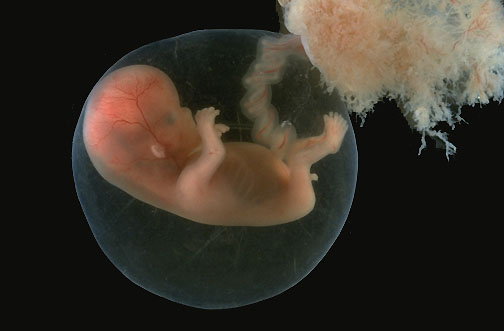
9-10 weeks


Share on Facebook

Abortion grief at 50-60

Ann Saltenberger presented the following quote, attributed to a textbook on psychology in her book  Every Woman Has a Right to Know the Dangers of Legal Abortion (Glassboro, New Jersey: Air Plus Enterprises, 1982)136

“The significance of abortions may not be revealed until later periods of emotional depression. During depressions occurring in the 5th or 6th decade of the patient’s life, the psychiatrist frequently hears expressions of remorse and guilt concerning abortions that occurred twenty or more years earlier.”


Share on Facebook

Pro-choicers fight bill that would stop future Gosnells

Pro-choice activists opposed proposed regulations of abortion clinics in Pennsylvania. These regulations were prompted by the Kermit Gosnell incident.

According to the article:

“….the measure would hold abortion providers to the same standards as doctors providing any other medical procedure.”

From Rep. Jerry Stern, R-Blair, who supported the bill:

“I would think any woman who has a medical procedure performed at one of these clinics would want to be assured that the facility meets state minimum standards. The conditions and treatment that women have been subjected to at facilities such as the Women’s Medical Society in Philadelphia and the Allentown Medical Services are quite honestly disgraceful.”

Laura Olson “State Lawmakers Push Bill on Abortion Clinics” Post-Gazette, March 30, 2012


Share on Facebook

Two studies show that “therapeutic” abortion is traumatic

Sometimes women abort because there is something wrong with their unborn baby such as down syndrome. In fact, 80% to 90% of down syndrome pregnancies are aborted. Sometimes the baby has a more serious defect and is not expected to survive long after birth. Women may decide to have an abortion, thinking that the violent procedure will ease the suffering of the infant – when in fact, the opposite is often true. These abortions usually take place in the second or third trimester and involve poisonous injections, skull crushing, or dismemberment. Not surprisingly, women find these abortions to be very emotionally devastating. Here are two studies that found that women suffer after abortions for fetal anomaly.

White – Van Mourik MCA, ConnorJM, Ferguson–Smith MA The Psychological Sequelae Of a Second Trimester Termination of Pregnancy for Fetal Abnormality Over A Two-Year Period. Birth Defects: Original Articles Series 1992; 28:61 – 74, P 71

And

Zeanah CH, Dailey JB, Rosenblatt MJ, Saller DN Jr Do Women Grieve after Terminating Pregnancies Because of Fetal Abnormalities? A Controlled Investigation. Obstetrics & Gynecology 1993; 82; 272 – 275, P 275

Share on Facebook

Link with alcoholism in the American Midwest

Among 917 women in the US Midwest, 26% of those who described themselves as moderate to heavy drinkers have had an abortion

Klassen AD, Wilsnack SC. Sexual Experience and Drinking among Women in a US National Survey. Archives of Sexual Behavior 1986 October; 15 (5): 363 – 92

Share on Facebook

From “First Trimester Prenatal Diagnosis: Earlier Is Not Necessarily Better”

from another researcher:

“Prospective parents are rarely prepared… for the extent of the psychological trauma experienced after a selective [genetic] abortion.”

Boss, JA. First Trimester Prenatal Diagnosis: Earlier Is Not Necessarily Better. Journal of Medical Ethics 1994; 20:146 – 151, P146

Share on Facebook

Pain control and abortion

A study of abortion providers on different drugs to alleviate pain in surgical  and medical abortions concluded:

“Our patients are still experiencing a significant amount of pain so more research is needed in pain control in abortion.”

Wiebe ER, Rawling M. Pain Control and Abortion International Journal of Gynecology and Obstetrics 1995 July; 50 (1): 41 – 6

Share on Facebook

Abortion studies can be misleading

Pro-life researchers Elizabeth Ring-Cassidy and Ian Gentles revealed that the conclusions of many abortion studies are misleading:

“There are often glaring inconsistencies between the actual research results and the summaries and conclusions of articles… Attempts to minimize negative results and to explain away findings that are not consistent with accepted opinion exist throughout the literature on abortion sequelae. A medical practitioner or family counselor is then left to wonder: Whose finding should be accepted?”

They cited, for example: Taylor VM, Kramer M.D., Vaughan TL, Peacock S. Placenta previa in relation to induced and spontaneous abortion: a population-based study. Obstetrics and Gynecology 1993 July; 82 (1) 88 – 91; P91

In this study, they found that women who have abortions are 28% more likely to have placenta previa. However, they discounted this finding as insignificant. Also, the excluded from consideration the women who had no live births after abortion. Had they included these women, the risks would’ve been increased by 50%.

“Taylor’s conclusion provides a useful illustration of a fact noted elsewhere ….that the conclusions of research studies on abortion after affects often minimize the significance of the data gathered.”

They give another example: Daling, JR, Chow WH, Weiss NS, Metch, BJ, Soderstrom, R. Ectopic Pregnancy in Relation to Previous Induced Abortion, Journal of the American Medical Association 1985 February; 253 (7): 1005 – 8

“women who had two or more induced abortions increased their risk of ectopic pregnancy 2.6 times. While admitting that this finding is “worrisome”, they nonetheless concluded that “it remains unresolved whether having a legal induced abortion in the United States imparts an excess risk of EP [ectopic pregnancy].” The abstract of the study states that the research shows that abortion “does not carry a large excess risk.” Here again, the conclusion is at odds with the data.

Elizabeth Ring-Cassidy and Ian Gentles. Women’s Health after Abortion: The Medical and Psychological Evidence Second Edition (Toronto, Canada: The deVeber Institute for Bioethics and Social Research, 2003) 8, 43-45, 52

Share on Facebook
Complications of abortions higher than doctor’s estimates

A study of 6408 first trimester abortions found that the rate of uterine perforation was seven times higher than practitioners estimated it to be.

Kaali SG, Szeigetvari IA, Bartfai GS. The Frequency and Management of Uterine Perforations During First Trimester Abortions. American Journal of Obstetrics and Gynecology 1989 August; 161 (2): 406 – 8

Share on Facebook

Statistics on African-Americans and breast cancer

An African-American U.S. woman has about a 10% risk of contracting breast cancer during her lifetime. In December 1993 the Journal of the National Medical Association reported (pp. 931-939):

Black women of age 50 and above who had at least one induced abortion have an increased risk of breast cancer of 370% (95% CI=2.6,8.4). (I.E. they have a 47% lifetime risk of contracting breast cancer.) JNMA is a publication of African-American medical professionals concerned with African-American health problems and has published for over 100 years.

Breast Cancer Risk Factors In African-American Women: The Howard University Registry Experience, JNation Medical Association, A E Laing et al., 1993, 85:931-939

read more about the physical risks of abortion here.

Share on Facebook