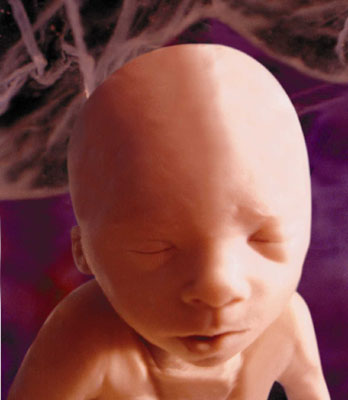
Abortionist speaks out against abortion

Abortionist David Grimes argues why adoption should not be promoted, for example, in literature given to women before abortions:

“I feel that it [the Federal government encouraging adoption in any way] would amount to coercive behavior. And it would be inappropriate behavior for anyone in the health care profession to inflict their point of view on anyone. No one knows better than the woman herself what’s best for her.”

“Defying Simple Slogans: Why ‘Adoption, Not Abortion’ Won’t Work.” Newsweek May 1, 1989

He has no problem with abortion clinics “inflicting” their point of view that abortion is a good solution to an inconvenient pregnancy.

Share on Facebook

Liturgy on abortion by Catholics for Free Choice

Catholics for Choice (then called Catholics for Free Choice) has the following liturgy to celebrate abortion:

“Praised be you, Mother and Father God, that you have given your people the power of choice. We are saddened that the life circumstances of (aborting woman’s name) are such that she has had to choose to terminate her pregnancy. We affirm her and support her in her decision.”

The litergents then”sprinkle flower petals, or share dried flowers.”

CFFC brochure entitled “You Are Not Alone” quoted in Mary Meehan. “How Can They Be Called Catholic?” National Catholic Register, November 19, 1989, page 5.

Share on Facebook

Woman threatens to kill her kids to get abortion

Helen Bayley was a member of the local League of Women Voters in New York, and she became active in the pro-choice movement after being forced to have two psychiatrists pronounce her mentally unstable in order to have an abortion.

(In the 1960s, in some states, a woman had to claim mental illness in order to be granted and abortion) From the book Before Roe:

“I’m going to kill my kids,” I raged. I said I’ll go berserk. I felt that way. I felt like a tigress. I felt I was clawing my way out of a thicket.”

The book goes on to say:

“Bailey became a vocal supporter of abortion reform, testifying in a legislative hearing in Albany in the spring of 1968 and lobbying legislators.”

Rosemary Nossiff Before Roe: Abortion Policy in the States (Philadelphia, Pennsylvania: Temple University Press, 2001) 91, 92

Share on Facebook

Abortionist: “We wont’ lose too many Beethovens”

One abortionist, talking about abortion and birth control:

“Those [young and poor] are the ones that need it most. There are so many damn welfare programs. It’s like spitting in the ocean. Here is a positive program – the kids live in an environment that doesn’t offer much hope. I don’t think we are going to lose very many Napoleons or Beethovens doing this… The population problem is not caused by the offspring of young engineers or doctors – that fewer of these, the fewer there will be to support those who don’t limit their offspring. If we don’t do something about it, we will populate ourselves off the earth. That’s suicide, slow suicide. That’s one solution.”

Jonathan B Imber Abortion and the Private Practice of Medicine (New Haven: Yale University Press, 1986) 51-52

Share on Facebook

Doctor explains why he does not do abortions

Dr. Aaron Sacks trained to do abortions, but after residency, decided not to do them. He explains why:

“Since finishing residency, I have never done any abortions. I think it has to do with – as much as I would like to say that it’s only my practice – but if I really look honestly, I would prefer not to do the abortions because somehow it’s difficult for me to draw the line between a child and a fetus and a baby. And all that is semantics to me… It touches me somewhere inside. [During training] I tried not to think [about] what I am doing. I just did it in the best technical manner I could do… And I was just looking at the end of the day to finish and that’s it.”

Lori Freedman Willing and Unable: Doctors’ Constraints in Abortion Care (Nashville, Tennessee: Vanderbilt University Press, 2010)  44

9-10 weeks
9-10 weeks
Share on Facebook

Premature babies and preborn babies react similarly to pain

Colleen A Malloy, M.D., Assistant Professor, Division of Neonatology at Northwestern University Feinberg School of Medicine, testifying before the House of Representatives on May 17, 2012, regarding the Pain Capable Unborn Child Protection Act:

24 week preborn
24 week preborn

“With the advancement of in utero imaging, blood sampling, and fetal surgery, we now have a much better understanding of life in the womb than we did at the time that Roe V Wade was handed down. Our generation is the beneficiary of new information which allows us to understand more thoroughly the existence and importance of fetal and neonatal pain. As noted in my biography, I am trained and board-certified in the field of neonatology. The standard of care in my field recognizes neonatal pain as an important entity to be acknowledged, measured and treated…

When we speak of infants at 22 weeks Last Menstrual Period, for example, [20 weeks old], we no longer have to rely solely on inferences or ultrasound imagery because such premature patients are kicking, moving, reacting and developing right before our eyes in the Neonatal Intensive Care Unit….

The cutoff point in this legislation is 20 weeks after fertilization… In today’s medical arena, we resuscitate patients at this age and are able to witness their ex–utero growth…

As we provide care for all these survivors, we are able to witness their experiences with pain. In fact, standard care for neonatal care infants requires attention to and treatment of neonatal pain. There is no reason to believe that a born infant would feel pain any differently than that same infant were he or she still in utero. Thus the difference between fetal and neonatal pain is simply the locale in which the pain occurs. The receiver’s experience of the pain is the same. I could never imagine subjecting my tiny patients to horrific procedures such as those that involve limb detachment or cardiac injection.

At 23 weeks in utero, a fetus will respond to pain (intrahepatic needling, for example) with the same pain behaviors as older babies: screwing up the eyes, opening the mouth, clenching hands, withdrawal of limbs. In addition, stress hormones rise substantially with painful blood puncture, beginning at 18 weeks gestation. This hormonal response is the same one mounted by born infants.

Moreover, the fetus and neonate born prior to term have an even heightened sensation of pain compared to an infant more advanced in gestation. There is ample evidence to show that while the pain system develops in the first half of pregnancy, the pain modulating pathways do not develop until the second half. It is later in pregnancy that the descending, inhibitory neural pathways mature, which then allow for dampening of the pain experience.

The fetus may actually be more sensitive than the older child [to pain].”

Richard and Rhonda White Confronting Abortion Distortions (Xulon Press, 2013) 37 – 38

Share on Facebook

Woman laughs before her ninth abortion – then she sees her aborted baby

Abby Johnson’s book The Walls Are Talking: Former Abortion Clinic Workers Tell Their Stories collects firsthand accounts from former abortion facility workers. The stories vary in theme, each one an abortion worker’s memory of an event that stuck with her after she left. One story, called “Frequent Flyers,” is about a young woman who had nine abortions.

The chapter’s author, who is unnamed, explains how women who came in for repeat abortions at her facility were called “frequent flyers” by the staff. Even though abortion facility workers were committed to promoting and providing abortions, some of them had judgmental feelings toward these “frequent flyers.” The abortion facility worker says:

When Angie walks through our doors for her ninth procedure, even those of us whose paychecks were funded by abortion shook our heads and said “Really? Seriously?”…

Although it went against my own ideology, I wanted Angie to show some indication of remorse. I didn’t want to feel that way about the numerous women who presented for abortions two, three, or even four times. But nine? That, I felt, deserved at least a slight show of regret or even a bit of good old-fashioned shame.

Angie showed no trace of guilt or any kind of distress when she came to the abortion facility. She had laughed through her first abortion, and every abortion since. It was not at all different when she came in for her ninth. The abortion facility worker described Angie’s demeanor:

[S]he seemed to regard her visits to our clinic as an opportunity to perform her improv comedy act. “Could y’all just xerox my chart and I’ll fill in the dates?” She would jest. Once the paperwork was in order, Angie would attempt to banter with the girls in the waiting room. “It’s no big thing,” she assured them. “I’ve done it 8 times before, and I have no regrets.” Although I couldn’t help but like Angie, her flippancy appalled me.

She showed no guilt or remorse of any kind:

Over the years, I had consoled and held the hands of scores of women who approached that same table with much trepidation. Some would weep, their knuckles white as they gripped my hand until it ached. Others would clutch Bibles to their chests and mouth prayers begging for forgiveness, even before the abortionist had begun his work and when their babies were still safe in their wombs. Many times women would climb onto the table and remain limp and unresponsive during the procedure. Mentally, they were a million miles away. And then there was Angie… Angie never even attempted to explain herself. When we would talk to her about birth control and try to set her up with an appointment to explore the matter further, she would just smile and politely refuse with a wave of her hand.

Angie was using abortion for birth control, not bothering to learn any other method. She may have gone on to have nine more abortions – but something happened.

Angie had no doubt heard pro-abortion rhetoric. She had certainly been told that abortion is only removing a ball of cells, a piece of tissue, or an undeveloped mass. But after her ninth abortion, she was curious and wanted to see the “tissue” for herself. She asked the abortion worker to show her the remains of the abortion, and the abortion worker complied. At 13 weeks, her baby was fully formed.

I debated about how to arrange the pieces. Would it be best to throw them all together in a clump so that none of the parts would be recognizable, or should I piece it back together as we normally did to ensure that none of the parts were missing. There was no protocol on such things, so in the end I opted to piece the parts back together.

Angie’s reaction was not what the abortion worker anticipated:

“Thanks,” she said, her trademark smile still fixed on her face. When her eyes traveled to the container, she gasped sharply, and for the first time since she had arrived, Angie was utterly silent. A few moments later her entire body shuddered and gooseflesh was raised on her smooth brown arms.

When she reached out her to touch the baby, I tried to pull the dish away. She grabbed my wrist and stopped me. We were both silent for a few moments as she continued to stare at the contents of the dish. I stepped back and Angie fell forward to her knees, her fingers still wrapped around my wrist. The other girls in the recovery run began to take notice, and my discomfort level rose exponentially.

Realizing her mistake, the abortion worker tried repeatedly to take the dish containing the bloody body parts away. But Angie held tight to the remains of her child, and wouldn’t let the abortion worker pry it from her hands. The abortion worker said:

[Angie] remained frozen on the clinic floor. “That’s a baby,” she said, barely audible at first. “That was my baby,” she said. Her volume steadily increased as a torrent of words poured from her mouth, words that made everyone extremely uncomfortable. “What did I do? What did I do?” she said over and over and began to sob. Some of the girls in the recovery run began to weep along with her. Some covered their faces with their arms or buried their heads in the arms of the recliners.

Finally, the abortion facility workers were able to tear away the dish. Angie became hysterical. Other abortion workers tried to calm her.

Fellow workers rushed to my side to calm Angie down. After a few minutes, it became obvious that she wasn’t going to calm down. We couldn’t even get her off the floor. After discussing it hastily, we decided to drag her to the bathroom. At least the heavy door would stifle her sobs to until we figured out what to do.

Angie flailed her arms and legs and her screams reached a fever pitch as we dragged her down the hall. We must have been quite a spectacle for the other girls in the recovery room. Finally we managed to place a still panicked Angie in the bathroom and closed the door. I suggested that she splash some cold water on her face and “pull herself together.” Her cries, although muffled, were easily distinguished through the door.

Angie began begging the abortion workers to take her mutilated baby home with her. She did not want to part with her child, even though her child was dead. She pleaded with the workers to give in and let her have the baby. They refused. She continued to sob and wail in the bathroom, disrupting the entire facility.

The abortion workers finally went to her paperwork and found her emergency contact – the number the facility was supposed to call in the event of a life-threatening complication. They dialed the number and got her current boyfriend. He arrived at the clinic. It took him 45 minutes to coax Angie out of the bathroom. They both left the abortion facility in tears.

Angie never came to the facility again. The writer of the story does not know what happened to her. The road ahead of her, once she realized her responsibility for the deaths of nine of her children, would be agonizing to travel. We can only hope she found healing.

From then on, the abortion facility had a strict rule never to show the aborted babies to women. Ultimately, another scene like Angie’s would slow down abortion facility operations and affect the facility’s profits. More women would learn about fetal development, and there would be a decrease in the number of abortions. In order to keep everything running smoothly, quickly, and profitably, the facility banned all women from seeing their aborted babies.

Sometime later, the abortion facility worker who showed Angie her aborted baby left the abortion business. She does not give her reasons why, but the story of Angie and her emotional agony no doubt influenced her.

How many women go into abortion facilities not knowing how developed their children are? How many repeat abortion patients have no idea their babies were pulled limb from limb and then thrown out with the trash or sold for parts? All of the abortion facility workers that day discovered that the truth is the ultimate enemy of abortion. They were reminded how vital it is to keep the facts away from vulnerable women if abortion is to be sold to them. It was the only way to continue making money off them.

Source: Abby Johnson The Walls Are Talking: Former Abortion Clinic Workers Tell Their Stories (San Francisco, CA: Ignatius Press, 2016) 71-77

Share on Facebook
Pro-Abortion advocate talks about change in the way women view abortion

Judith Arcana was an abortionist before Roe v. Wade with the organization JANE and is currently a pro-abortion activist. She talks about how women seem to have different feelings about abortion now than they did when it was first legalized:

“The young American women I have encountered, and those asked in surveys, are now starting to say something they never used to say in the 60s and 70s. Now they say ‘I think abortion should be legal, but I could never have one’….

with abortion, something has changed the other way, gone backwards, so to speak. A US generation has grown up in a context where abortion is a negative word.

Granted, abortion was never a jolly subject, but simply thinking and talking about abortion is once again something people do not want to do, something fraught with guilt and fear and shame.”

Judith Arcana ““Feminist politics and abortion in the US,”  Psychology and Reproductive Choice

Visited 9/2/2017

Share on Facebook

Abortionist: Abortion is “violence”

Abortionist Lisa Harris describes the violence inherent in second trimester abortions:

“Currently, the violence and, frankly, the gruesomeness of abortion is owned only by those who would like to see abortion (at any time in pregnancy) disappear . . . The pro-choice movement has not owned or owned up to the reality of the fetus, or the reality of fetal parts. Since the common anti-abortion stance is that the fetus has a right to life, those who support abortion access necessarily deny such a right. However, in doing so, the fetus is usually neglected entirely, becomes unimportant, nothing …

It is worth considering for a moment the relationship of feminism to violence. In general feminism is a peaceful movement. It does not condone violent problem-solving, and opposes war and capital punishment. But abortion is a version of violence. What do we do with that contradiction?”

Lisa Harris, M.D. “Second trimester abortion provision: breaking the silence and changing the discourse.” Reproductive Health Matters (2008), 16(31), 74-81

Diagram of a D&E abortion

de

Share on Facebook

Abortionist speaks on perforation of uterus

Abortionist Henry Morgentaler on the danger of perforating the uterus during an abortion:

“What happens during dilatation is that the doctor tries to widen the diameter of the cervical canal leading to the uterine cavity by pushing metal dilators through it. As he does this he encounters muscular resistance. A very thin dilator might pass through the cervical canal easily; however, as they progressively increase in thickness, the resistance of the muscles holding the cervix closed increases correspondingly. The doctor overcomes this resistance by steady pressure until it gives way and the dilator slips into the uterine cavity. Occasionally, the resistance gives way suddenly and the dilator is then propelled into the uterus with a force which might bring it in too far, thus perforating the uterine wall. In pregnancy, the uterine wall softens considerably and thins out in certain places; if the dilator hits a weakened spot, it might go through it. If the doctor is unaware of this, and often he has no way of knowing, he will pursue the dilatation which will then enlarge the perforation.

When the opening necessary for the abortion has attained the appropriate diameter, the doctor will try to evacuate the uterus but may find that no material is forthcoming because his instruments, instead of being in the uterine cavity, are elsewhere, usually in the abdominal cavity. If the aspiration cannula or sharp curette is used, it may damage the small intestine or rupture a major blood vessel with immediate shock a likely occurrence. Major surgery is then needed to repair the damaged abdominal organs.”

Henry Morgentaler Abortion and Contraception (New York: Beaufort Books, Inc., 1982) 73 – 74

Share on Facebook