20 years of research proves that unborn babies feel pain

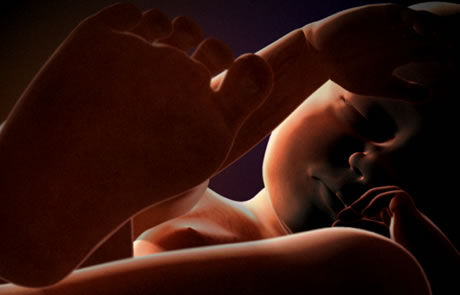
“Over the last 20 years, medical technology and scientific research, by way of ultrasonography, fetoscopy, fetal electrocardiograms, and fetal electroencephalograms, have demonstrated the remarkable responsiveness of the human fetus to pain, touch and sound… The majority of babies aborted by this [partial-birth abortion, a late term abortion] procedure are alive and feel pain by the end of the procedure… The fact that anesthesia is now routinely used on preborn children during fetal surgery is an obvious commentary on the unborn child’s capacity to feel pain.”

Sheila Carey–Kuzmic, M.D., F ACOG, Pediatric Specialist, Board certified in Westerly, Rhode Island

Fetal Pain and Partial-Birth Abortion, Physicians Ad Hoc Coalition for Truth

Phoebe Lee Casualties of Indulgence: from Life to Aborted (New York: Writer’s Showcase, 2001)  1231-122

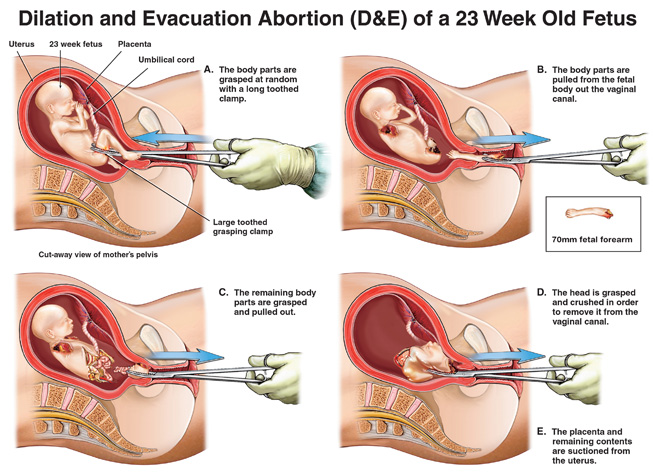
In a partial-birth abortion, the baby was delivered feet first and then her skull was punctured. This was very painful for the baby. Partial-birth abortion is now illegal. Abortions laid in pregnancy are now done by D&E, where the baby is dismembered. This is just as painful for the child, if not more so.
de

Share on Facebook

On women and “breeding”: Margaret Sanger

Margaret Sanger, the founder of Planned Parenthood:

“Woman’s passivity under the burden of her disastrous task [to have children] was almost altogether that of ignorant resignation. She knew virtually nothing about her reproductive nature and less about the consequences of her excessive childbearing. It is true that, obeying the inner urge of their natures, some women revolted, they even went to the extreme of infanticide and abortion. Usually, their revolts were not general enough. They fought as individuals, not as a mass. In the mass they sank back into blind and hopeless subjection. They went on breeding with staggering rapidity those numberless, undesired children who became the clogs and the destroyers of civilization.”

Margaret Sanger, Women and the New Race, (New York: Brentano’s, 1920)

Sanger was very anti-child and anti-motherhood.

Share on Facebook

Due to fear of disability, doctor tries to get woman to abort

Author Ann Saltenberger describes an experience she had while pregnant. She became sick and spent some time in the hospital, where doctors ran a battery of tests including x-rays. She was pregnant at the time, and a doctor told her she should abort her baby. The doctor told her the following when he was driving her home:

“An hour later the green, sundrenched farmlands of South Jersey were slipping past the car windows. I settled back into the plush seat and relaxed. But Dr. L was tense and I soon found out why. “I know you’re the wrong person to say this too,” he began (I had already begun to garner a considerable reputation for my research into the effects of artificial pregnancy termination), “but you really should have an abortion.”

His words had continued, unheard. I tuned in as he was saying something about my probably having a viral affection, and German Measles is a viral infection, “and we all know what German measles does.”

“Yes, but it only does it to 25% of preborns. You’re not going to tell me that part, are you?” I thought, but I said nothing.

He droned on. The x-rays. X-rays do horrible things: twist developing bodies, destroy forming minds. No doubt about it, he was sure this baby would be retarded or deformed. Not worth worrying over. Not worth saving. Rx: abort it and forget it.”

Her baby was born perfectly healthy:

“Now, eight years later, it’s spring again. The sun is shining and the breezes are warm. And Jimmy is seven and healthy and strong, full of fun and questions and tricks. Appearance: beautiful; neurological evaluation: normal; intelligence: superior.”

Ann Saltenberger Every Woman Has a Right to Know the Dangers of Legal Abortion (Glassboro, New Jersey: Air – Plus Enterprises, 1983) 14, 17

Share on Facebook

People will be wary of sharing resources with the disabled

Author Hans S Reinders:

“Once the assumption of individual responsibility for the reproduction of “bad genes” is firmly in place, people will be wary of sharing the costs of healthcare services for people with special needs whose existence they believe to be caused by “irresponsible reproductive behavior.”

Hans S Reinders The Future of the Disabled in a Liberal Society: An Ethical Analysis (Notre Dame, IN: University of Notre Dame Press, 2000) 85 – 86, 90

Share on Facebook

Prenatal testing and lack of informed consent

Nancy Press and CH Browner examined a California screening program where babies were tested for genetic defects as part of prenatal care:

“So strong was the presumption in these studies that testing was both good and unproblematic that all issues of informed consent – including whether informed consent was even necessary – were left to the discretion of the investigators at each research site.”

Nancy Press and CH Browner “Why Women Say Yes to Prenatal Diagnosis” Social Science and Medicine 45 (7), 1997, 981

Melinda Tankard Reist commented:

“The studies revealed how the issues of eugenics, disability and abortion were obscured in this “routinization”. This in turn help achieve a high level of test acceptance. There was a “purposeful ignoring” of the connection between prenatal testing and abortion. Nurses rarely mentioned abortion when discussing screening with a couple and the official state booklet on AFP given to all eligible women didn’t even mentioned the word.”

Melinda Tankard Reist Defiant Birth: Women Who Resist Medical Eugenics (North Melbourne, Australia: Spinifex, 2006) 10

Share on Facebook

Melinda Tankard Reist on diversity and disability

Melinda Tankard Reist wrote a book where she shared the stories of women whose babies were diagnosed with health problems. All of the women had their children. Reist says:

“Diversity is upheld as a value, yet great efforts are made to ensure that certain mothers don’t have children, and that certain children are never to be allowed to contribute to this diversity. In this sense, at least, humanity is becoming increasingly homogeneous. Babies born outside a standard view of what is normative are viewed as muddying the gene pool and costing the “normal” citizens of society too much money.”

Melinda Tankard Reist Defiant Birth: Women Who Resist Medical Eugenics (North Melbourne, Australia: Spinifex, 2006) 5

Share on Facebook

Mother grateful she chose life for daughter with Down syndrome

Louise Drinkwater’s daughter Molly has Down syndrome.  Her mother describes why she is grateful she chose life for Molly despite her having Down:

She’s an incredibly happy little girl. She lights up our lives… I’ve been a person who thought academic achievement was really important, and it’s been a beautiful learning experience to realize that value is about the soul of the person. Molly has really helped me to sit back and enjoy the moment rather than racing to get ahead.

J Robotham and D Smith “Love Me or Let Me Go” Sydney Morning Herald, August 31, 2004

Share on Facebook

Woman who aborted disabled baby: “They didn’t discuss options”

From a woman who had an abortion by induction (induced labor) after her baby was shown to have a defect:

“It was like we were in a tunnel and there was only one way out. I just didn’t think I had any choice but to go with what was suggested. I don’t understand why they didn’t discuss all the options. I don’t think that we thought of the consequences of what we were doing. I went in to have the baby induced – that was the word used. It didn’t register with us that they were going to terminate the pregnancy.”

B Beech and G Anderson “We Went through Psychological Hell: A Case Report of Prenatal Diagnosis Nursing Ethics 6 (3) 1999, 253

Share on Facebook

Aborted babies born alive at 28 weeks

From an abortionist:

“It is not too unusual that a pregnancy turns out to be 4 weeks more advanced than would be determined by the given dates. A number of 28 weeks gestations have been salted out [aborted by a saline injection], resulting in the birth of living children. The emotional distress engendered is horrendous.”

A Altchek “Abortion Alert” Ob & Gyn 42(3): 452-454, Sept 1973

28 weeks
28 weeks
Share on Facebook

Geneticist: Aborting a Down syndrome babies can save $1,000,000

“If you prevent the birth of a child with Down’s syndrome you are probably saving the community a million dollars or more in the life of the child.”

Australia geneticist, Prof. Grant Sutherland.  He was past president of The Human Genetics Society of Australia.

“New Down’s Syndrome Test” The Adelaide Advertiser August 6, 1992

There is no test that reveals the presence of Down before conception, so “preventing the birth” means abortion.

Share on Facebook