Clinic Worker: Abortion is a “Sad” Situation

From an abortion clinic counselor:

“You know, I mean, it’s gory, and it’s really a sad situation to see the abortions, and I have my own opinion about how I feel about abortion… [But to] me it’s a job, and it’s the closest I could get to what I really wanted to do… I want to be a nurse – midwife.”

James Tunstead Burtchaell Rachel Weeping (Kansas City: Andrews and McMeel, Inc., 1982) 136

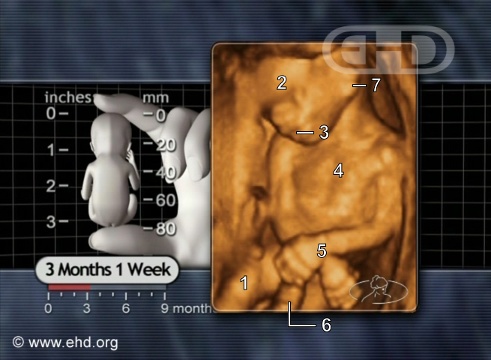
9 week old unborn baby
pieces of a nine week aborted babies
Share on Facebook

Abortionist On Guilt

From an abortion provider who is also a family doctor:

“As a family doctor, I have processed abortion guilt with so many women.”

Carole Joffe Dispatches from the Abortion Wars: the Costs of Fanaticism to Doctors, Patients, and the Rest of Us (Boston, Massachusetts: Beacon Press, 2009) 122

Although this abortion provider no doubt tells her patients not to feel guilty, her comment reveals that many of them do have those feelings after having abortions, and that abortion is a hard thing for women to deal with.

Share on Facebook

Woman takes aborted baby home in a jar

From one abortion provider:

 “She [the patient who just had an abortion] asked me if she could have the pregnancy… I gave it to her in a jar… She wanted to put it in the – River, at a place she knew that felt special to her. I told her I thought a goodbye ritual like that would help her move on. We had a long, long hug before she left.”

Carole Joffe Dispatches from the Abortion Wars: the Costs of Fanaticism to Doctors, Patients, and the Rest of Us (Boston, Massachusetts: Beacon Press, 2009) 121

Remains of an abortion at eight weeks

Share on Facebook

Clinic worker Sallie Tisdale on women who have abortions

From clinic worker Sallie Tisdale:

“A twenty-one-year-old woman, unemployed, uneducated, without family, in the fifth month of her fifth pregnancy. A forty-two-year-old mother of teenagers, shocked by her condition, refusing to tell her husband. A twenty-three-year-old mother of two having her seventh abortion, and many women in their thirties having their first. . . .Oh, the ignorance . . . .Some swear they have not had sex, many do not know what a uterus is, how sperm and egg meet, how sex makes babies. . . .They come so young, snapping gum, sockless and sneakered, and their shakily applied eyeliner smears when they cry. . . .I cannot imagine them as mothers.”

“We do abortions here” Harper’s Magazine. Quoted in Jason Deparle, “Beyond the Legal Right; Why Liberals and Feminists Don’t like to Talk about the Morality of Abortion,” Washington Monthly Apr. 1989

1st trimester. The majority of abortions are done at this time


Share on Facebook

D & X versus D & E

The director of one late-term abortion clinic discussed the legal furor over partial-birth abortions (or D & X abortions), in which a baby is partially delivered before being killed. She mentioned that D&E abortions, which have never been criminalized, are just as gruesome:

“If people object to D&X, what will they say when they get to this? D&E is the next battleground.”

When abortions come late in a pregnancy.,  By: Lavelle, Marianne, Glastris, Paul, Gerson, Michael J., Daniel, Missy, Meyer, Michele, U.S. News & World Report, 00415537, 01/19/98, Vol. 124, Issue 2

Diagram of the D&E abortion procedure

16 week old victim of a D&E abortion:


Share on Facebook

A small difference in the world

Susan  Poppema, a Seattle abortion doctor:

“Every day I feel I’ve made a small difference in the world.”

“Abortion And The Fight For God” Newsweek October 17, 1994

This doctor does abortions up to 14 weeks

Abortion at 10 weeks
Share on Facebook

Clinic worker: many women don’t tell

One clinic worker discusses how many women do not tell their partners, parents, or friends about their abortions, and come in for them alone:

“…While lots of women involve loved ones in their decision and some even bring partners, parents or friends to the clinic, lots of women don’t. For most of these women, I think its about self-preservation. They don’t tell because they expect their parents or partner to be unsupportive, perhaps even try to prevent them from having an abortion. I think the majority probably tell them later, when the fear that the unsupportive loved one can block their choice is gone. These women sometimes express guilt for not telling, but it strikes me as smart. It makes sense to call only on people one can expect support from. It only makes me mad that some women can’t rely on their closest family and friends to support them, no matter what.”

Lynne V. “What 1,000 Abortions Have Taught Me” Feminist Women’s Health Center http://www.fwhc.org/abortion/1000ab.htm

Women who hide their pregnancies from the very people who could help them find alternatives are forced to struggle with the terrible decision of abortion alone. This clinic worker is not the first to suggest that her patients considering abortion refrain from telling anyone who might encourage them to have the baby or offer practical, life-affirming help.


Share on Facebook

Provider worker talks about women’s “mental images” of abortion

One abortion provider says

Feet at 11 weeks

“Women frequently ask questions like, “Can you tell what sex it is?”“How big is it?” “Does the doctor cut the cord?” “What happens to the fetus once the abortion is finished?” These questions are normal. Most women have a mental image of the fetus; they want to compare their image to reality. In a few cases, women have asked to see the tissue. My experience with this has been very positive — the women’s mental image is almost always scarier and more disturbing than reality. For some women, the motivation is curiosity; for others, I believe it is a way to say good-bye to this pregnancy. Women often ask these more graphic questions in an apologetic tone, afraid their questions are morbid or strange. I see these questions as part of the process and hope all providers meet these questions with respect and an affirming attitude.”

Lynne V. “What 1,000 Abortions Have Taught Me” Feminist Women’s Health Center http://www.fwhc.org/abortion/1000ab.htm

Baby aborted at 11 weeks
Share on Facebook

Abortionist complains about attitudes of her patients

”If you do 12 i[abortions] n a row, it can make you feel bad…No matter how pro-choice you are, it makes you feel low..

She said she preferred doing second trimester abortions. When asked why:

”Because the patient is asleep”

Of her patients:

”They look at you as an evil person who is deliberately putting them through a painful procedure. I just feel like explaining to them that this is not something that I am going out of my way to do. It’s their whole attitude that bothers me. I feel like a simple thank-you is in order instead of ‘Why are you doing this to me?’ ”

Jack Hitt “Who Will Do Abortions Here?” New York Times Jan 18, 1998

http://www.nytimes.com/1998/01/18/magazine/who-will-do-abortions-here.html?pagewanted=all&src=pm

Share on Facebook

Doctors don’t interact with patients, says clinic worker

Charlotte Taft, former clinic administrator:

“In most clinics, the doctor is pretty much the technician. We do the counseling, we do the blood testing we do the sonogram, and then the doctor sees the patient for the abortion. And for many reasons that’s cost effective, and you need to do that in order to keep the cost low. It does mean that the doctor’s interaction with the patient is very limited. So they don’t get a lot of the goodies that you get when you’re in a relationship. They get to go inflict pain on someone for five minutes. That’s a tricky piece.”

Interview with Charlotte Taft by Jane Reynolds of Project Choice quoted in  Mark Crutcher  “Lime 5: Exploited by Choice ” (Denton, Texas: Life Dynamics Incorporated, 1996) 185

Share on Facebook