Slate Article: Pro-Choicers View Pro-Lifers as Insincere

From one article about legislation that would have banned sex selection abortions (abortions done because the gender of the unborn baby is female but the parents prefer a male, or vice versa):

“A trio of writers at the Huffington Post condemn the gender bias that leads to sex-selective abortion but call the bill’s supporters “hypocrites … who don’t care about sex discrimination.”

While the author criticizes the pro-life movement for not doing enough to prevent abortion, he also says:

“…too many in the pro-choice movement refuse to believe that anyone who’s pro-life actually cares about the unborn. They can’t allow themselves to believe anything but that we hate women and are afraid of sex, because if they acknowledge that our concern is for the unborn, they might have to challenge their own beliefs.”
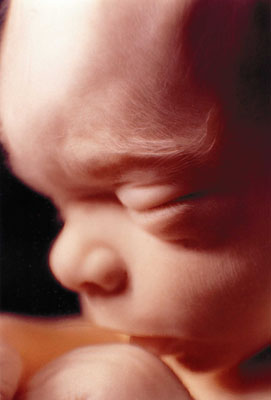
20 week-old unborn baby

…..

“It’s worth pointing out that sex-selective abortions are, by nature, late-term abortions. You can’t find out the gender of a fetus until 18 to 20 weeks, if then. Perfectly healthy children that are nearing viability are being aborted because of sexism. That’s the most important thing.”

Rachael Larimore, columnist for Slate, “How far apart we are on abortion” The Virginian-Pilot (Norfolk, VA) June 2, 2012


Share on Facebook

An Observation of a Rescue

In the late 1980s and early 1990s, large sit ins or “rescues” at abortion clinics were common. Pro-life activists would stage a sit in in front of an abortion clinic’s doors, hoping to dissuade women from going in to have abortions. These activists would usually be arrested for trespassing. These protests are a thing of the past, in part because the pro-life movement has evolved into new tactics, in part because the FACE (Freedom of Access to Clinic Entrances Laws) have made it a felony to block access to an abortion clinic.

The vast majority of pro-life activists engaged in civil disobedience were nonviolent. In fact, they were often the victims of violent police tactics. In this quote, one observer who was not part of the movement describes the sit ins.

“Such large sit ins usually generated a tense emotional atmosphere. Knowing friends were in imminent danger of being arrested and manhandled, seeing them handcuffed and (at times) dragged like sacks of potatoes, or lifted in a pain inducing manner, generated much emotion regardless of the number of friends involved.… At times, during large events, I saw police arrest picketers who had no intention of sitting in, who either had not actually stepped on forbidden territory or had done so inadvertently…. During large events arrests of obvious violators sometimes entailed unnecessary roughness. For example, one time I watched as police tossed a handcuffed septuagenarian priest head over heels in the cartwheel despite his obvious frailty; a young female activist recounted being lifted painfully by her long hair. Many activists recalled the times police beat non-resisting male activists.”

Carol JC Maxwell. Pro-Life Activists in America: Meaning Motivation and Direct Action. (Cambridge: Cambridge University Press, 2002) 66 – 67

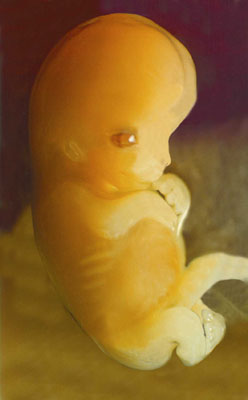
sit ins were usually an attempt to save babies like this one from being aborted


Share on Facebook

Clinic Escorts Call Themselves “Cheerleaders of Death”

From an author who observed it a busy abortion clinic:

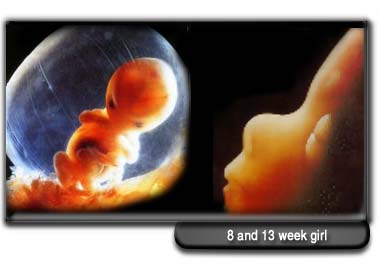
unborn baby at seven weeks – the vast majority of abortions happen at this stage or later

“The core of the pro-choice trench [the escorts] belongs to young student volunteers from “Cutler College”… They jokingly call themselves the “Cheerleaders of Death”… They erupt in laughter about the nickname, and talk about getting black cheerleading uniforms (with skulls) and learning “death cheers.”

James D Slack Abortion, Execution, and the Consequences of Taking Life (New Brunswick: Transaction Publishers, 2009) 53


Share on Facebook

Kathryn MacKinnon On Abortion

Kathryn MacKinnon, law professor known for effort to combat pornography and sexual harassment, on the 1975 case legalizing abortion on demand:

“Sex doesn’t look a whole lot like freedom when it appears normaltively less costly for women to risk an undesired, often painful, traumatic, dangerous, sometimes illegal, and potentially life-threatening procedure than to protect themselves in advance. Yet abortion policy has never been explicitly approached in the context of how women get pregnant, that is, as a consequence of intercourse under conditions of gender inequality: that is, as an issue of forced sex.”

Katherine McKinnon, Feminism Unmodified (Cambridge, MA: Harvard University Press, 1987) 95 – 96

Quoted in

Rachel McNair, Mary Krane Derr, and Linda Naranjo-Hubbl. Pro-Life Feminism: Yesterday and Today (New York: Sulzburger & Graham Publishing, Ltd.) 15-16

Share on Facebook

Abortion Clinic Escorts Hide the Truth

Many times, abortion clinics do not give accurate information to the women who go there. There is a section here that chronicles some of the lies and biased counseling from clinic workers.

For example, here is a drawing that was given out at abortion clinics – it was put out by the National Abortion Federation, which is an organization of abortion providers. They are aware of the facts of fetal development, they have to be – it is their job to do abortions.

Note – the drawing has been enlarged and is no longer “actual size”

Here is a real picture of an unborn baby at six weeks after conception:

Here is a picture of an unborn baby at nine weeks, from the endowment for human development.

And finally, here is a picture at 12 weeks


Pro-Life sidewalk counselors often offer women literature with accurate pictures of unborn babies and true facts about abortion. Randy Alcorn, pro-life author and activist, tells the following story:

“My wife often used to do sidewalk counseling outside abortion clinics. She offered accurate medical information as well as financial and practical support for women who felt they had no choice but abortion. Routinely clinic workers would take this information out of the woman’s hands or tell them, “It’s a bunch of lies.”

Randy Alcorn “Pro-life Answers to Pro-Choice Arguments” (Sisters, Oregon: Multnomah Publishers, 2000) 207-208

Share on Facebook

Philadelphia Abortionist Exhibits Bizarre Behavior

Performing abortions can be a very difficult thing for doctors to do. Besides the stigma that persists about abortion providers, many doctors are troubled by the procedures themselves.  Sometimes these stresses lead to bizarre or disturbing behavior of abortions providers. For example, in an article in the Philadelphia Inquirer, a nurse said that an abortionist:

“walked out of the operating room after doing six abortions. She smeared her hand [which was covered with blood] on mine and said, “Go wash it off. That’s the hand that did it.”

Mark Crutcher  “Lime 5: Exploited by Choice ” (Denton, Texas: Life Dynamics Incorporated, 1996) 173

19 weeks in the womb
Share on Facebook

Few Ivy League College Women Carry Unplanned Pregnancies to Term

A large percentage of abortions are performed on college-age women. These women often feel forced to choose between their education and their baby. Groups like Feminists for Life have college outreach programs where they try to encourage colleges and universities to provide services to pregnant and parenting students. This pro-life group believes that no woman should be forced to sacrifice her baby in order to have an education.

The problem is real.  Frederica Mathews-Green writes:

“A student at an Ivy League college told the author that the campus health center refers about 50 women a year for abortions; yet in the previous five years the number of students who continued their pregnancies totaled zero.”

Frederica Mathews-Green. Real Choices: Offering Practical, Life-Affirming Alternatives to Abortion (Sisters, Oregon: Multnomah Books, 1994) 162

Share on Facebook

Partial-Birth Abortion More “Respectful” That Vacuum Aspiration?

When commenting about the uproar surrounding the partial-birth abortion ban, the Royal College of Obstetricians and Gynaecologists put out a statement that said `

“it could be considered more respectful to the foetus than established methods of abortion such as vacuum aspiration . . . in which the foetus is removed in fragments’

“Abortion: New and Disturbing Questions.”  The Daily Mail. July 17, 1996. 11.

Here is a diagram of a vacuum aspiration, or suction abortion.

Share on Facebook

Marriage Counselor Discusses Aftermath of Abortion for Couples

Dr. Forrest C Stevenson, certified marriage counselor of Brighton, Michigan:

“As a marriage counselor, I have too often shared with a couple in this sorrow. They love each other, but as they look at each other, I see the hurt in their eyes. I’ve heard a woman say, “Seven years ago my husband said I could not have this baby. “I’m still in school, I’m going to get my education first.” I did what he said and I had an abortion. I wonder what that baby would’ve been like. Would he have had curly hair like his daddy? Would he have been a happy baby? Would it have been a girl? Would it have been a boy? What could’ve happened?”

Too many times I’ve heard a young man say, “I demanded that my wife get an abortion, but I wish that she had not done what I said.” These people may love each other, but the hurt of the guilt that they share together has grown like a wall between them. It is so serious they can hardly build an adequate life. Their marriage is a nightmare because of shared guilt.”

John R Rice The Murder of the Helpless Unborn… Abortion (Murfreesboro, Tennessee: Sword of the Lord Publishers, 1971) 32

Although this is a very old reference, the emotional aftermath of abortion has not changed that much in the past few decades. You can read about men who regret their partners’ abortions here and women who regret their abortions. 

Abortion still put a tremendous strain on couples’ relationships. One study showed that 80% of all relationships broke up in the aftermath of an abortion.

Share on Facebook

Frederica Mathews Green On Abortion And Women

Author Frederica Mathews-Green interviewed many postabortion women for a book she was writing. She says of her research:

“It was striking how frequently women in these groups said, “If I’d only had one other person to stand by me…” They weren’t asking for magical solutions. They were asking for a friend.”

Later in the book, she says that she had expected the women she interviewed to say that they were most concerned about material needs and goals like finishing an education or being able to afford a baby, but:

“Yet when we listened to women describe their situations in depth in the listening groups, a surprising theme emerged. In nearly every case, the abortion was undertaken to fulfill a felt obligation to another person, a parent or boyfriend. Our assumption that abortion decisions were prompted by the sort of practical problems – food, shelter, poverty, clothing – which a pregnancy care center could attempt to solve was not borne out. Instead, the woman felt bound to please or protect some other person, and abortion was the price she felt she had to pay.”

Later, Mathews Green continues:

“When postabortion women talk about the reasons for their decision, they talk most often about the failure of the baby’s father to be supportive, to fill the father’s role. Unexpected pregnancy can raise some breathtaking problems, but a partner’s vigilant love has a way of easing them. Imagine a woman discovering a pregnancy in a difficult situation, but her partner saying to her, “I love you, I love our baby, I’ll do anything I can to make this family work.” On the other hand, imagine a story from one of my listening groups: a married woman with two kids, living in reasonable security, to whom her husband says, “Only ignorant people have more than two kids. I don’t want this baby. You have to have an abortion.” Which child will survive?”

Frederica Mathews-Green. Real Choices: Offering Practical, Life-Affirming Alternatives to Abortion (Sisters, Oregon: Multnomah Books, 1994) 21, 33, 45


Share on Facebook