Eleanor Smeal: Pro-Choicers Need to Take Back “Moral Highground”

Eleanor Smeal, president of the Feminist Majority Foundation and a leader in the women’s equality movement for more than 30 years, said religious groups and feminists have often been “on a collision course,” but they need to work together for reproductive choice. 

“I feel we’re missing the boat in not taking back the moral high ground on this issue.”

Supporters of legal abortion talk strategy. (2001, Apr 11). The Christian Century, 118, 10-10.

Can pro-choicers really have the moral high ground?


Share on Facebook

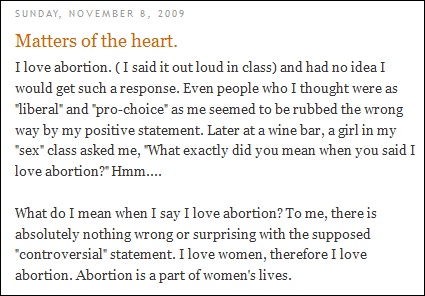
“I Love Abortion”

From a pro-choice blog that can be found here. 

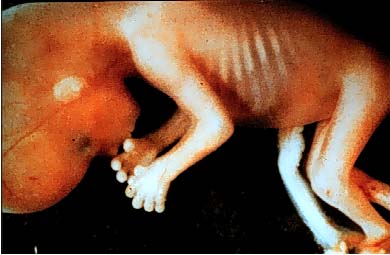
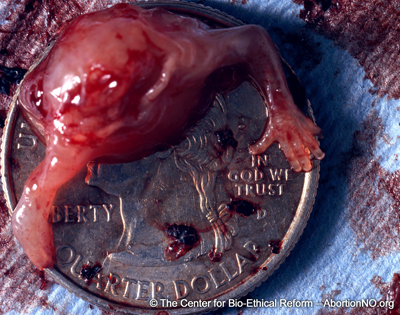
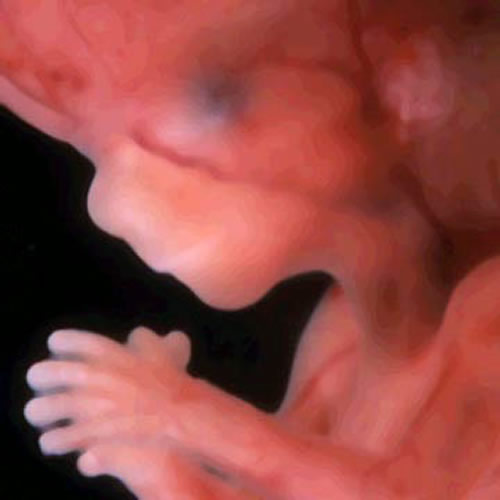
Here is a picture of a nine week old unborn baby. 42% of all abortions are done LATER than nine weeks.

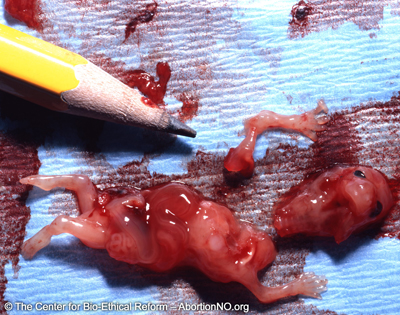
Here are some pictures of babies aborted at nine weeks.

Share on Facebook

Philadelphia Inquirer “The Dreaded Complication” : Babies born alive

 “(Live births) are little known because organized medicine, from fear of public clamor and legal action, treats them more as an embarrassment to be hushed up than a problem to be solved. It’s like turning yourself in to the IRS for an audit.” Cates said. “What is there to gain? The tendency is not to report because there are only negative incentives.”~

Willard Cates, M.D., former head of the Centers for Disease Control of the U.S. Public Health Service as quoted in “Abortion: The Dreaded Complication” ; Philadelphia Inquirer, Aug. 2, 1981


Much thanks to the blog Saynsumthin for the image! You can read more about the “dreaded complication” here! 


Share on Facebook

Woman Encouraged to Have Multiple Abortions

Makeka, former patient of abortionist Dr. Kermit Gosnell:

So when I got pregnant again I went to the clinic and I asked them… “Is it OK that I get, you know, another abortion?” ”Fine, fine”. They even like had this woman sit down and she told me that women in Brazil have at least twenty-one abortions, and she’s like, “They’re still able to conceive…” And, that was it for me. That was where I basically said, you know what, this has to be OK. It was the norm for me after she had coached me into believing that that was the norm. I would say the next fourteen years… within that time I had eight abortions. Eight. And I look back at it and it’s like God, what was I thinking? It just seemed like it was OK, it was so OK to go in there and get it done as long as you had the money.

Quoted by Lauren Enriquez, “Recapping the Gosnell saga: 11 eye-opening testimonies and quotes” Live Action April 30, 2013

14 weeks
Share on Facebook

Former Clinic Worker: Deborah Edge

Deborah Edge left the abortion business after working at a clinic for 17 years. Here is part of her testimony that appeared on Foxnews.com on May 3, 2013 (I Worked at an Abortion Clinic Like Gosnell’s House of Horrors)

“I looked in the paper and saw a doctor’s office in need of a bilingual receptionist, someone who could schedule appointments for patients – it was perfect for me. I didn’t realize it was an abortion clinic.

…..

As happens with a lot of abortion clinic employees who are hired to do one thing but are recruited into another, my scheduling position evolved into doing work in the lab.  “Lab” is where we sorted through the parts of the aborted child to make sure they were all accounted for and nothing was left inside the patient.

84 day old unborn baby

I also did counseling and somehow stomached the excuses women had to abort – for many it was because the baby was a girl and they wanted a boy while others it was because of a fetal defect and others because they didn’t want another child.

10 weeks

My conscience bothered me at times and I would secretly try to change the patient’s mind during counseling.

One woman came in who was pregnant with twins and already had another child. I just couldn’t counsel her to choose abortion and told her that there are other options. She chose to keep the twins and saw me a couple years later and told me how grateful she was for my advice and that her children were her joy.

As time went by I learned every position in the clinic and the doctor trusted me. However, he was always in a bad mood and rude to patients and employees. He referred to the larger women as cows or whales. I hated how he treated everyone and left but went back because I needed the money.

….

I tried to soothe my soul by comforting these women during their abortions or helping them with rides to the airport or bus and even had a few stay at my home because they had no extra money for hotels.

But I saw more things that made me question why I was working there. I saw the doctor increasing prices for no reason, making pregnancies look larger on the ultra sound to charge more. I saw him charge women for being overweight, on medication by a primary doctor, for having had previous C-sections, for having a tilted uterus, and many other reasons he just made up.

But even worse than lying to the women or dealing with a cranky boss was what I saw during the abortions. I was the doctor’s right hand person in the operating room and just like those employees of Dr. Gosnell, I saw the abortionist puncture the soft spot in the baby’s head or snip its neck if it was delivered alive.

22-24 weeks

She then goes on to describe how she got a flyer about ATTWN, Abby Johnson’s ministry to clinic workers, and responded to it. Read the rest of this testimony:

http://www.foxnews.com/opinion/2013/05/03/worked-at-abortion-clinic-like-dr-gosnell-practice/#ixzz2SHaemKTr


Share on Facebook

Former Clinic Worker: Angie

And Then There Were None is a pro-life group that reaches out to women and men who work in abortion clinics. They encourage them to leave, and when they do, they help them find new jobs and give them emotional support and sometimes material help.

Angie worked at a Planned Parenthood clinic that did not do abortions, but she was touched by abortion all the same. Here is excerpt from her testimony:

I was a Women’s Health Nurse Practitioner, a wife and mother of two kids in college. Heavily involved in ministry at church, I knew my husband had become distant. That led to a separation and ultimate end of our 23 year marriage. During my separation, I was led to a job at Planned Parenthood in Denton. I guess it was naive on my part, but I figured if I wasn’t working in the actual clinic that did the abortions, maybe it was an acceptable place to work.

It was there that my eyes were opened to the atrocities and the realities of abortion for the first time. It happened one day when a young women came in 20 weeks pregnant and bleeding. I examined her, listened with the monitor for the babies heartbeat, and realized it wasn’t beating. I sent her to the Emergency room where they found that the baby had died. A few days later, Planned Parenthood’s supervising Nurse Practitioner came to my office inquiring why I had used a fetal heart Doppler to allow my patient to hear her babies heartbeat. When I said it was part of the routine prenatal exam, she said “not at Planned Parenthood it isn’t!”We do not allow the patients to hear the heartbeats of their baby because it may sway their decision. When I commented that it was probably good in this instance, because the patient got to the Emergency Room where she needed to be, she questioned why I did not send her to Dallas for an abortion. I said, “You would have done a sonogram and told her that her baby was dead.” She said, “no we wouldn’t have, by the time we do the sonogram, she has already signed consent for the abortion. We don’t tell them if it is dead or alive, or twins, or triplets. It was at that point that I knew I could no longer be a party to this kind of travesty.

12 weeks sonogram

I was so shaken, I went across the street to a pregnancy resource center and told them who I was and what had happened. It was as if they already knew me. They said they thought there was a “plant” next door at Planned Parenthood, because of all the girls that had been referred there over the last few months. It was then as they prayed and cried with me, that I began to see how in spite of myself, God was using me for His purposes.

….

Several weeks later, I was in a state of despair.  I had no job, no insurance, and I felt like God had abandoned me.  What was my purpose?  Just as I was at my lowest, I was awakened early in the morning. It was as if God were speaking audibly to me. All I could think was “Save the Babies.” I called a local pregnancy center that day and spoke to the director. It just so happened their nurse manager was ill, and not sure if she would return. I started volunteering the next week, was trained to do sonograms and hired as the nurse manager 3 months later. ….

. Now, every day I can’t wait to go to work and see who God will place in my path this day. As I watch the women and see the look on their faces as they witness the miracle of a little living, breathing, human being squirming on the sonogram, it makes me see a little bit more of His purpose for my life. They hear the little heartbeat, see the fingers, the toes, the humanness of their baby. They begin to bond and most decide to choose life. It makes me ever so grateful that God gave me a second chance. A second chance to “choose life.

first trimester sonogram

Read the full testimony here 

Note: religious beliefs expressed in testimonies are not endorsed by site owner.

Share on Facebook

Number of Abortion Providers Declined in 1990s

From Lawrence B. Finer and Stanley K. Henshaw “Abortion Incidence and Services in the United States in 2000” Perspectives on Sexual and Reproductive Health 35, number one (2003) 6-15

Number of abortion providers:

1992 – 2380 providers

1996 – 2042

2000 – 1819


Share on Facebook

Anesthesia denied to rape victim having abortion

Ellen Hamilton, who had an abortion because she was raped, said she was more traumatized by the abortion.

According to Danielle Capelli with the Canadian Broadcasting Corporation on a NPR “All Things” Considered segment April 3, 1992, “Abortions without Anesthesia at Canadian Hospital.”

“She was sent over to Yellowknife, and she had–she was told that no anesthesia would be used because it wasn’t necessary; that general anesthesia was dangerous–that it would cause bleeding–and that local anesthesia wasn’t needed because it would only cause minor discomfort and the procedure would be over in a couple of minutes. In fact, she found it excruciatingly painful. She said she was strapped down to the table, held down by a number of nurses, including one male member of the staff at the hospital who had to come in and help hold her down. She said she was screaming and writhing in pain; she was begging the doctor to stop. The doctor was yelling at her, saying, ‘You’re only making it worse, stop moving,’ and refused to stop; he just kept going. “


Share on Facebook

Woman’s Story of Molestation by Doctor

“I had an abortion in Anaheim without my parents’ knowledge. The doctor performing the operation molested me, knowing I would not tell. I will vote yes on parental notification.”

caller on the O’Reilly Factor

The O’Reilly Factor Transcript 10-13-2005

Share on Facebook

Women’s Health after Abortion: The Medical and Psychological Evidence

Here are some studies about abortion’s dangers from the book “Women’s Health after Abortion: The Medical and Psychological Evidence”

Elizabeth Ring-Cassidy and Ian Gentles. Women’s Health after Abortion: The Medical and Psychological Evidence Second Edition (Toronto, Canada: The deVeber Institute for Bioethics and Social Research, 2003)

(43)

A study found that “most dramatic uterine perforations during first trimester abortions are unreported or even unsuspected.”

Kaali SG, Szigetvari, IA, and Bartfai GS. The Frequency and Management of Uterine Perforations During First Trimester Abortions. American Journal of Obstetrics and Gynecology 1989 August; 161 (2): 406 – 8 P407

A perforation is a cut on the uterine wall. These injuries can cause bleeding and infection.

***

(18)

“The observed association between induced abortion and an increased risk of the later development of breast cancer is congruent with our understanding of the hormonal effects of pregnancy on a woman’s breast tissue. Prior to her first pregnancy, a woman’s breast is composed largely of connective tissue linking ducts which contain few milk producing cells. Upon conception, a surge of oestradiol reaches twentyfold in the first trimester, triggering an explosive growth of breast tissue, a period when breast cells are most likely to be affected by carcinogens. When a woman completes her first full pregnancy, further hormonal changes propel these newly produced breast cells through a state of differentiation, a natural maturing process which greatly reduces the risk of future breast cancer.

An abrupt, premature termination of the first pregnancy by abortion arrests this process before the cancer reducing evolution of hormone release later in pregnancy can occur, leaving a large population of dangerously stimulated breast tissue cells in place, greatly raising future cancer risk.”

Kelsey, JL, “A Review of the Epidemiology Of Human Breast Cancer” Epidemiologic Reviews, 1979, 1: 74 – 109

***

18 to 19

“Animal studies support this model. Russo and Russo exposed two groups of rats to a chemical carcinogen. One group, who mated and carried a first pregnancy to term, developed mammary tumors at a rate of 6%. The other group, who mated, became pregnant, then were aborted (via hysterectomy) developed mammary tumors at an incidence of 78%; virgin rats also developed tumors at a high rate, but not as high as those that were aborted.”

Russo J, Russo IH. Susceptibility of the Mammary Gland to Carcinogenesis. Pregnancy Interruption As a Risk Factor in Tumor Incidence. American Journal of Pathology 1980 August; 100 (2); 497 – 512

****

44

“dilation and evacuation between 12 and 16 weeks… have the potential to cause significant morbidity and mortality.” Because of possible uterine complications, the researchers conclude that such procedures should only be used where intensive emergency treatment can be initiated immediately.”

Trott E., Ziegler W, Levey J. Major Complications Associated with Termination of a Second Trimester Pregnancy; a Case Report. Delaware Medical Journal 1995 May; 67 (5): 294 – 296

***

53

“The greatest consequence of induced abortion for future pregnancy is a rise in the rate of premature births ranging from 30 to 700% Preterm babies weighing less than 1500 grams suffer an incidence of cerebral palsy over 38 times greater than full-term babies. Thus induced abortion tremendously increases a woman’s risk of later bearing a child with cerebral palsy.”

***

66

“The abortion procedure can trigger an episode of PID [pelvic inflammatory disorder] in any woman, but those postabortion women who already have chlamydia are at far higher risk of PID than women who do not carry the organism. Women can be asymptomatic and still harbor chlamydia trachomatis in the lower genital tract. If the abortion clinic does not test for this and prescribe the appropriate antibiotic regime, the woman may only discover the chlamydia while being treated for postabortion PID. By then it may be too late to avoid later fertility problems.”

***

“Delay in the onset of symptoms is a critical factor when considering PID caused by chlamydia following abortion. Blackwell and colleagues found from their patient records that women continued to develop symptoms at 11 weeks, 24 weeks, and 36 weeks post abortion. Osser and Persson found it to be variable: if the woman was positive for chlamydia before the abortion, the time of onset for salpingitis (infection of the fallopian tubes) was 14.1 days and for endometritis (infection of the uterus) 8.2 days.… Such complications would not be identified by abortion clinics as immediate sequelae or coded as being related to abortion at all.”

Blackwell AL, Thomas PD,Wareham K, Emery SJ. Health Gains from Screening for Infection of the Lower Genital Tract in Women Attending for Termination of Pregnancy. The Lancet 1993 July 24; 342 (8865): 206 – 10, P209

Osser S., Persson K. Post-Abortive Pelvic Infection Associated with Chlamydia Trachomatis and the Influence of Humoral Immunity. American Journal of Obstetrics and Gynecology 1984 (November 15; 150 (6): 699 – 703

Share on Facebook