“The hardest question you get asked is ‘does the baby feel pain?’ We had to lie to them or say we don’t know.”
Former clinic worker Amy

They said it.
“The hardest question you get asked is ‘does the baby feel pain?’ We had to lie to them or say we don’t know.”
Former clinic worker Amy
“Dr. _X_ was good at the digoxin, but Dr. _Y_ wasn’t. Dr. _Y _ would mess up and babies would be born alive… Moms are damaged mentally. You will never, ever, ever, ever forget it. [Abortion] hurts a whole community. It hurts a family.”
Former Clinic Worker Christine
 Christine describes one time a baby was born alive and fell into a toilet:
“This baby was moving… I’m like, oh God, what do I do?” she said. “We were supposed to give CPR but never did… once that fetus dropped in the toilet, I knew I was done… I am guilty for not saving the child who drowned in the toilet. When I left, I didn’t look back.”
And Then There Were None
Share on Facebook“After you work at Planned Parenthood, you’re set apart. It’s a stigma. As a single parent it’s lonely… people look at you differently. The medical community does too. Planned Parenthood makes you feel like you’re stuck there because you’ve been involved with abortion… When I left Planned Parenthood, I never wanted to think about it again. It worked for a few years, but eventually I went out to pray during 40 Days for Life. I figured after that I’d be done, but God has more in store for me.”
Mary, former clinic worker
And Then There Were None
Share on FacebookGermaine Greer, who is pro-choice, said in an interview in the New Republic:
“It is typical of the contradictions that break women’s hearts that when they avail themselves of their fragile right to abortion they often, even usually, went with grief and humiliation to carry out a painful duty that was presented to them as a privilege. Abortion is the latest in a long line of non-choices…”
The New Republic, October 5, 1992 quoted in Rachel M MacNair, PhD. Achieving Peace in the Abortion War (New York: iUniverse, 2009) 115
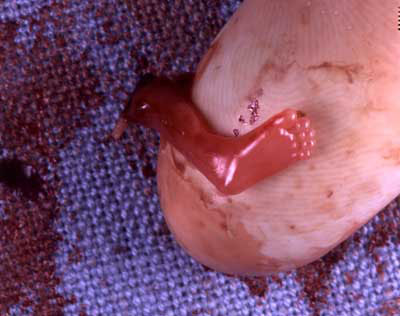
Abortion is heartbreaking for everyone involved. The clinic workers, the women, the fathers, the siblings, and the babies
Share on FacebookBruce Finkel, who performed over 30,000 abortions, had a charge of rape filed against him by student nurse. After his arrest, over 100 women accused him of sexually molesting them, many during their abortions. He was convicted on 22 counts of sexual assault and given a sentence of 35 years.
Researcher Rachel MacNair discusses the response of the Arizona chapter of the National Organization for Women.
After discussing the excuses NOW made for another abortion doctor who molested his patients, she said the following:
“In the case of BF, the response was even worse: the spokesperson for the Arizona chapter of the National Organization for Women, familiar with the case, assured people that the women were lying, and this was due to an antiabortion conspiracy.
How over 100 women of sufficient pro-choice philosophy to go to an abortion provider, many if not most of whom were in fact getting abortions, along with several former employees of the clinic, were talked into making the allegations was not clearly explained.
Advocates in NOW are not normally inclined to take the side of the accused in sexual abuse cases, outside the context of the accused being abortion provider.”
Rachel M MacNair, PhD. Achieving Peace in the Abortion War (New York: iUniverse, 2009)97 – 98
Share on FacebookFormer clinic worker Molly:
“Gosnell’s going to prison for life, but I’m just as guilty… but the 24 week abortions I helped in, that was legal. There is no statute of limitations on murder, but I’m not in jail… If you can believe it’s an unfeeling non-person, it’s so much easier to dehumanize them. You can’t hear the baby cry.”
And Then There Were None
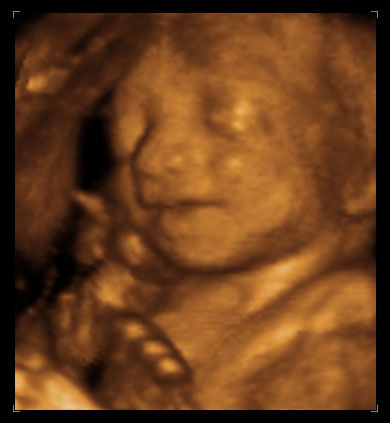
From former clinic worker Mary:
“When you take that jar and dump it [after an abortion], and you see those arms and legs, there’s no denying it’s a baby.”
And Then There Were None
Share on Facebook
A woman who came to an abortion clinic bent on aborting her baby tells the following story:
“When I arrived, there was a long line of other women waiting for abortions. I could not see the doctor until I waited a long time. Eventually he saw me. He did an ultrasound examination of my abdomen to see the baby. When I asked to see it he refused. I asked him how big the baby was. He would not tell me. He said the abortion was going to be easy…However, by that time of the day I did not have time to wait for the abortion…I explained I had to leave. An appointment for the abortion was arranged for the next day, Nov 2, 1992. By that time in pregnancy, I could already feel the baby move inside me. I cried a lot on Nov 3 before I went to the clinic…Upon arrival at the clinic, I saw ladies outside carrying picture of unborn babies. I looked at the pictures and thought about my own baby. As I was going towards the door a lady asked “Can we help you?” I started crying …They asked if I knew how the baby looks like and they showed me a book about how the baby looks like as it grows inside the mother.
They also asked me about why I wanted an abortion. I told them about my financial problems…[They] helped me by paying my rent and helping to pay for the groceries [and] with maternity clothes and things for the baby. My daughter Emily was born on April 8, 1993.”
Leonard Stern “Abortion Wars” The Ottawa Citizen Sun 28 May 2000
Share on Facebook“It doesn’t matter if the fetus is a person. We too are persons, but you can’t force people to donate blood to save other people. Our laws are set up so you can’t force somebody to give any part of themselves to sustain the life of another person.”
Cyny Recker, director of education for the Canadian Abortion Rights Action League.
Leonard Stern“Abortion Wars”The Ottawa Citizen Sun 28 May 2000


A group of pregnant couples met in a study where they had amniocentesis to see whether or not their children had an abnormality and planned to abort the babies if they did.
Said one woman in the study:
“One mother gave voice to her sense that an already affected child felt threatened by her visit to the center when she found him hiding in the closet upon returning.”
In this case, the handicapped child was afraid the mother would kill him in addition to killing her unborn sibling.
“One father stated that there was “no good way to explain to your own child that you might have had a part in deciding the end of his life.”
John C Fletcher “The Brink: The Parent-Child Bond in the Genetic Revolution” Theological Studies 33 no. 3 (September 1972) 457 – 85, 466, 464
Share on Facebook