Herald Sun writer Evelyn Tsitas mocks women who grieve or suffer from guilt and regret after their abortions:
“Abortion can be an emotional subject – particularly for people who choose to get upset about it. There is a movement taking hold called: “I’ll always regret what I did and want to burn in hell for it.”
“The power of the uterus,” the Herald Sun, March 18, 1998, 19
Despite pro-choice mockery of women who experience abortions and later come to regret them, many women have stepped forward to give their testimonies of how abortion hurt them. There are a few of these testimonies here. Organizations like Silent No More have compiled thousands of them.
In an early Live Action expose, Lila Rose caught an abortion clinic worker on camera discouraging a woman seeking abortion from looking at photos of unborn babies.
The clinic counselor says, in response to a question from the girls’ friend (who is really Lila Rose).:
“Well, no. I mean, it just may make the decision harder for her. You know, when she sees, you know, what the fetus looks like at this point.”
The tape was shot at EMW Women’s Surgical Center, Louisville, Kentucky, June 23, 2008
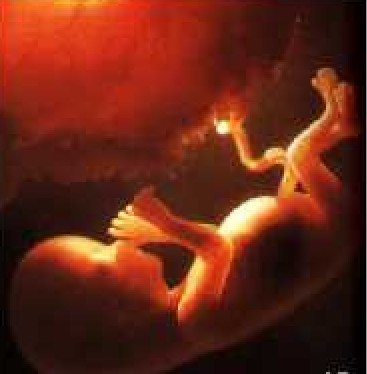
15 weeks – legal to abort in every US state and all throughout Canada
Reporter MARTIN BASHIR interviewed abortionist William Harrison (now deceased) on Nightline. He asked the abortionist if he ever mentioned adoption to women coming in for abortions:
MARTIN BASHIR: (Off-camera) Do you ever mention in your counseling the possibility of adoption as an alternative?
DOCTOR WILLIAM HARRISON: No. Not unless the patient asks me. You know, it’s easy to say adoption is a better option but…
MARTIN BASHIR: (Off-camera) You don’t even mention it?
DOCTOR WILLIAM HARRISON: Pardon?
MARTIN BASHIR: (Off-camera) You don’t even mention it?
DOCTOR WILLIAM HARRISON: Not unless the patient asks me, no. I’ve had one patient who gave up two babies for adoption. She committed suicide the year before last. And my patients who have given up babies for adoption and then had abortions, tell me that the most difficult thing that they’ve ever done is to give up a baby for adoption. It’s not like giving away a puppy.
It would seem that Dr. Harrison probably does what he can to discourage women from putting their babies up for adoption. While it is true that adoption can be a very hard thing for a woman to go through, today there are many options for women. they can have open adoption where they are still a part of the child’s life, which is often easier for a birth mother than cutting all ties. Also, it should be remembered that when a woman has an abortion, her risk of suicide is six to seven times greater (if she is a teen, she is actually ten times more likely to commit suicide) When a woman gives a baby up for adoption, her child goes to loving home and she is spared the guilt and grief of knowing she participated in the death of her own child.
Commenting on a case where a 14-year-old girl is being forced into abortion by her family, Texas Center for Defense of Life, one of their attorneys, Stephen Casey said the following:
“It’s not the first case in Texas and these cases are very very under reported. Girls go through these situations they don’t feel like they have a representative or an advocate and that’s what TCDL does, is we let them know they’re not alone. And they have a constitutional right to carry their child and protect their child.”
“I have been unable in certain cases to actually put a needle into the heart for technical reasons or because the mother is obese or the fetus is in a particularly difficult position to gain access to the heart. When you put these agents not in the heart or near the heart, you can’t guarantee fetal death.”
Dr. Marilynn C. Frederiksen, abortionist, in sworn testimony in National Abortion Federation, et. al. v. Ashcroft, U.S. District Court, Southern District of New York, April 6, 2004
She is describing a late-term abortion technique, usually practiced in the late second and third trimester, were poisoned (usually digoxin) is injected into the baby to kill him or her and then labor is induced. These abortions are more dangerous to the mother then going through the birth of the baby would be, and babies are sometimes born alive.
There has long been a shortage of abortion providers. Consider this quote from 1991:
“There is nothing more critical [than the shortage of abortionists]. If you don’t have people to provide the service, then political and legal victories become moot.”
Barbara Radford, former director National Abortion Federation
Glamour, September 1991
Mark Crutcher “Access: the Key to Pro-Life Victory” Life Dynamics Incorporated,
Reasons for the shortage include pro-life activities and the distastefulness of performing teh abortions and seeing the bodies of babies on a daily basis.
“The fetus passes through the catheter and either dies in transit as it’s passing through the catheter or dies in the suction bottle after it’s actually all the way out.”
Sworn testimony given in US District Court for the Western District of Wisconsin (Madison, WI, May 27, 1999, Case No. 98-C-0305-S), by Dr. Martin Haskell, an abortionist.
He is describing the way an aborted baby passes through the tube attached to the suction machine. The baby can come out intact, or, more often, mangled like the one below
Prochoicer Lana Clarke Phelan comments on doctors who don’t do abortions:
“Another cliche [used by doctors to refuse to do abortions] is the timeworn “life has begun and I cannot play god” bit, yet daily each doctor sees nothing unethical in excising a cancer, performing a vasectomy on a requesting male without question, or using antibiotics to frustrate the will of god regarding life and death.”
Lana Clarke Phelan. “Abortion Laws: The Cruel Fraud.” Speech presented at the First California Conference on Abortion at Santa Barbara, California in March of 1968 by the Society for Humane Abortion, Inc., San Francisco, California
Picture of a seven-week-old baby after she as been abortedShare on Facebook
“My sister has since had two stillbirths – as a family we have grieved and emphasized with her and her husband’s dreadful pain. Inside of me I felt cheated as no one had grieved with me for my two lost children – not even me. My sister’s children died at the same time as both my losses – I felt responsible, guilty, and so alone. When my mom says the no one in the family has experienced pain like my sister my heart cries out silently – but I have.”
Melinda Tankard Reist Giving Sorrow Words: Women’s Stories of Grief after Abortion (Springfield, IL: Acorn Books, 2007) 22