From former abortionist turn pro-lifer Dr. Bernard Nathanson:
“I have spent my life in the practice of obstetrics and gynaecology and have watched as the attention of the specialty has turned from a preoccupation with the maternal welfare to the welfare of the unborn child. It is the transcendent irony in the history of medicine that as increasing scientific attention and enormous resources were being assigned by the medical community to the protection and welfare of the unborn child, a new liberty was being quarried out of the United States Constitution which permitted and even encouraged the mass scale destruction of the child.”
Bernard Nathanson, M.D. The Abortion Papers inside the Abortion Mentality (Chicago: Loyola Press, 1990) 17
From pro-choice Methodist Minister John M Swomley:
“There is also covert violence in the idea that women should not have sexual intercourse if they don’t want children. An act of sexual intercourse is not an implied contract to have children. While this may be the belief of those who accept the doctrine that every sexual act must be open to procreation, it would be violent for any government to decide that such a sectarian doctrine should be enforced against anyone, Catholic or non-Catholic, who does not accept that teaching.”
John M Swomley Compulsory Pregnancy: The War against American Women (Amherst, New York: Humanist Press, 1999) 58
Suggesting a woman shouldn’t have sex is violence, but abortion is not? Look at the picture of an aborted baby (first trimester) below and ask yourself if a suggestion of abstinence is more violent than abortion.
A Georgia woman who allegedly took an abortion pill she purchased off the internet to abort a five-and-a-half-month-old baby boy has been charged in the child’s death and abortion advocates have come to her defense.
According to reports published by a local media outlet, police say that 23-year-old Kenlissa Jones purchased Cytotec, from a source in Canada.
The drug, also known as Misoprostol, is promoted by abortion advocates in home abortion remedies online.
Reports indicate that Jones got a neighbor to take her to the hospital, but she delivered the baby boy in the car on the way.
Dougherty County police say that Jones’ baby boy died after about half an hour at the hospital and have now charged Jones with malice murder and possession of a dangerous drug. Jones’ brother, Rico Riggins, told WALB that he did not know his sister was pregnant.
“Once she took those pills, from the way I’m understanding it, she was in a world of hurt for a while,” Riggins said.
Riggins said his family is grieving and in need of prayers.
“We lost what would have been a nephew for me. And everything. And then my sister,” Jones’ brother said.
Dougherty County District Attorney Greg Edwards said the case will likely go before a grand jury, because Georgia and federal laws will need to be explored.
According to Georgia law:
No abortion is authorized or shall be performed if the probable gestational age of the unborn child has been determined in accordance with Code Section 31-9B-2 to be 20 weeks or more unless the pregnancy is diagnosed as medically futile, as such term is defined in Code Section 31-9B-1, or in reasonable medical judgment the abortion is necessary to avert the death of the pregnant woman or avert serious risk of substantial and irreversible physical impairment of a major bodily function of the pregnant woman. O.C.G.A. § 16-12-141 (2014)
This is not the first time a woman has been charged after ordering and consuming drugs to self-induce an abortion.
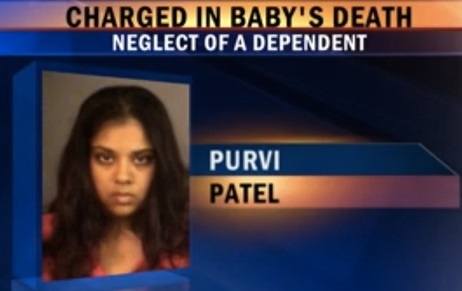
Earlier this year a 33-year-old Indiana woman was sentenced to 20 years in prison on feticide and neglect charges after she took abortion pills she had ordered to abort her roughly thirty (30) week pregnancy.
The woman, Purvi Patel then threw the almost fully developed baby into a dumpster behind a restaurant her family owns where the infant died.
Abortion advocates wasted no time coming to Purvi’s defense. (read here.)
Life Dynamics president, Mark Crutcher called Patel’s defenders, savages, saying that abortion advocates never met a baby they didn’t want to kill.
Crutcher pointed out that had Patel’s baby been found in the dumpster of an abortion clinic, no charges would have been filed,
“The fact is, if the body of this child had been found in the dumpster of an abortion clinic instead of the dumpster of a restaurant this arrest would have never happened and Patel would just be another enlightened woman exercising her constitutional right to choose,”
he stated at the time of Patel’s arrest.
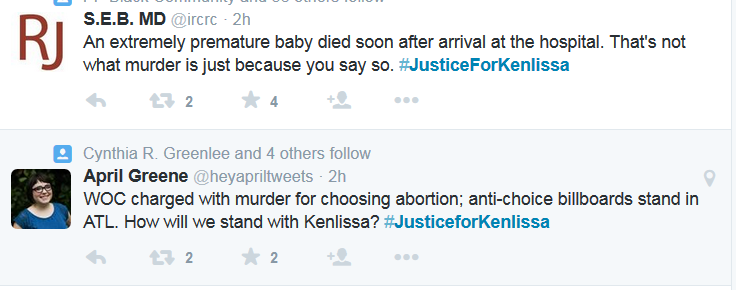
Now, abortion advocates are rushing to the aid of Kenlissa.
On twitter they have set up the twitter hashtag #justiceforKenlissa to defend Kenlissa’ actions.
No page has been established to grieve her dead son, though.
This baby is five months old. The baby aborted Jones by was even more developed
In an article in Live Action, Nancy Flanders describes how Canadian paramedic David Baxter was undecided about abortion until he saw the miscarried body of a 17 week old unborn baby
17 weeks
He had picked up a 14-year-old who was having a miscarriage and delivered her to the emergency room. After a little while a nurse came out and showed him the body of the baby, which had been miscarried at 17 weeks.
Baxter said:
“All I remember, is looking at that poor little thing, and seeing fingers, and toes, and a face. I saw this was real. I thought, ‘That’s a baby; not something to be discarded.’”
“In order to be attentive, focused, and disciplined, there is an emotional distancing. You cannot allow your own emotional vulnerability to get in the way of your own judgment and attention when you’re in the midst of the surgical procedure.”
Eve Kushner Experiencing Abortion: a Weaving of Women’s Words (Binghamton, New York: The Haworth Press, 1997) 56
it is not surprising that an abortion provider would need to distance herself. After all, they see the torn apart arms and legs of babies (like the one below) during these procedures.
Lawrence McKinney, at the time Planned Parenthood board member in upstate New York, said the following upon seeing a large family:
“All I do actually is to multiply them by $600, which is deductible from their income tax and realize that I, with only three children, am paying for them. The McKinney suggestion, which has and will go nowhere is: 1) give everybody a tax reduction for four children and after that make them pay $600 for every other child. The only trouble with my system is that since most of the explosive families are on relief anyway, there is nothing to deduct from or to tax with.”
Mary C Kahl Controversy and Courage: Upper Hudson Planned Parenthoodfrom 1934 to 2004 (New York: IUniverse, Inc., 2004) 43
In a book by a pro-choice author who collected postabortion testimonies from a number of women, a postabortive woman named Nora told her story. Nora was strongly pro-choice and anti-Catholic and couldn’t understand her feelings of guilt after her abortion.
From the author:
When Nora had an unplanned pregnancy 8 months ago, her scorn for Catholicism played into her decision. She recalls, “All those films I was shown in Catholic school – those were a big part of my having an abortion, because I was rejecting them.” Nora found those pro-life ideas “bogus,” “wrong,” and “based on nothing.”
She took more than scorn into account when she decided to end her pregnancy; as she was still an undergraduate and valued her education highly, her choice was automatic. She viewed her upcoming abortion simply as a legal right she could exercise and expected to feel nothing. Instead, in the weeks afterword, pain and confusion rolled over her in waves.
Nora says:
When I was really freaking out, I couldn’t even formulate my opinion on it. It was just this feeling of horribleness and you can’t even put everything together and see what you’re really thinking. It’s pure emotional rottenness….I’d wake up in the middle of the night and I’d be crying. I felt really empty inside.…
I thought I was going to go nuts at one point…
I sound like a Catholic here, thinking that this child was real and natural and that I ended his life. I’m disturbed at the process.
From the author:
Nora was shocked that her feelings showed up with a pro-life undertone. She recalls thinking “This is so trite that I’m having this.” She explains, “I was so disgusted with myself for having the feeling that I killed something. I was really surprised that I would have that kind of conservative attitude.” Rejecting Catholicism but still feeling terrible after her abortion presented a conflict. Nora says, “I felt bad for feeling grief, because I thought I was succumbing to that garbage.”
The pro-choice author who collected this story tries to pass off Nora’s guilt as just hormones:
Because Nora’s strong reaction occurred in the weeks after her abortion, her feelings were probably linked to the hormonal shifts a body goes through when pregnancy ends. The drop in hormone levels may have colored her moods with a painful and frightening intensity.
But even she acknowledges that this argument is weak:
This does not tell the full story, however. Neither societal censure nor hormones determine the content of our concerns. To attribute most postabortion reactions to those causes is politically useful, but emotionally too simple.
Eve Kushner Experiencing Abortion: A Weaving of Women’s Words (Binghamton, New York: The Haworth Press, 1997) 7 – 9