
Clinic Worker Speaks in Support of Late-Term Abortion

“What’s the difference? Abortion is abortion. The nice folks who are debating this, who want to draw the line and put a limit on gestational age, will just be putting a restriction on poor women. Women who want abortions get them. It will just force the poor women back to unacceptable remedies.”

Anne Walshe, clinic administrator, on late term abortion

LA Times, The Abortions of Last Resort, 1-7-1990

18 weeks – legal to abort in every US state

Her clinic performs 16,000 abortions a year- half of them late.

Share on Facebook
Abortion Advocates Support Late-Term Abortion

Abortion advocate on late term abortions:

“Pregnant women do not like to seek late abortions, doctors do not like to perform them. An abortion is not an abstract issue for the woman who seeks it. Her pregnancy is a pressing practical problem and seeks an abortion because she has reasons for wishing to end it. You may not agree with that reason and you may think it wrong for that woman to end her pregnancy. But your agreement and approval is of no consequence. The issue is: should you have the right to force a woman to endure pregnancy and labor because you disapprove of her reason.”

Pro-choice forum, The Law and ethics of Post Viability Abortion, by Dr. Andrew Fergusson and Ann Furedi-transcript of papers given at a seminar held at Kent University Law School in the Autumn Term 1997 http://www.prochoiceforum.org.uk/aad2.asp

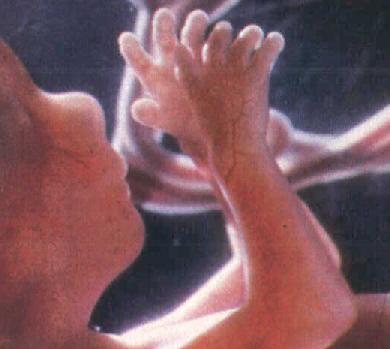
19 week unborn baby – legal to abort in every US state


Quote provided by life dynamics

Share on Facebook

Planned Parenthood Spokesperson Defends Late-Term Abortion

Abortion advocate (Planned Parenthood’s Susan Newsom) on late term abortion legislation:

“It’s not the first choice for a lot of people. Everybody’s got his or her own ambivalence. Abortion is such a personal thing that people set personal criteria. The one thing we’re united on is it should be a woman’s decision and not the government’s.”

“Disagreement within abortion-rights ranks,” Boston Globe 1-16-1990


Share on Facebook

Less Than 10% of all Late-Term Abortions Are Due to Medical Reasons, Abortion Clinic Survey Says

In one article, a survey was done at 18 late-term abortion clinics. These clinics comprised of one third of all clinics that do late abortions.

The article says:

 “Only 9.4 percent of late abortions at clinics that responded to the U.S. News survey were done for medical reasons, either to protect the mother’s health(a rare situation) or, more commonly, because of fetal defects such as spina bifida and Down’s syndrome (box, Page 32)…for post-20-week abortions generally, about 90 percent were classified by the clinics as “nonmedical.”

It further quotes a clinic worker saying that most of these abortions are done on 10-18 year-olds in “total denial” of their pregnancies.

“When Abortions Come Late in Pregnancy” US News and World Report. Jan 19,1998 Vol 124 Issue 2


Share on Facebook

Study in British Medical Journal: Unborn Babies React to Pain

From the British medical journal, Lancet, a study was done where scientists tested fetal hormonal stress responses. First they stuck the baby with the needle, then they hope to needle into the umbilical cord, which has no nerve endings.

They concluded:

“The fetus reacts to intrahepatic (liver) needling with vigorous body and breathing movements, but not to cord needling. The levels of these hormones did not vary with fetal age.”

MFisk, et al. “Fetal Plasma Cortisol and B – endorphin response to the Intrauterine needling,” Lancet, volume 344, July 9, 1994 PG 77

To read about more studies that confirm that babies in the womb feel pain, go here.

Share on Facebook

Pro-Choice medical professional Urges the Use of Anesthesia for Babies Being Aborted

Unborn babies may feel pain beginning with the seventeenth week of gestation suggests Professor Vivette Glover of the Queen Charlotte’s and Chelsea Hospital in London, UK:

Professor Glover supports legalized abortion, but she asserts that

“one should not muddle the two. One should think about how one is doing [the abortion] in the most pain-free way.”

Professor Glover goes on to say:

“Between 17 and 26 [weeks] it is increasingly possible that it [the unborn baby] starts to feel something and that abortions done in that period ought to use anaesthesia.”

London Telegraph, August 28, 2000

Share on Facebook

National Right to Life Quotes Neurologist On Fetal Pain

“At 20 weeks, the fetal brain has the full complement of brain cells present in adulthood, ready and waiting to receive pain signals from the body, and their electrical activity can be be recorded by standard electroencephalography (EEG)”

– Dr. Paul Ranalli, neurologist, University of Toronto

“Pain of the Unborn: What does an Unborn Child Feel during an abortion?” National Right to Life Education Trust Fund, Washington D.C. 2004

20 weeks
Share on Facebook

Professor of Neurosurgery Says Unborn Babies Feel Pain

An unborn child at 20 weeks gestation

“is fully capable of experiencing pain… Without question, [abortion] is a dreadfully painful experience for any infant subjected to such a surgical procedure.”

– Robert J. White, MD., Ph.D. professor of neurosurgery, Case Western Reserve University

“Pain of the Unborn: What does an Unborn Child Feel during an abortion?” National Right to Life Education Trust Fund, Washington D.C. 2004

20 weeks
Share on Facebook

Scientific Evidence for Fetal Pain

The following quotes are from “Pain of the Unborn: What does an Unborn Child Feel during an abortion?” National Right to Life Education Trust Fund, Washington D.C. 2004:

“[The] Brain begins to take shape 18 days after conception, by 20 days forebrain, midbrain and hindbrain and spinal column starts to grow.”

Blackburn, ST. Maternal, Fetal, and Neonatal Physiology. 2nd ed (2003).

……

“Four or five weeks after conception, pain receptors appear around the mouth, followed by nerve fibers, which carry stimuli to the brain. By 18 weeks, pain receptors have appeared throughout the body. Around week 6, the unborn child first responds to touch.”

Blackburn, ST. Maternal, Fetal, and Neonatal Physiology. 2nd ed (2003).

Vanhatalo, S & van Nieuwenhuizen, O. “Fetal Pain?” Brain and Development. 22 (2000)

6 to 7 weeks

Share on Facebook

Study Recommends Anesthesia For Unborn Babies

In a 1994 study in Lancet, scientists determined that the unborn do feel pain by studying hormonal stress reactions in the unborn baby. They recommend that anesthesia be used when operating on unborn children and went on to say:

“This applies not just to diagnostic and therapeutic procedures on the fetus, but possibly also to termination of pregnancy, especially by surgical techniques involving dismemberment.”

Giannakoulopoulos X, Sepulveda W, Kourtis P, Glover V, Fisk NM. Fetal plasma cortisol and β-endorphin response to intrauterine needling Lancet. 344 (1994) 77-81.

Share on Facebook