
Share on Facebook“I’ll never forget what it was like walking down into that waiting room.
I had to leave because of the vibes I felt…I had first hand knowledge of what I felt in that place. I had been a soldier during the last of Vietnam (1970-1973) and worked on rescue squads after my separation from the army. What I felt in the abortion clinic was the air of death. The hopelessness and despair hung in the waiting room like fog. I couldn’t stand to be in there. I didn’t want my wife in there, either.”
Author: Tech
Father of Aborted Babies Speaks Of His Frustration
“Can you imagine how it feels to know that your child is going to be killed at nine o’clock tomorrow, and there is not a thing you can do about it?”
Gary Bell, father of two aborted babies
Linda Pierce “Hidden Tears” Easton Publishing Company 1991
Share on FacebookFormer Clinic Worker Brenda Shafer
Nurse Brenda Shafer said:
“I took the assignment because I was at that time very pro-choice. I had even told my two teenage daughters that if one of them ever got pregnant at a young age, I would make them get an abortion.”
“It was one of these cases that especially haunts me. The woman was six months pregnant (26 1/2 weeks). The doctor told her that the baby had down syndrome, and she decided to get an abortion…
Dr. Haskell brought the ultrasound in and hooked it up so that he could see the baby (then 26 1/2 weeks into pregnancy.) On the ultrasound screen, I could see the heart beating. I asked Dr. Haskell and he told me that “Yes, that is the heartbeat.” As Dr. Haskell watched the baby on the ultrasound screen, he went in with forceps and grabbed the baby’s legs and brought them into the birth canal. Then he delivered the body and arms, all the way up to the neck.
At this point, only the baby’s head was still inside. The baby’s body was moving. His little fingers were clasping together. He was kicking his feet. All the while his little head was still stuck inside. Then Dr. Haskell took a pair of scissors and inserted them into the back of the baby’s head. Then he stuck a high-powered suction tube into the hole and sucked the baby’s brains out. I almost threw up as I watched him do these things.

Next, Dr. Haskell delivered the baby’s head, cut the local court in delivered the placenta. He threw the baby in a pan, along with the placenta and the instruments he’d used. I saw the baby move in the pan. I asked another nurse and she said it was just “reflexes.”
The woman wanted to see her baby, so they cleaned up the baby and put it in a blanket and handed it to her. She cried the whole time, and she kept saying, “I’m sorry, please forgive me.” I was crying too. I couldn’t take it. In all my professional years I’d never experienced anything like this.
Another case I saw on that third day was a six-month-old (approximately 25 weeks) baby. The mother was over age 40. There was nothing wrong with this baby, she just didn’t want it. The doctor used the same procedure… This baby was also alive. I saw the heartbeat on the ultrasound. (Actually every baby that they still have a heartbeat at the time of the procedure.” The second baby was a little smaller than the first baby. I remember thinking how perfect this child was. The mother did not want to see it…
I also saw third case that day (I was only assisting in one operating room.) This was a 17-year-old girl. She was approximately 25 weeks. The same procedure was done on this baby.
The Down’s Syndrome baby was the only baby that had a defect. And that baby with Down Syndrome had the most perfect angelic face I have ever seen. I never realized how perfect these babies are at this point. When you hear the word “fetus,” I think a lot of people think is I did of just a blob of cells, or a mass of something. It was very revealing to me. I don’t think about abortion the same way anymore. I still have nightmares about what I saw.”

Brenda Shafer, “What the Nurse Saw,” National Right to Life News, July 18, 1995: 23
Share on FacebookPro-choice Activist Complains about Pictures of Unborn Babies
At the October 1989 annual conference of the National Abortion Rights Action League, pollster Harrison Hickman stated in a workshop entitled ‘Framing and Selling the Pro-Choice Message’ that:
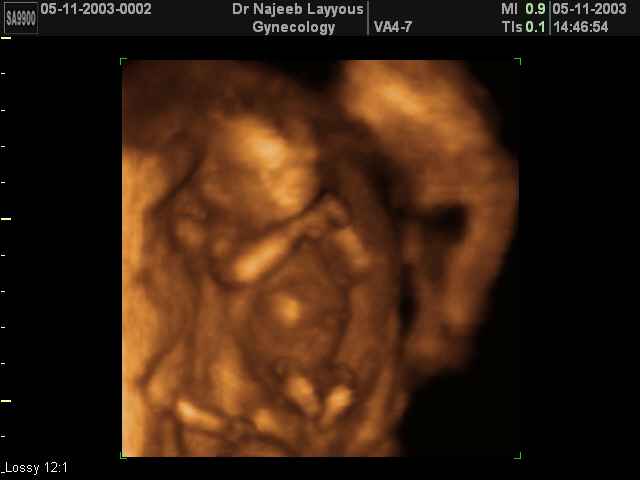
“Nothing has been as damaging to our cause as the advances in technology which have allowed pictures of the developing fetus, because people now talk about the fetus in much different terms than they did 15 years ago. They talk about it as a human being, which is not something that I have an easy answer how to cure.”
Quoted in Frederica Mathews-Green. Real Choices: Offering Practical, Life-Affirming Alternatives to Abortion (Sisters, Oregon: Multnomah Books, 1994) 30
Abortionists Seen As Despicable
Says one abortion provider:
“An abortionist is a despicable person. They assume you did it for the money, you didn’t have the qualifications to be real doctor… You were either a drug addict, an alcoholic, a ne’er-do-well, you couldn’t maintain a practice or you were owned by the Mafia… You weren’t a good person and probably weren’t a good doctor either. At the very least, you are an embarrassment to the medical community.”
David Bennett
Carole Joffe. Doctors of Conscience: the Struggle to Provide Abortion before and after Roe Versus Wade (Boston, Massachusetts: Beacon press, 1995) 153
Share on FacebookAbortionist: Some of My Colleagues Don’t Speak to Me
“Even my own colleagues there at University Hospital, I would be over there delivering a baby, and they would say, “What are you doing here? I didn’t think you delivered babies, I thought you just did abortions.”… Some of my colleagues don’t speak to me because I do abortions.”
Abortionist Eugene Fox, M.D
Carole Joffe. Doctors of Conscience: the Struggle to Provide Abortion before and after Roe Versus Wade (Boston, Massachusetts: Beacon press, 1995) 152
Share on FacebookThe Back Alley to the Front Alley
Eugene Fox, doctor who referred for abortion shortly after Roe V Wade:
“Some of these places were terrible. They were just back alley shops that open their doors…”
Carole Joffe. Doctors of Conscience: the Struggle to Provide Abortion before and after Roe Versus Wade (Boston, Massachusetts: Beacon press, 1995) 138
Many people don’t realize that very few legal safeguards will put in place after Roe versus Wade to protect women from unscrupulous and negligent abortion providers. In many cases, “back alley” abortionists simply hung up their shingles and began performing legal abortions. To read more about illegal abortions before Roe V Wade, go here.
Share on FacebookPartial Birth Abortion
Partial-Birth abortions became illegal when the Supreme Court allowed a ban against them to stand. The court had previously ruled against the ban, and the law was sent back with minor changes after a new justice was confirmed. It was a very long battle to ban this type of abortion, which usually took place between 20 and 26 weeks. Here are some pictures of how these abortions were performed.
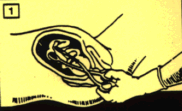
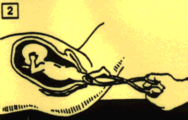



Prominent abortionist Dr. Martin Haskell, who performed the abortion Brenda watched, was asked about the diagram in an interview, and answered that it was “accurate from a technical point of view.”
(AMA- American Medical News July 5, 1993)
He describes partial-birth abortion this way:
“At this point, the right-handed surgeon slides the fingers of the left had [sic] along the back of the fetus and “hooks” the shoulders of the fetus with the index and ring fingers (palm down). Next he slides the tip of the middle finger along the spine towards the skull while applying traction to the shoulders and lower extremities. The middle finger lifts and pushes the anterior cervical lip out of the way.
While maintaining this tension, lifting the cervix and applying traction to the shoulders with the fingers of the left hand, the surgeon takes a pair of blunt curved Metzenbaum scissors in the right hand. He carefully advances the tip, curved down, along the spine and under his middle finger until he feels it contact the base of the skull under the tip of his middle finger.
Reassessing proper placement of the closed scissors tip and safe elevation of the cervix, the surgeon then forces the scissors into the base of the skull or into the foramen magnum. Having safely entered the skull, he spreads the scissors to enlarge the opening.
The surgeon removes the scissors and introduces the suction catheter into the hole and evacuates the skull contents. With the catheter still in place, he applies traction to the fetus, removing it completely from the patient.”
He then goes on to say that the procedure can be used essentially all the way to birth.
“The author is aware of one other surgeon [J McMahon, now deceased] who uses a conceptually similar technique…Coupled with other refinements and a slower operating time, he performs these procedures up to 32 weeks or more.”
Martin Haskell, M.D. “Dilation and Extraction for Late Second Trimester Abortion” Contained in National Abortion Federation “Second Trimester Abortion: From Every Angle.” Fall Risk Management Seminar, September 13-14, Dallas, Texas. Presentations, Bibliography and Related Materials. 1992
Share on FacebookDr. Leroy Carhart, on Sucking the Brains out of Children
Dr. Carhart performed partial-birth abortions and fought against laws forbidding partial-birth abortions. in his speech to the religious coalition for reproductive choice, he puts things in perspective:
“We’re not asking for the right to suck the brains out of every child that walks down the street, we need to continue to offer safe abortions to women who need them to be done.”
Dr. LeRoy Carhart, addressing the Religious Coalition for Reproductive Choice, Omaha World-Herald, 1/2001

Keith L. Moore, The Developing Human: Clinically Oriented Embryology, 7th edition On Life
Keith L. Moore, The Developing Human: Clinically Oriented Embryology, 7th edition. Philadelphia, PA: Saunders, 2003. pp. 16, 2.
Share on Facebook“Human life begins at fertilization, the process during which a male gamete or sperm (spermatozoo developmentn) unites with a female gamete or oocyte (ovum) to form a single cell called a zygote. This highly specialized, totipotent cell marked the beginning of each of us as a unique individual.” “A zygote is the beginning of a new human being (i.e., an embryo).”