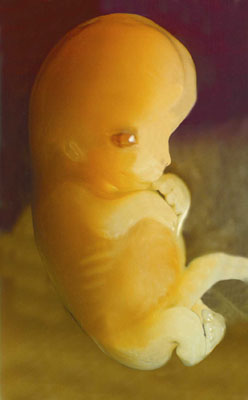
Maker of Abortion Pills Send Warnings to Emergency Rooms

Danco Laboratories , the manufacturer of the abortion pill RU-486 issued this warning to emergency room doctors. Below are exerpts of the letter:

November 15, 2004

Dear Emergency Room Director:

Danco Laboratories is providing this information to assist you in taking care of patients who may present in an emergency room setting following treatment with Mifeprex ® (mifepristone) and misoprostol. In particular, you should be aware of the rare events – serious infection, prolonged heavy bleeding and ruptured ectopic pregnancy – discussed below.

There may be some women who present to an emergency room with serious and sometimes fatal infections and bleeding that occur rarely following spontaneous (miscarriage), surgical and medical abortions, including following Mifeprex use, and childbirth. A high index of suspicion is needed for timely diagnosis and intervention in these patients.

A summary of  the updated warnings follows:

Infection and Sepsis

In postmarketing experience following the use of Mifeprex and misoprostol, we have received a few reports of cases of serious bacterial infection, including very rare cases of fatal septic shock

Vaginal Bleeding

Vaginal bleeding occurs in almost all patients during the treatment procedure (see WARNINGS). According to data from the U.S. and French trials, women should expect toexperience vaginal bleeding or spotting for an average of nine to 16 days, while up to 8% of all subjects may experience some type of bleeding for 30 days or more. Prolonged heavy bleeding (soaking through two thick full-size sanitary pads per hour for two consecutive hours) may be a sign of incomplete abortion or other complications and prompt medical or surgical intervention may be needed to prevent the development of hypovolemic shock. Patients should be counseled to seek immediate medical attention if they experience prolonged heavy vaginal bleeding following a medical abortion. Excessive vaginal bleeding usually requires treatment by uterotonics, vasoconstrictor drugs, curettage, administration of saline infusions, and/or blood transfusions.

Ectopic Pregnancy

Additionally, in postmarketing experience we have received a small number of reports of ruptured ectopic pregnancy. Physicians should remain alert to the possibility that a patient who is undergoing a medical abortion could have an undiagnosed ectopic pregnancy since some of the expected symptoms of a medical abortion may be similar to those of a ruptured ectopic pregnancy. The presence of an ectopic pregnancy may have been missed even if the patient underwent ultrasonography prior to being prescribed Mifeprex.

We rely on medical feedback from health care professionals and therefore remind you to report serious adverse events and any on-going pregnancies following treatment with the Mifeprex regimen to us.

Please provide a brief clinical synopsis (by postal mail, email or phone):

Medical Director

Danco Laboratories, LLC
P.O. Box 4816
New York, NY 10185

Share on Facebook

Attorney Describes “Assembly Line” Care at Abortion Clinic

“It was really a case of an assembly line, conducting abortions, one after another, three to five minutes apart.”

Attorney for the family of a girl who died from a legal abortion
ABC 20/20 Transcript # 99030802-j11, A Woman’s right, a woman’s risk, 3/8/1999

For examples of other women who died from legal abortions, go here.

For more cases of abortion malpractice go here. 

Share on Facebook

Abortionist on the Danger of Uterine Perforations

In an article in Salon, an abortionist said the following:

“This is why I hate overuse of forceps- things tear. There are only two kinds of doctors who have never perforated a uterus, those that lie and those who don’t do abortions.”

Margaret A. Woodbury “A doctor’s right to choose” Salon July 24, 2002

Can be found here. 

For more details about the abortions this doctor performs, go here.

For more information on the dangers of abortion, go here. 

For studies on abortion’s physical risks, go here.

Share on Facebook

Mother of Down Syndrome Child Speaks Out

When tests reveal that unborn babies have Down Syndrome,the majority of women decide to terminate the pregnancy. Here are the reflections of one woman who has a child with Down Syndrome:

“Whenever I am out with Margaret, I’m conscious that she represents a group whose ranks are shrinking because of the wide availability of prenatal testing and abortion. I don’t know how many pregnancies are terminated because of prenatal diagnosis of Down syndrome, but some studies estimate 80 to 90%… Margaret does not view her life as unremitting human suffering (although she is angry that I haven’t bought her an iPod). She’s consumed with more important things, like the performance of the Boston Red Sox in the playoffs and the dance she’s going to this weekend. Oh sure, she wishes she could learn faster and have better math skills. So do I. But it doesn’t ruin our day, much less our lives. It’s the negative social attitudes that cause us to suffer.

Many young women, upon meeting us, have asked whether I had “the test.” I interpret the question as a get home free card. If I say no, they figure that means I’m a victim of circumstance, and therefore not implicitly repudiating the decision they may make to abort if they think there are disabilities involved. If yes, then it means I’m a right-wing antiabortion nut whose choices aren’t relevant to their lives.

Either way, they win.”

Patricia E Bauer “Selective Abortion Is Immoral” in Lucinda Almond The Abortion Controversy (New York: Greenhaven Press, 2007) 25-26

Read more about abortion and disability here.

Share on Facebook

Lack of Insurance Puts Pressure on Pregnant Woman to Abort

In the article “From Fence-Sitter to Activist” (which can be found here) a young woman describes the reasons why she became pro-life. She became pregnant while in college, and wanted to keep her baby. However, she ran into trouble due to her lack of health insurance.

“I arrived at the midwives’ clinic, which was in a local hospital. I reported for my appointment and was asked for my medicaid card. When I told them I was an uninsured college student, they told me that this was a clinic for medicaid patients. I begged. I pleaded. They sent me away.

I cried out in the parking lot. “They never flat out TELL you to have an abortion,” I sobbed to my husband, “but they make it very clear that they expect you to! They don’t offer you so much as a kind word!” I was heartbroken. Nobody cared about our baby. But a woman came running out of the hospital looking for us. Panting, she told us, “I’m glad I caught you before you left!” She introduced herself as one of the midwives. She assured me that she would make sure that I got proper prenatal care, and led us back inside. She took us to the financial office. There, she told a clerk to make payment arrangements for me, then send me back to the clinic. I never forgot the despair as I stood crying in the parking lot, or the relief and gratitude when the midwife reached out to me. I swore that I’d never leave a pregnant woman alone and despairing, as I had been.

Even with payment arrangements, we were nervous about the medical costs. I wondered if perhaps we could get some kind of catastropic insurance. We made an appointment. There, we were humiliated. The case worker counted our student loans as income, but didn’t count tuition and books as necessary expenses. We pleaded. We weren’t looking for full coverage — just emergency coverage in case something went wrong. We were told that we should have thought of this before I became pregnant. Back out in the parking lot I was furious. Again, they never outright TELL you to get an abortion, but they sure do make it plain what they expect. I hated the people who hated my baby.”

Extending health coverage to the uninsured, and making prenatal care and birth affordable for everyone will drastically cut the abortion rate. As this woman says, many pregnant women have nowhere to turn.

Share on Facebook

Only a Small Percentage of Doctors Are Willing to Do Abortions

In an essay entitled “Abortion: the War on Women” author Elizabeth Fox – Genovese cited the following statistic:

only 5 out of 100 obstetricians/gynecologists are now willing to perform abortions

Lawrence B Finer and Stanley K Henshaw, “Abortion Incidence and Services in the United States in 2000,” Perspectives on Sexual and Reproductive Health 35:1 (2003): 6 – 15

Erika Bachiochi. The Cost of “Choice”: Women Evaluate the Impact of Abortion (San Francisco, CA: Encounter Books, 2004) 51


Share on Facebook

Pro-Life Activist Confronts the Reality of Abortion

In a book on pro-life activism, an author relates the following story:

A pro-life activist identified only as “Dylan” recounted how he found pieces of aborted babies in the trash outside the clinic. He said he:

“wasn’t even thinking about it [finding aborted babies] but one day, when I went there [to the clinic], there were these trash bags sitting right there outside their door. I took a deep breath and threw them in the trunk of my car, and went over to Elaine’s [another pro-lifers] house.”

According to the author:

“Together they carefully opened the gauze bags and probed the contents. They took the identifiable fetal parts to a pathologist at a nearby Children’s Hospital who photographed the remains. Dylan remembers that, “In pictures it was just incredible. You could see all the bones and the bone structure.” The pathologist “identified it as a 9 1/2 week-old unborn child.”…

9 to 10 week-old unborn baby

From Dylan:

“I was shocked, even though I knew up here [intellectually], seeing it knowing that was a baby who was alive that day, when I was at the mill, who had died that day at the mill was just devastating. And yet it was like, don’t anybody ever try and tell me, if they ever tried before, don’t ever try to tell me that’s not a baby.”

Carol JC Maxwell. Pro-Life Activists in America: Meaning Motivation and Direct Action. (Cambridge: Cambridge University Press, 2002) 115 to 116

For more about aborted babies found in the trash, go here.

an article about babies dumped in the trash in Michigan

and in Oklahoma

and in Minnesota

Share on Facebook

Pro-Life Center Offers Women Sonograms

The Woman’s Choice Network is a pro-life organization that helps women who were facing unplanned pregnancies and encourages them to choose life.

In 2011, the network assisted more than 1,500 women. Of the 172 who saw their sonogram when considering abortion, 123 continued the pregnancy.

Amy Scheuring, the executive director, said the following:

“The sonogram is just the first step. It’s day one of a two-year journey. Most of the work we will do comes after the sonogram,” Ms. Scheuring said, citing baby supplies, mentoring, assistance finding child care and other help.”

“We really leave it up to them, and we do have an occasional woman who doesn’t want to look,” she said. “But almost every woman, most every boyfriend and almost every weepy grandma in the room looks at that screen. They want to see. And the most common response we hear is ‘We had no idea.’ “

Ann Rodgers “Women’s center in Pittsburgh’s North Side welcomes ultrasound machine” Pittsburgh Post-Gazette August 18, 2012
At an abortion clinic, they simply take the woman’s money and sent her home after a dangerous and degrading operation. This pro-life center follows the woman after her baby is born and gives her help for years. Many abortion clinics do not allow women to view the ultrasound.

3-D sonogram and eight weeks
Share on Facebook

Author: Clinic Workers Look for “Fetal Parts”

One author who observed in an abortion clinic said the following:

seven week-old unborn baby

“Following first trimester abortions, sterile room workers strain the contents of the aspirator jar and cannulae to isolate the fetal tissue,… After eight weeks gestation, weight should increase according to the doctor’s estimate of gestational length, and sterile room workers look for fetal parts. If they did not find evidence of the spine, skull, and upper and lower extremities, the client was called back into the examination room for a reaspiration.”

Wendy Simonds. Abortion at Work: Ideology and Practice in a Feminist Clinic (New Brunswick, New Jersey: Rutgers University Press, 1996) page 70

Share on Facebook

Clinic Worker Calls Unborn Baby “Pregnancy Tissue”

A clinic worker said the following in a blog from abortion providers:

“As we have talked about before, the vast majority of abortions occur before 12 weeks. I know it’s a little gross, but if you have a person look at the pregnancy tissue of a nine week old pregnancy and then a 5 year old, and then said, okay — the tissue or the child has to die — pick one, most people would pick the tissue. That is because the tissue is NOT the same thing as the child.”

The Abortioneers. The Mississippi Personhood Amendment  October 29, 2011

http://abortioneers.blogspot.com/2011/10/mississippi-personhood-amendment.html

Here is some nine week old “pregnancy tissue”

click here to look at this “pregnancy tissue” after she has been aborted

The clinic worker in this case presents a hypothetical situation that would never occur in real life – there are no circumstances under which a person would have to choose between the life of an unborn child and the life of a young girl. Rather, both should be allowed to live. The clinic workers use of the term “pregnancy tissue” to describe an unborn baby that has arms, legs, fingers, toes, a beating heart, and a developing brain, reveals the deception that abortion clinic workers commonly use.  A person reading this blog would have no idea of how developed a nine-week-old unborn baby actually is – the term “pregnancy tissue” gives the impression of an unformed collection of cells and “tissue.”  The reality is much different.

Share on Facebook