Abortionist Describes “Standard” D&E

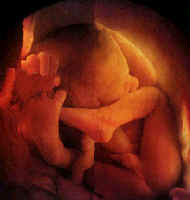
14 weeks – possible age for D&E abortion


“In a standard D&E, the fetus generally doesn’t come out intact, but you might very well bring down a leg at the start of the procedure, and if the definition is a beating heart, potentially any second-trimester abortion could fit this bill…”

The heart actually start beating at 18 –21 days after conception

Allan Rosenfield, professor of obstetrics, University School of Public Health.Times

“Wider Impact is Foreseen for Bill to Ban Type of Abortions.”

Quoted by Life Dynamics

Share on Facebook

Later Abortions Are “Bad” Says Abortionist in GQ Magazine

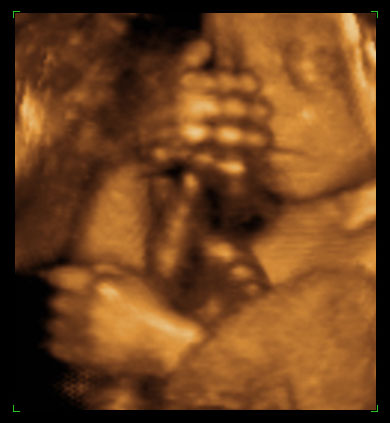
legs of an unborn baby at 14 weeks

“The later ones though, they’re bad- you see little arms and feet – little, but you know what they are, and you know what’s really being done.”

Unnamed Abortionist

Mary Ellen Mark “The Abortionist” GQ Magazine February 1994

Share on Facebook

The Unborn Baby Is a “Problem”

Dr. James T. MacMahon, abortionist

22 week sonogram

“I want to deal with the head last, because that’s the biggest problem. From my point of view, the fetus is a potential problem to the patient.”

LA Times “The Abortions of Last Resort” January 7, 1990. Quoted by life dynamics.

Share on Facebook

Planned Parenthood Physician Robert Crist on 9 to 10 week abortions

Newspapers reported that Abortionist Robert Crist

“cited instances when 9- or 10-week-old fetuses are unintentionally suctioned intact into the suction bottle. Sometimes, they’re still alive, with their hearts visibly beating.”

10 week-old unborn baby

Dr. Crist is Planned Parenthood’s chief abortion physician in Missouri.

St. Louis Post-Dispatch “Court Hearing on Abortion Law Focuses on when a Fetus Dies; Some Aborted Fetuses Still Have Beating Hearts, Doctor Testifies: St. Louis. May 26, 2000 Quoted by deathroe

Share on Facebook

A Way to Ensure the Aborted Baby isn’t Born Alive (The American Journal of Obstetrics and Gynecology)

Of the various ways to perform an abortion after the midpoint of pregnancy, there is only one that never, ever results in live births. It is D&E (dilatation and evacuation), and not only is it foolproof, but many researchers consider it safer, cheaper and less unpleasant for the patient. However, it is particularly stressful to medical personnel. That is because D&E requires literally cutting the fetus from the womb and, then, reassembling the parts, or at least keeping them all in view, to assure that the abortion is complete.

To read about live births after abortion, go here.

From The American Journal of Obstetrics and Gynecology

The American Journal of Obstetrics and Gynecology 1976 Sept 1, 126(1) 83-90.

Share on Facebook

Abortionist Describes an “Easy” Second Trimester Abortion

“[D & Es] the procedure typically used for later abortions, have always been somewhat problematic because of the toughness and development of the fetal tissues. . . . I kept doing D&Es because that was what I was comfortable with, up until 24 weeks. But they were very tough… I noticed that some of the later D&Es were very, very easy. So I asked myself why can’t they all happen this way. You see the easy ones would have a foot length presentation, you’d reach up and grab the foot of the fetus, pull the fetus down and the head would hang up and then you would collapse the head and take it out. It was easy. At first, I would reach around trying to identify a lower extremity [i.e., a foot] blindly with the tip of my instrument. I’d get it right about 30-50 percent of the time. Then I said, ‘Well gee, if I just put the ultrasound up there I could see it all and I wouldn’t have to feel around for it.’ I did that and sure enough, I found it 99 percent of the time. Kind of serendipity.”

22 to 24 weeks

.”2nd Trimester Abortion: An interview with W. Martin Haskell, MD, Cincinnati Medicine Fall 1993

Share on Facebook

An Account of a Partial Birth Abortion

Here is an  account of a partial birth abortion:

“The patient lay on her back on the operating table, her ankles dangled in the air, gently held by a loop of cloth tied to high steel poles. At the tap of a button, the bed rose, bringing her womb up to working level, and the doctor lowered a clear plastic face mask, like an arc welder’s.

The doctor inserted his gloved right hand deeply into the patient’s vagina until only his thumb protruded.

”I am looking for a foot,” he said to the resident standing beside him. I stood directly behind them. He pulled out a foot, a bit longer than an inch.

”There is the foot,” he said. ”Now you pull the one leg and then you reach in and flex the other one like this.”

He re-inserted a single forefinger into the vagina and suddenly two legs, froglike, appeared. The skin was translucent, membranous. The feet quickly turned a dark purple. Within minutes, so did the legs. The doctor gripped each leg as if holding hedge clippers.

”Place each thumb on the buttocks,” he instructed. The pads of his thumbs and the fetus’s buttocks were perfect matches in size and shape. ”Then turn and twist like this.”

He pulled firmly. A back appeared, then with the flick of a forefinger, a small arm fell out and then another. The anesthesia had relaxed the natural paisley curl of the fetus into something linear and flaccid. A 10-inch homunculus, its head locked into the cervix, hung in full view, motionlessly toward the floor, its long tapered legs disturbingly elegant.

It happened quickly. The back of the fetus’s skull was punctured. There was a tiny spurt of blood into the stainless-steel waste can that sat on the floor beneath. A curette was inserted, a hose was attached and the deep rumble of the suction machinery near me kicked on.

Into a clear plastic jar at my feet there appeared instantaneously about a half-inch of pinkish fluid marked by tiny whitish-gray globules. On some animal level, deep in my own brain stem, I knew what it was and leapt back in fear.

The periphery of my vision went gray, and a minute later, when my equilibrium returned, I found myself standing amid an ancient medical ritual.”

The procedure is profoundly upsetting. The image of that limp suspended fetus has not left me. By the time I traveled back home — two days later — I had trouble holding my 8-month-old daughter…”

Hitt. “Who Will Do Abortions Here?” New York Times January 19, 1998
Share on Facebook

Newsday Reporter Describes Witnessing Abortions

B.D. Colen, a reporter for Newsday:

“I had spent a week in a clinic, watching first trimester abortions and interviewing the physicians doing them, the women having them, and the counselors working with those women…

None of that prepared me for what I saw that sunny afternoon in a sterile, white procedure room at The Washington Hospital Center…

After dilating, or opening, the cervix, the physician used a curette, the gynecological version of a sharpened spoon, to cut the fetus into pieces he would then remove with forceps. A large petri dish sat on an instrument stand to the right of the girl’s feet, and most of the red material in the dish was unrecognizable. But from time to time during the procedure the physician would tap his forceps on the edge of the dish – and into the muck would drop a foot, or a hand, or a piece of rib cage…

Having seen what I saw, I cannot for a moment abide the disingenuousness of those who argue that a fetus is not human, or those who convince themselves that abortion is not killing…

Yes, abortion is killing. But it is not murder. Murder is legally banned killing. Abortion is one of many forms of legally and socially sanctioned killing.”

.B.D. Colen “A High, But Necessary, Toll” Newsday May 12, 1992

Share on Facebook

Abortion Procedures Are Not “Pleasant” Says Abortionist

Dr. Suzanne Poppema, author of the book “Why I Am an Abortion Doctor,”

“Abortion procedures are not aesthetically pleasant,” she declared. “There’s no question about that. You think these pictures the anti-abortion forces show in Congress are bad? I think if you started showing pictures of `normal’ (abortion) procedures, with forceps, those would be equally effective.”

Stephen Chapman “Is Partial Birth Abortion Really so Awful?” Chicago Tribune March 23, 1997 p 23

Below is a diagram of an abortion with forceps, or a D&E. You can read more about this technique here.


Share on Facebook

Dr. Warren Hern Describes Crushing Baby’s Skull

14 week-old unborn baby

Dr. Warren Hern, late term abortionist,  describes a D&E procedure in this book Abortion Practice:

“As the calvaria [head] is grasped, a sensation that it is collapsing is almost always accompanied by the extrusion of white cerebral material [the brain] from the external os. this calvaria sign may not be much in evidence with the 13-week procedure, but it is more likely to appear at 14 weeks. Prior to 14 weeks, the calvaria may enter the suction cannula and may not be noticed.”

Warren Hern Abortion Practice (Boulder, CO: Alpengo Graphics, INC, 1990) p 142

Share on Facebook